

peace lily (Spathiphyllum wallisii) are elegant and beautiful plants known to thrive indoors or in more shady areas of your garden. They are extremely popular not only for their lush green leaves and soft white flowers, but also for their calm nature.
As complex as they may seem, they are wonderful plants for beginning gardeners. They thrive in low light conditions and require little effort to bloom in your garden or on your windowsill.
Unfortunately, the quiet nature of peace lilies doesn’t mean you won’t run into trouble. You may have problems with wilted or browned leaves. But the biggest problem is the strange phenomenon of leaf yellowing.
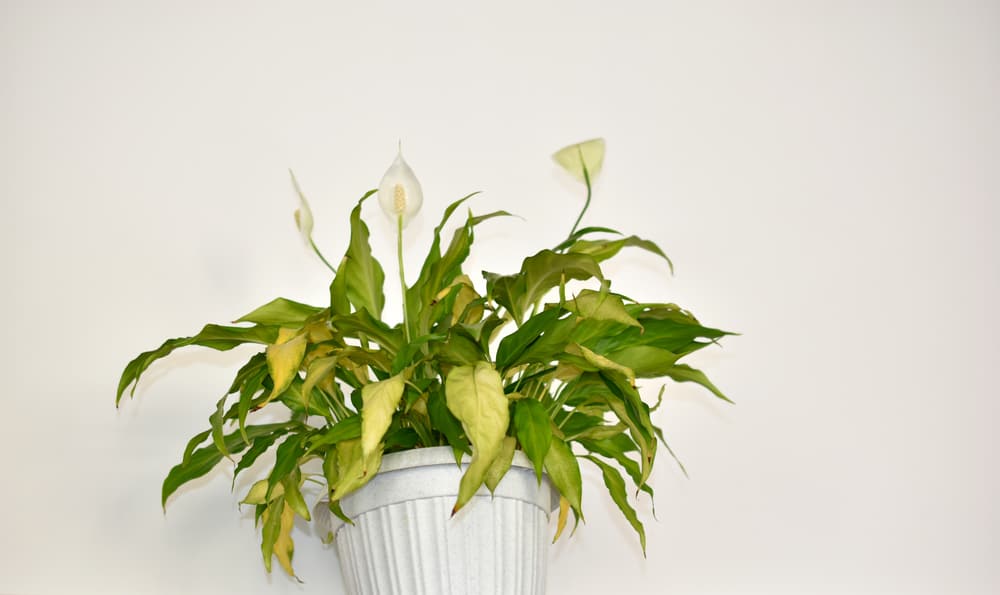
Yellow peace lily leaves occur for a variety of reasons, ruining the elegant tropical appearance of the plant.
Fortunately, fixing yellowing peace lilies isn’t a difficult task, and with these tips, you can get your plant back to good health in no time.
7 reasons to have yellow leaves on your peace lily
1. Improper watering

Peace lilies are tropical plants that like lots of water and a little humidity. But water too much and you risk being surrounded by yellowed leaves.
Too much water or poor drainage can cause them to accumulate around the roots of peace lilies. This causes root rot, which prevents the roots from absorbing water and nutrients, eventually causing the leaves to turn yellow.
On the other hand, yellow leaves could be a sign of a thirsty peace lily. Although they are relatively hardy plants that can withstand a few dry days, prolonged periods of watering can cause health problems, as evidenced by yellowing of the leaves.
The solution
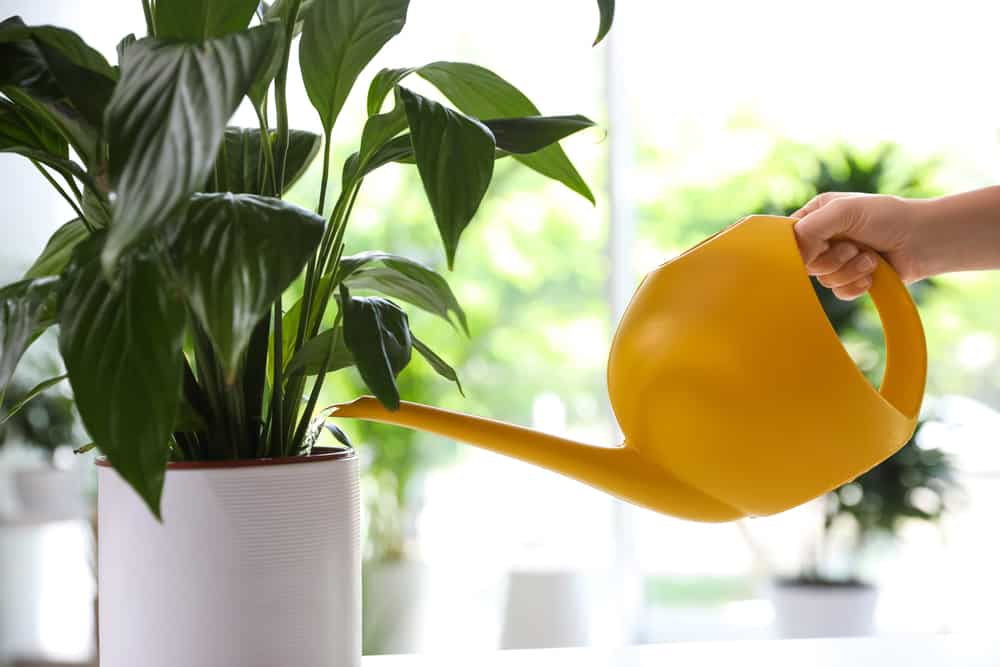
This solution is simple: learn your peace lily’s needs and adjust your watering habits accordingly.
You should water your peace lilies when the topsoil is dry. A good deep watering every week or every two weeks is usually fine for a healthy peace lily, depending on indoor growing conditions.
If you’ve adjusted your watering but are still experiencing yellow leaves, you may have inadequate drainage.
Peace lilies like moist but well-drained soil and should be planted in a light potting mix. You can easily increase the drainage of your soil by adding coconut husk (the best organic alternative to peat) and perlite. If you are displaying your lilies in pots, make sure they have plenty of drainage holes and never water into a pot lid.
Also, be sure to remove any excess water around the bottom of the pot, especially if it’s in a saucer.
2. Water quality

Sometimes it’s not the amount of water that causes our lily leaves to turn yellow, but the quality of the water you use.
Peace lilies are generally not picky about water quality. However, tap water is full of chlorine, fluoride, and other minerals, which can cause leaves to turn yellow in high concentrations.
The solution
The solution is quite simple: do not water your water lilies with tap water. Instead, use purified, filtered water or even rainwater.
Using tap water is very convenient, and I don’t blame you for taking the easy way out. If so, try dechlorinating your tap water. All you need to do is leave your pitcher or container of water in the sun for a day or two to allow the chlorine to evaporate, or boil it and let it cool before using.
3. Sunlight
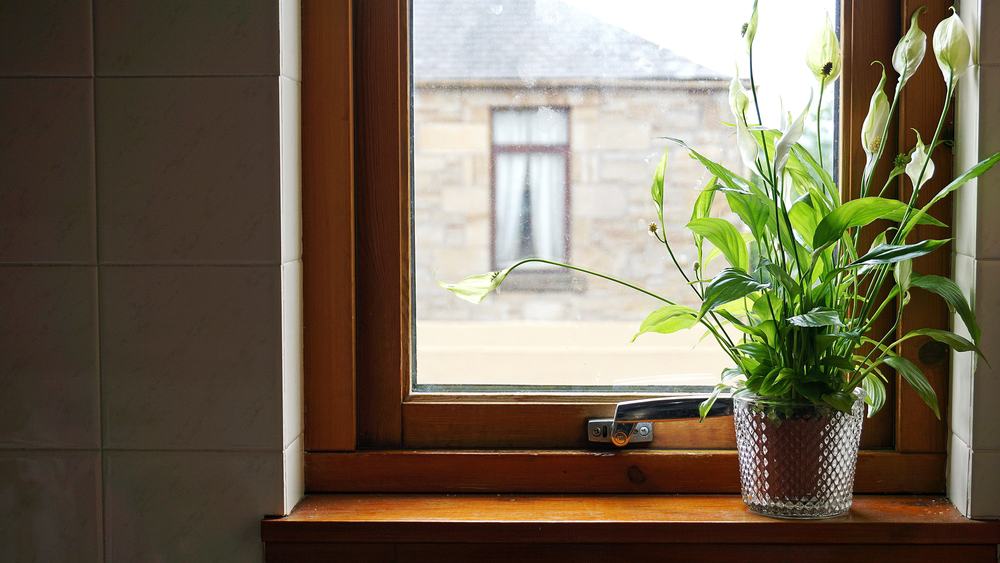
Lighting is one of the main causes of yellow lily leaves. Peace lilies love light, but too much direct sunlight can scorch the leaves, causing them to dry out and turn a pale yellow hue.
However, too little light can be a contributing factor. If your plant doesn’t get enough light, it will have trouble photosynthesising, which can lead to yellow leaves. Since the peace lily is usually the number one recommended “low light” houseplant, it’s usually the main culprit.
You’ll know your peace lily isn’t getting enough light if it’s also having trouble producing flowers.
The solution
Peace lilies are found naturally on jungle floors and thrive in the sunlight that filters through the trees. To recreate these conditions indoors, place your potted peace lilies near an east-facing window or in a bright corner that receives indirect sunlight throughout the day.
If your peace lilies aren’t getting enough light, move them to a sunnier spot on your windowsill or in and around your home, and keep them out of direct sunlight.
Outdoor lilies should be planted carefully. The location you choose should receive plenty of morning light or filtered sunlight throughout the day. Ideal is a shady spot near an eastern wall.
4. Temperature fluctuations

Extreme temperature changes can stress peace lilies and cause their leaves to turn yellow. Temperatures below the optimal range for tropical plants are another stressor that can affect lily leaf color.
As mentioned, peace lilies thrive in wooded environments (USDA zones 10 through 12), so they like warm, humid weather. The optimum temperature range for peace lilies is between 65 and 85F, one of the reasons they make such good houseplants.
When the temperature drops below 65 F and you experience a sudden cold snap, it can cause a yellowing color. Extreme heat can also have the same negative effects, usually accompanied by wilting.
The solution
A thermometer placed next to the plant will tell you if the temperature is causing yellow leaf problems.
Place your peace lily in the warmest room of your home, especially in the winter. Keep the jar away from windows, as it can get very cold near glass, and avoid direct sunlight to prevent overheating.
If you live in zone 9 or below, keep your peace lily indoors or in a pot to move between indoors and outdoors to control temperature drops.
5. Nutrient Problems
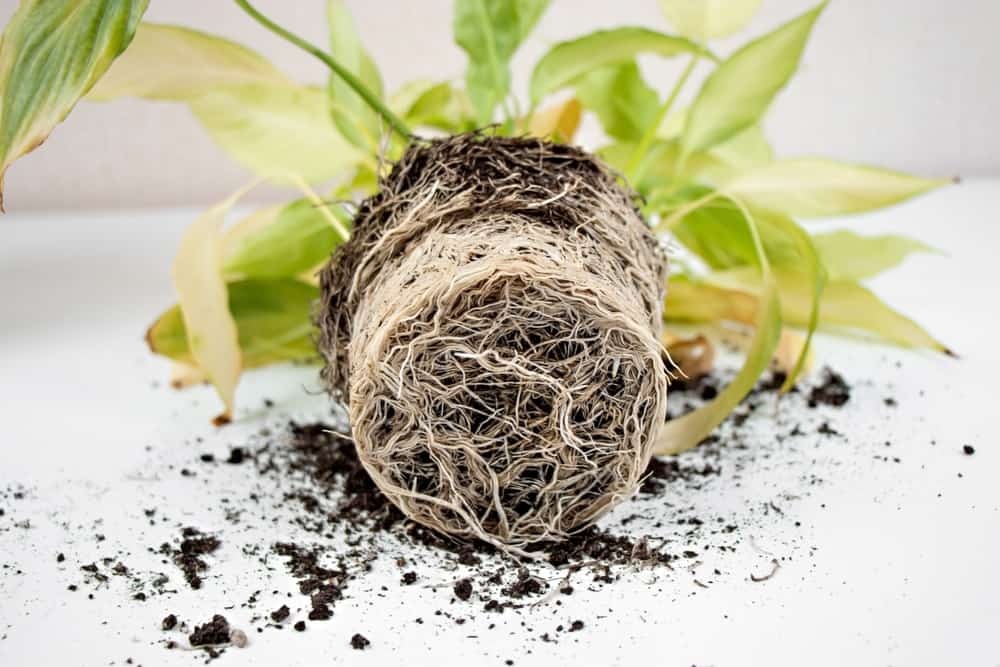
Due to the tolerant nature of peace lilies, they often don’t need heavy fertilizers to help them thrive. However, yellowing leaves could be an indication that your plant is lacking in certain nutrients, from key nutrients like nitrogen to micronutrients like iron or magnesium.
If your plant has been in the same pot for a long time without changing soil, nutrients are probably the main culprit. Once the plant has depleted all the nutrients in the soil, it will struggle to grow without additional fertilizer.
A root-bound plant can also lead to a nutrient problem, as the roots are unable to absorb and supply essential nutrients to the plant.
The solution
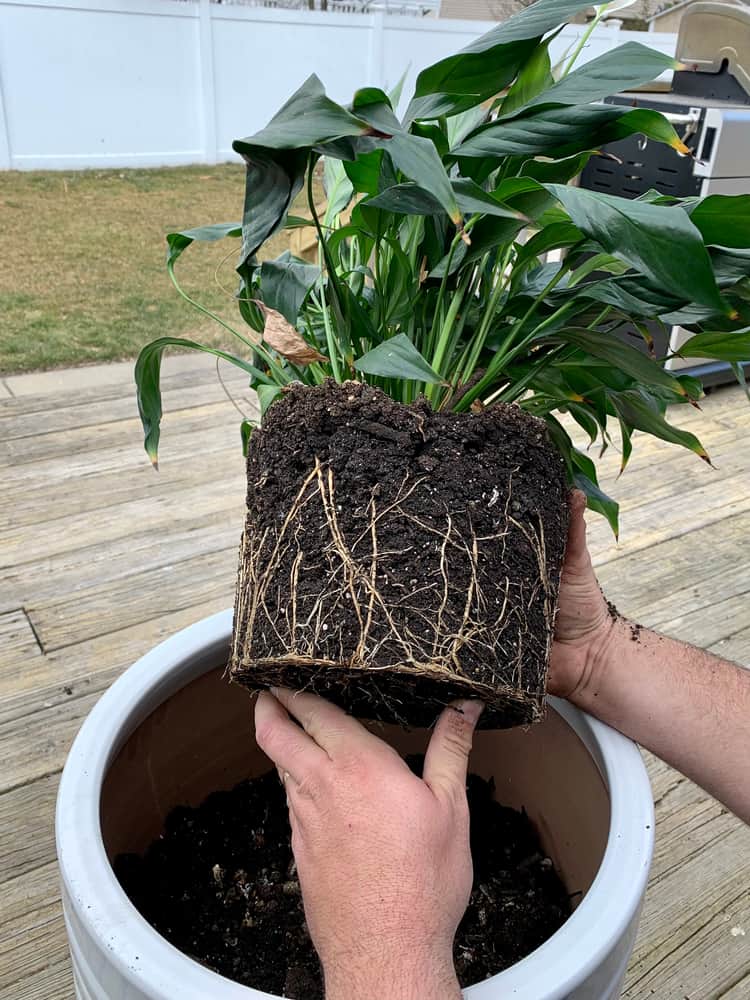
The ideal solution would be to do a soil test, but that’s not really common with houseplants. Instead, give your peace lily a small dose of balanced liquid fertilizer and wait a few weeks to see if that fixes the problem.
In the long run, when it comes to feeding issues, transplanting won’t hurt either. Eventually, the quality of the soil in the pots degrades as the nutrients leach out and the structure breaks down.
Give your plant a soil refresh and a new pot, and after a short period of adjustment it should be back to normal.
Check out our dedicated guide to repotting your peace lily here, including five warning signs that it’s time to repot.
6. Pests and diseases
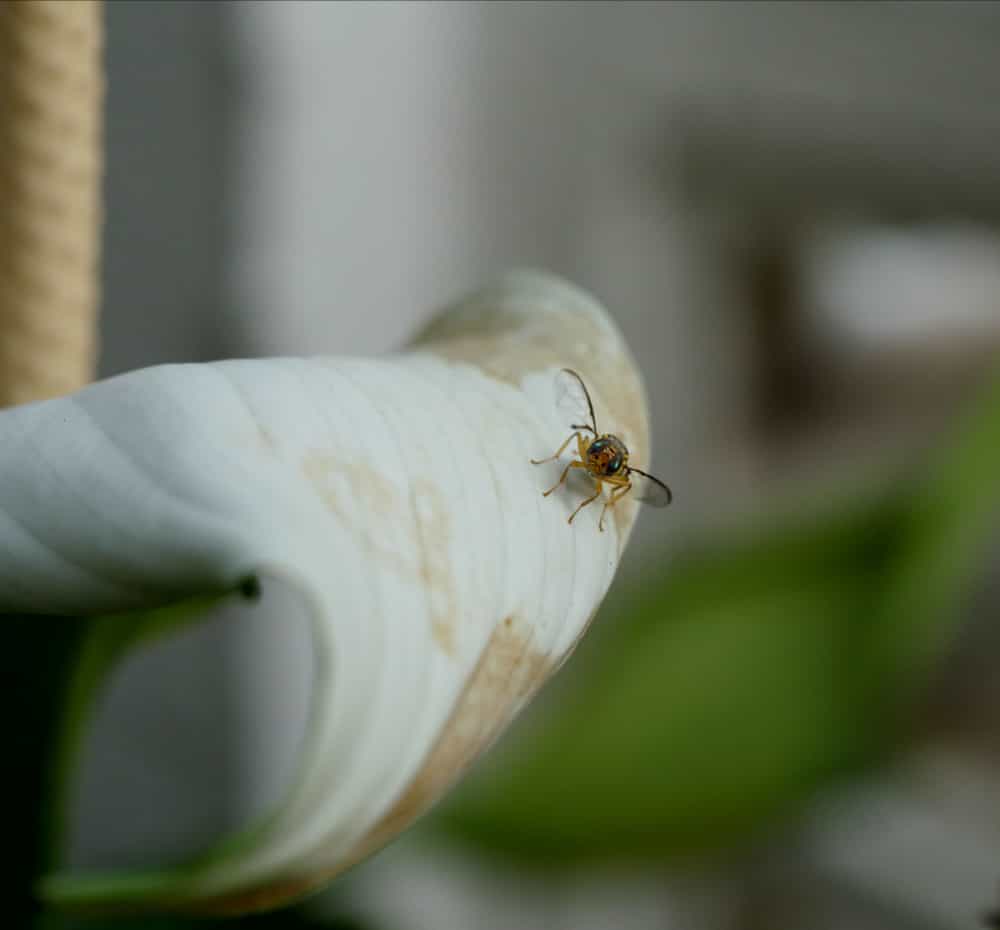
Pests don’t usually affect peace lilies, but you may have to deal with the occasional infestation of aphids, scale insects, or mites, especially if your peace lily is kept indoors.
The presence of these pesky little creatures can be a major stressor for your plants, eventually leading to yellowing leaves.
The same goes for the small number of diseases that can infect peace lilies. These include root rot and Phytophthora parasitica fungia fungal disease.
The solution
Removing pests that have taken up residence on peace lilies is quite easy. Good general maintenance and proper plant placement should keep them from infesting your plants.
But if you see an aphid or two, getting rid of them is easy. Simply peel them off the leaves and crush them between your fingers or put them in a pot of soapy water. You can also spray them with a spray bottle.
As for spider mites or scale insects, a simple spray of neem oil should rid your peace lilies of them in no time.
Unfortunately, fungal diseases invading your peace lily are a serious concern. If the infection is severe, your peace lily may need to be culled before the disease spreads. It is best to prune any affected leaves if you see gray or black mold growth and watch for signs of climbing.
Good plant hygiene and care practices should prevent pests and disease from taking hold of your peace lilies, especially indoors.
7. Age
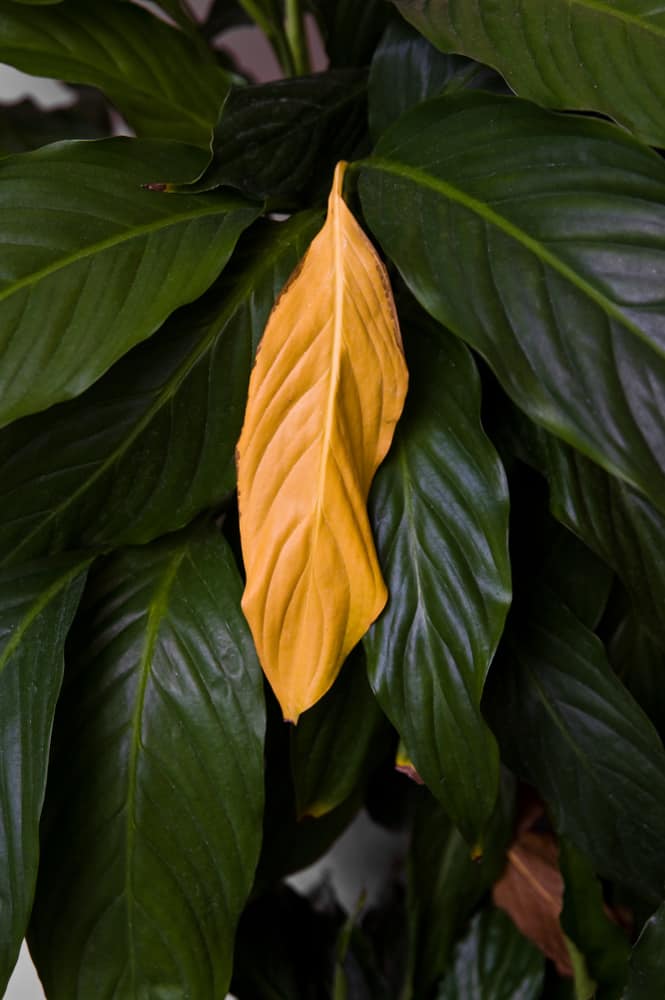
Leaf yellowing is not always a problem. Sometimes it’s just nature taking its course.
As with most plants, older leaves will turn yellow and eventually dry out and drop off as the plant redirects all of its energy into new growth.
The solution
As you might have guessed, there is no cure for the natural aging process (unless, of course, you believe in vampires or fountains of youth).
You can simply prune those old yellow leaves or wait for the plant to shed them naturally. However, always be sure to practice good garden hygiene and remove all dead leaves and plant debris from around the base of your peace lilies once they have fallen. This will prevent the appearance of pests and diseases.
Yellow peace lily leaves can be caused by a variety of plant stressors, from temperature fluctuations and improper watering to pests and diseases.
Unfortunately, even if you implement the solutions in this article, the yellowed leaves will never return to their former green glory. You can trim unsightly leaves for aesthetic purposes, but be careful not to over-trim and always try to correct the problem before trimming too many yellowed leaves and adding stress.