

Believe it or not, having a cherimoya in a jar isn’t silly. They are very easy to maintain plants and very grateful for the fruits they give you. He hardly needs care.
However, you’re going to have to keep an eye on him for a bit. In what? Below we leave you a maintenance guide that may be what you need to buy a cream apple tree. Shall we start?
location and temperature
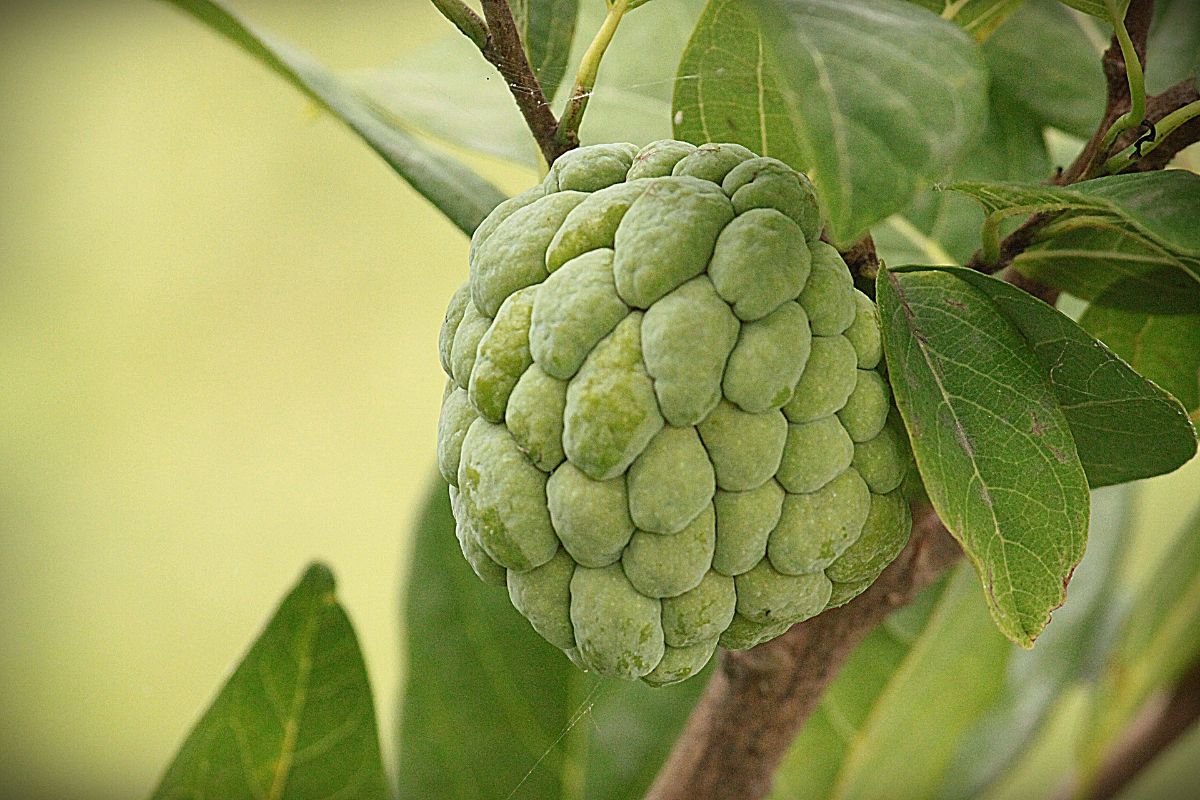
When you have a potted cherimoya, the first question you may ask yourself is whether it is best to have it outdoors or indoors. AND It will largely depend on how he is.
You see, in general, the custard apple tree should be outside. But when it is very small, for example because you are growing it from seed, it is normal to keep it inside the house to provide it with an appropriate temperature and so that the sun’s rays do not burn it. .
Based on this, if the specimen is young, it is best to place it in a place where it receives the most light, and only a few hours of direct light (early or late in the day). This will prevent the rays from burning the leaves.
Some experts comment that when the potted cherimoya is less than a meter tall, it is best placed in partial shade; and when it exceeds this height, it can be placed in full sun.
As for the temperature, it should be borne in mind that its ideal is around 27 degrees. A good range would be between 16 and 28 degrees.
It can tolerate low temperatures, but not frost. Indeed, if you live in an area where there are usually trees, it is possible that your tree will end up falling sick or weak and that in the end you will lose it if you do not protect it (in this case you should protect not only the stem but also the ground with plastic or nets that prevent the cold from affecting you).
Substrate
The custard apple tree isn’t particularly picky about what kind of soil you can use. In fact, he adapts very well to whatever you give him. But if you want to give it a suitable substrate, the best is one with a lot of organic matter (for example, with horse or sheep manure; and also good drainage.
Of course, we recommend that you check the pH of the soil often because when it is alkaline it can cause chlorosis and you would then have to act quickly to prevent it from dying. Always try to make the substrate neutral.
Flower pot
In the case of the pot, you should keep in mind that it is better if it is deep than wide. So try to find tall pots so you can plant your cherimoya in a pot so it can develop the perfect root system to grow.
Obviously, when it reaches about two meters, it may not grow anymore because there is no more room in the pot. There you can choose to leave it as it is or plant it in the ground. If you are not going to move it, you can even put an even bigger pot to make it grow.
As for the material of the pot, in this case it does not matter, although if you are going to have it in full sun, consider that plastic pots get much hotter and can lose water more quickly .
Irrigation
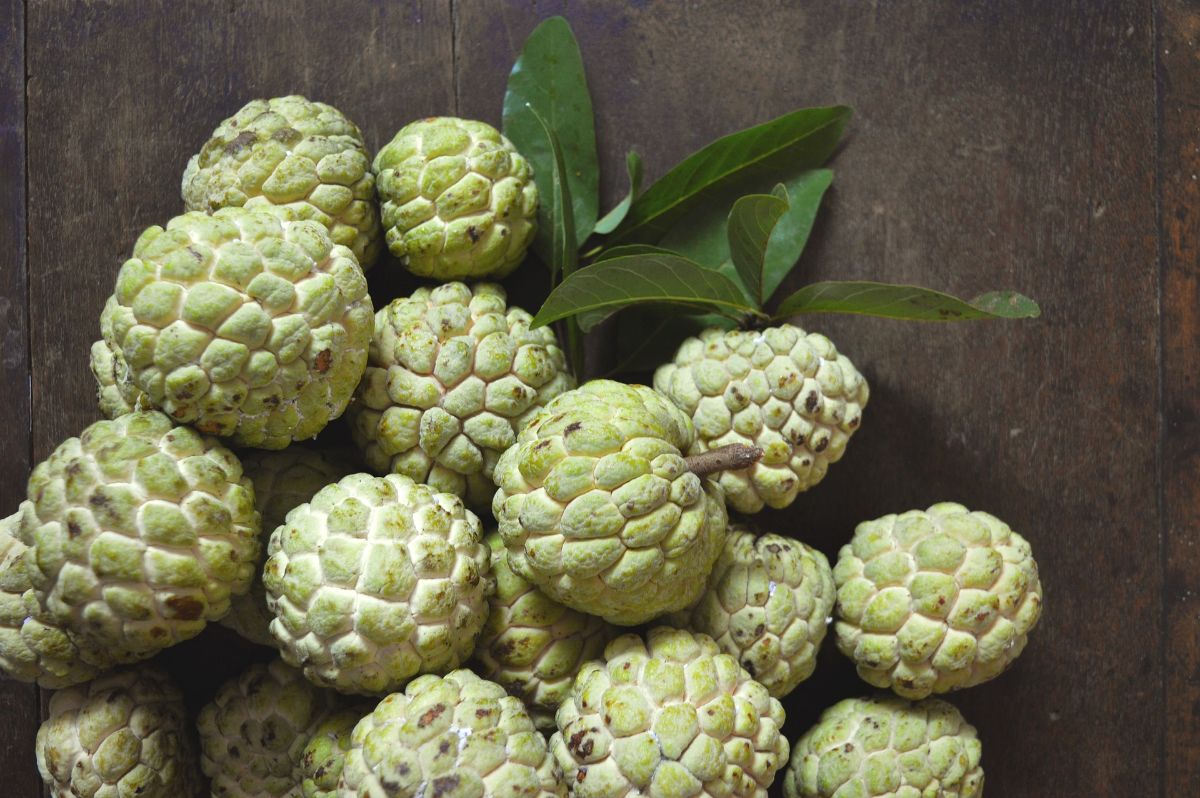
Irrigation is one of the basic cares of the potted cherimoya. And it is that it does not tolerate waterlogging at all (be able to kill him in no time). But he doesn’t like dry land either.
It needs constant watering to be good. And you can achieve this with a micro-sprinkler that will keep the soil moist but not overdone.
Subscriber
Potted cherimoya, as if in the ground, requires frequent fertilizing. Always opt for NPK fertilizers i.e. Nitrogen, Phosphorus and Potassium. Of the three, the most important are the first and the third, because it is there that we find the most deficiencies in this fruit tree.
Size
The size of the cherimoya in pot differs between that of the first three years, and the following ones. The first that is done is training, where you will have to control the growth and give it the most suitable structure, with 3-6 main branches from which the secondary branches emerge.
From the third year, you would already have a maintenance pruning so that you can clean it of dry branches, those that obstruct the passage of air or light, etc.
Plagues and diseases
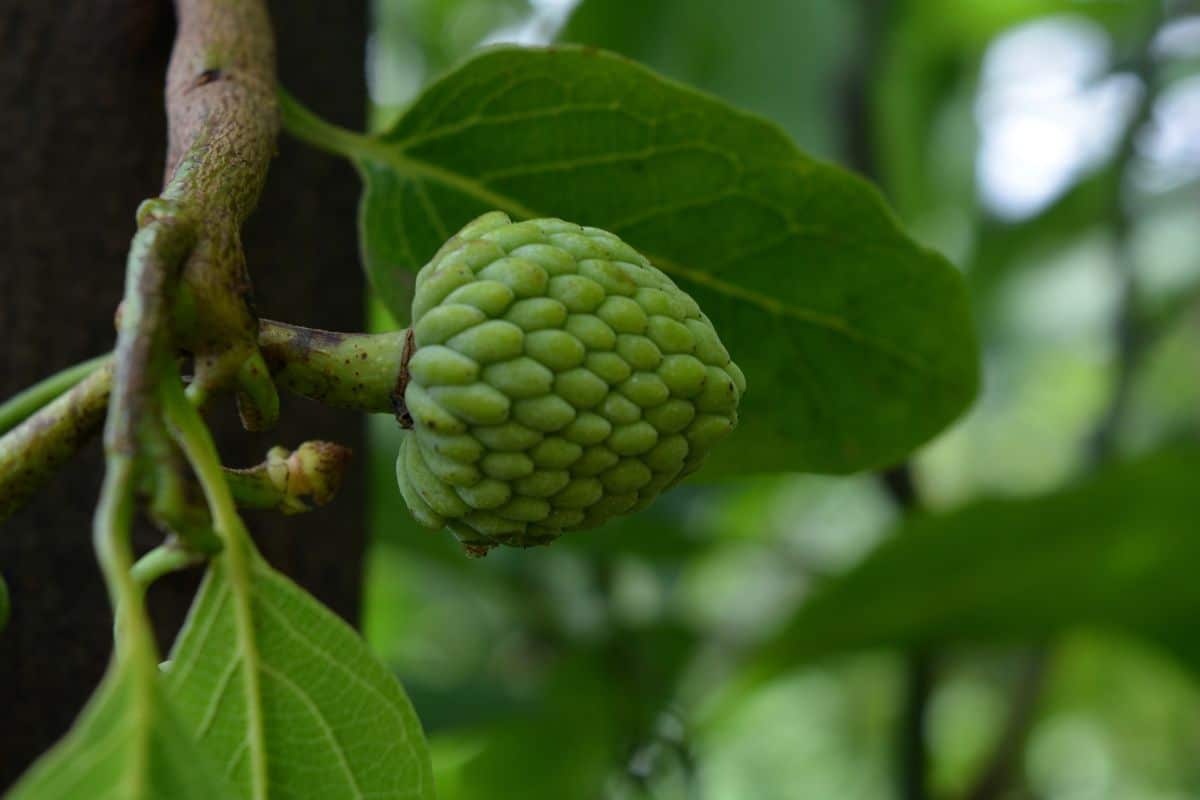
like fruit, watch out for pests and diseases that can affect itlike the chalcid fly (which attacks the fruits and covers them with a white down (like a mummy); or the fungus diplodia annonaewhich infects the stem and kills it from within.
Multiplication
Reproduction of the custard apple tree could only occur through the seeds of the fruits. Some experts have also tried to do it by grafting or cuttings. But these are complicated methods which are not recommended unless you are a professional as it is not easy to perform.
Other aspects to consider
The cherimoya is very beautiful, even more so when potted and well cared for. But you need to consider the following:
- He has dichogamy. That is, it sheds male and female flowers at different times. Sometimes they can group together, but the normal thing is that they take some first and then others, hence their more complicated pollination.
- Needs hand pollination. Those with custard apple typically harvest the pollen and pistils from the male flowers, refrigerate them for 24 hours, and brush them onto the female flowers. This is done because insects are not attracted to the flowers it throws (and natural ones, that is, those that do this in their natural habitat, do not exist in all countries).
- The cherimoya does not reach its full height until it is 7 years old. Besides, can live up to 40 years.
- Don’t expect it to bear fruit soon. In general, it will take between 3 and 4 years to be able to do this, first to flower and then to fruit.
Now that you know how to care for a potted custard apple tree, Would you dare to have one on your patio?