

A surprisingly popular series on plant care we featured on Blooming Backyard was the only one to cover the reasons why beloved plants don’t bloom.
I say “unexpected” not because our readers were disappointed that the flowers didn’t open on their rhododendrons or gardenias (that sentiment is natural), but because one of the main causes of failed blooming was a common mistake: prune these plants in the fall.
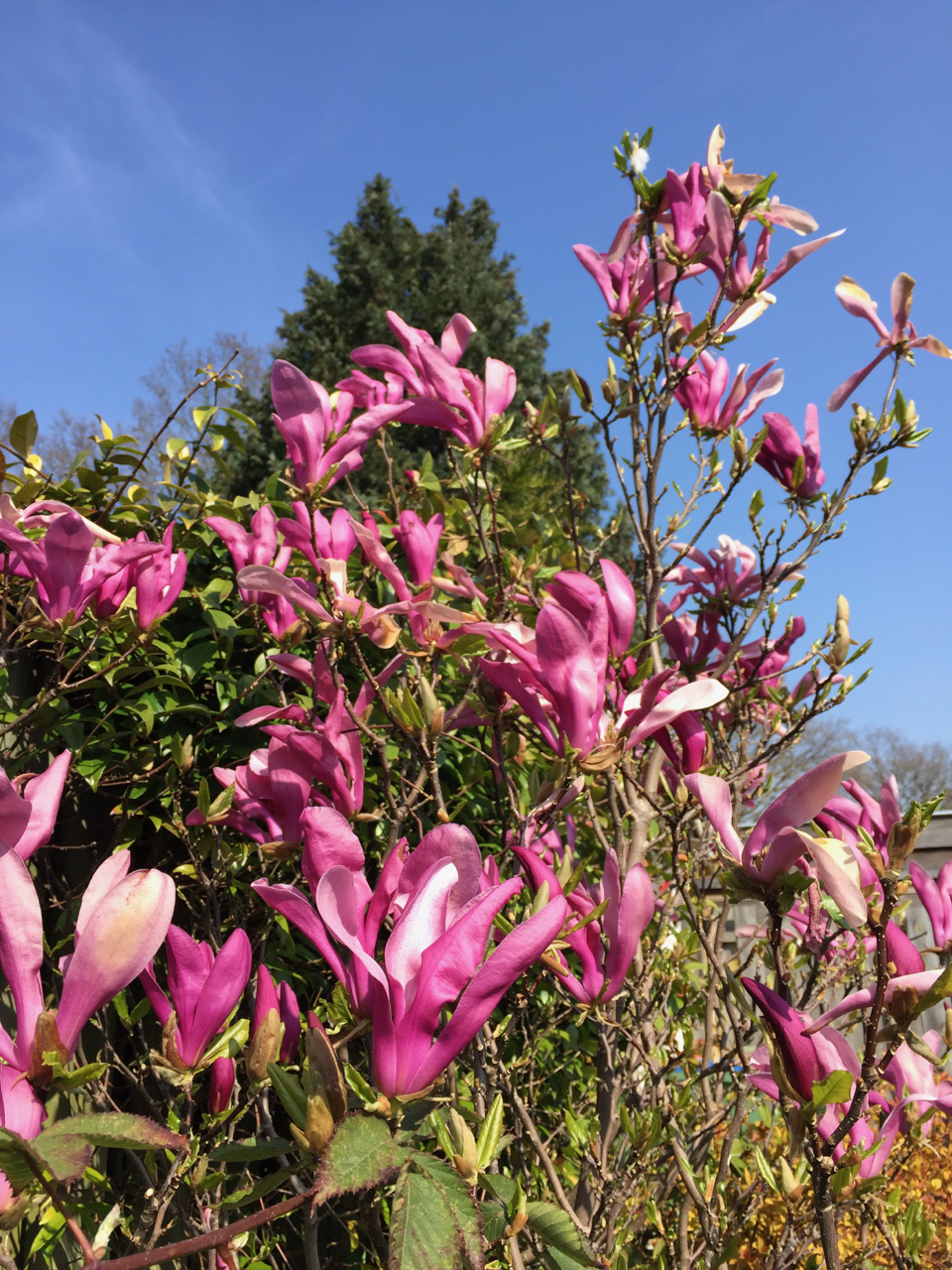 Magnolia Lily bushes bloom in late winter and early spring on old wood.
It’s pretty easy for me to say “don’t prune plants that bloom on old stems in the fall”. But what does this really mean and which plants does this advice apply to?
In this article, I have already covered the main reasons why you should postpone most spring sizes. But sometimes the temptation to tidy up the yard is too strong to resist in the fall.
So if you really can’t put your pruners away for a few months, check out this list of “absolutely unpruned” fall plants. Put them away and you’ll save yourself disappointment next year.
1. Rhododendrons and Azaleas
I’ll start with rhododendrons because they are some of the slowest plants to recover from an untimely fall pruning. And I love azaleas because they’re both part of the Rhododendron genus, so their pruning needs are the same.
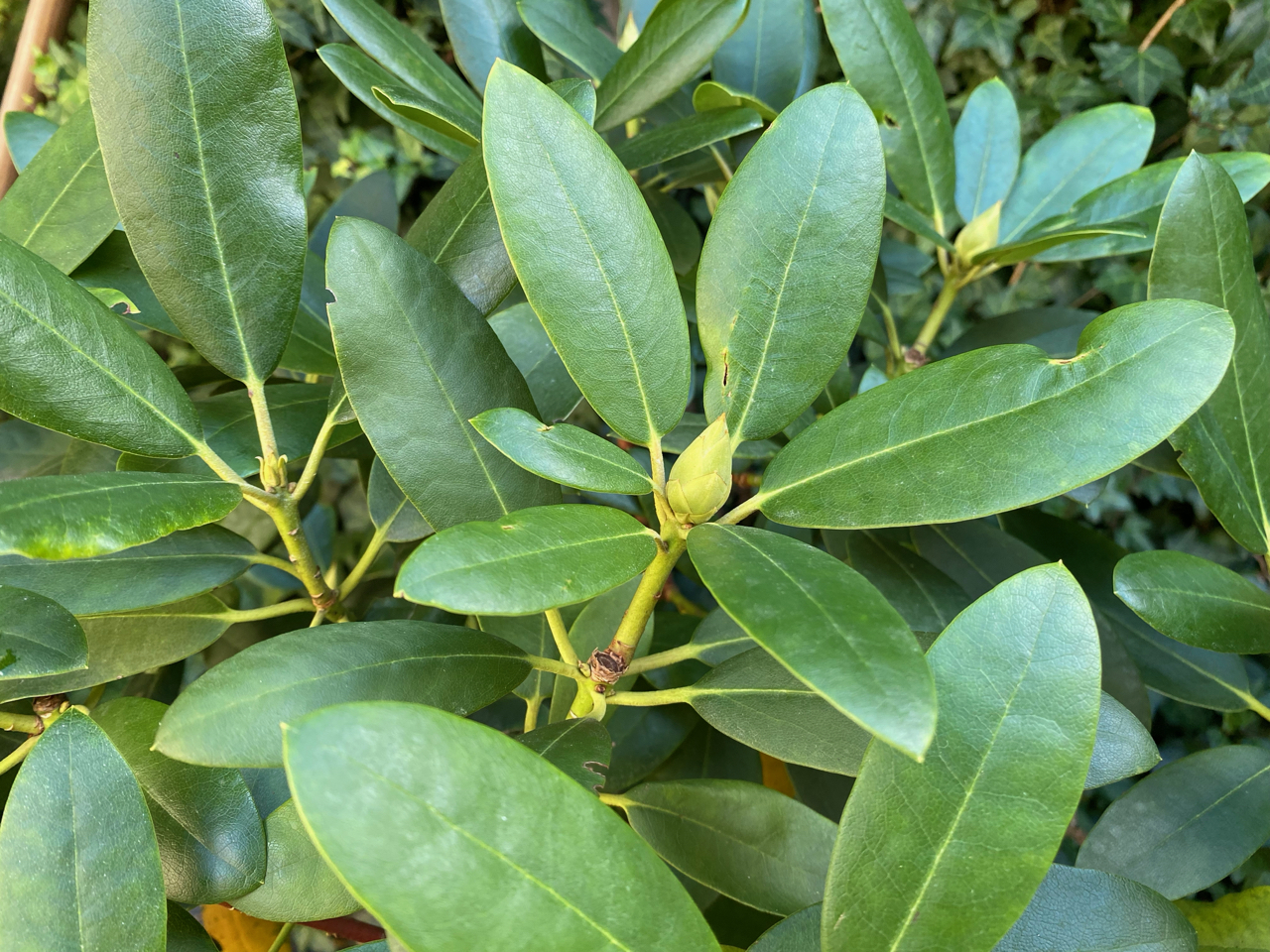 Rhododendron buds in autumn are the flowers for the following year.
Rhododendrons bloom on old wood: This means that your plant will produce next year’s flowers almost immediately after this year’s flowers drop.
Depending on the strain you are growing and your location, your rhodys may even begin to swell buds before they lose their current bloom. So if you decide to prune them in the fall, you will have to prune those shoots, which will affect the presentation next spring.
The best time to prune your rhododendron is after the flowers have dropped, but just before the new buds form.
A popular saying, at least in the United States, was to prune no later than the 4th of July. Granted, that’s an easy date to remember, but with the kind of erratic weather we’re experiencing right now, I think that’s no longer true.
 The same rhododendron as a busy bee hotel in May.
As a general rule, you should prune your rhododendrons and azaleas no later than three weeks after they finish spring blooming.
Keep in mind that rhododendrons are slow-growing shrubs, so there’s no need to prune them every year. Prune them only if they are too big or if you want to give them a more consistent shape. Never prune more than a third of the plant at a time.
Related Reading: 8 Reasons Why Your Rhododendrons Are Not Blooming
2. Japanese Camellias (camellia japonica)
I don’t know what’s in camellias that makes some gardeners want to cut them endlessly. Camellias are temperamental plants, but perhaps because they’re evergreen, they have a reputation as the tough shrub of the neighborhood.
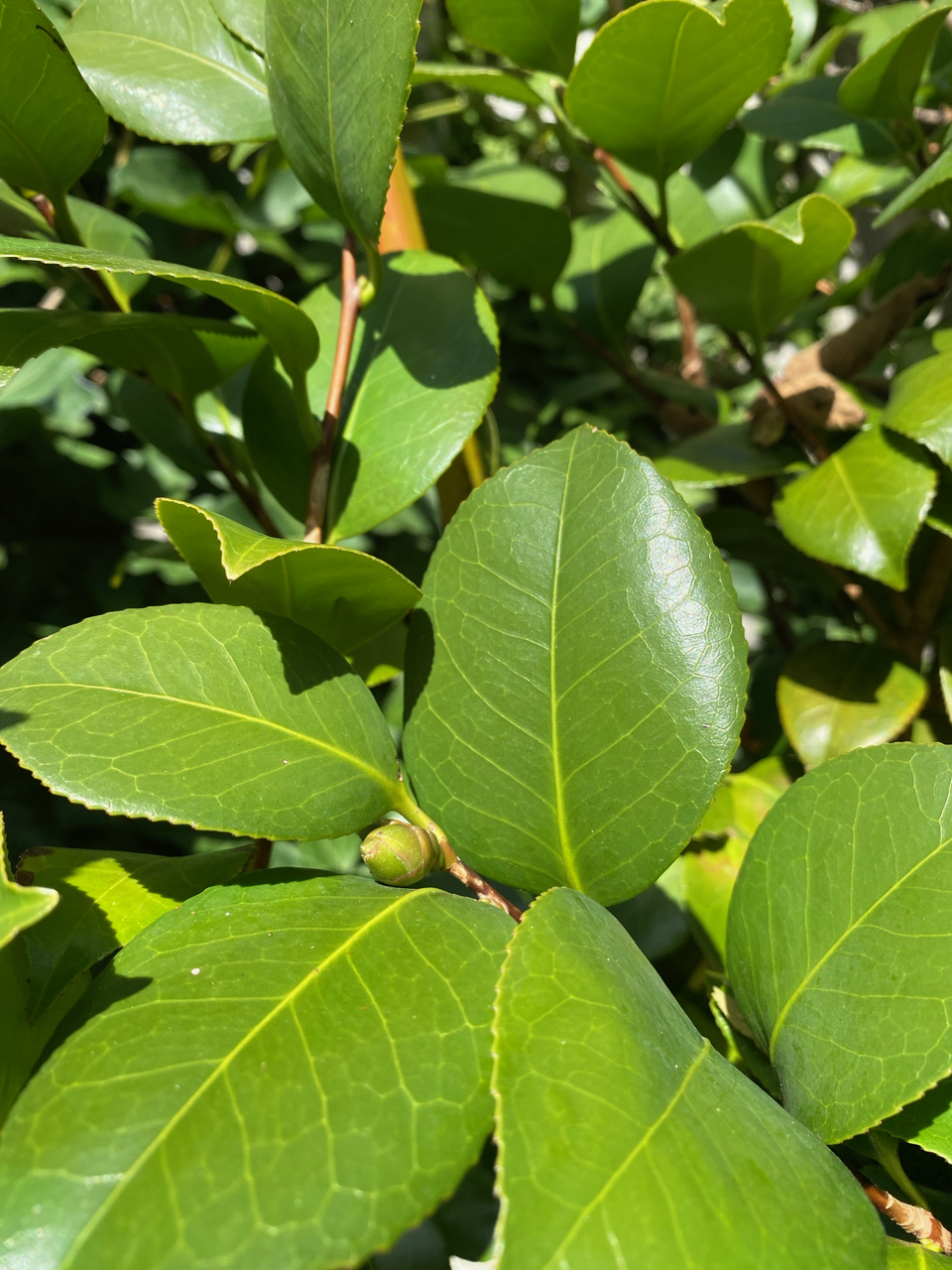 Don’t prune your camellia in the fall if you want it to bloom next year.
Like rhododendrons, camellias also flower on old stems, but early in the year. Depending on the cultivar you are growing (and there are thousands of cultivars on the market), Camellia japonica buds can sprout in March and open in November. Obviously, this will not happen if you prune it in the fall.
The best time to prune the camellia is in early spring, just after the flowers have faded. However, if your plant is an early bloomer, it’s best to wait until the last expected frost date has passed before pruning.
Camellias only need light pruning to encourage branching (if you go for the hilly shrub look) or upright growth (if you prefer the tree look). You certainly don’t need to prune your camellia every year.
Related Reading: 8 Secrets to Make Your Camellia Bloom Like Crazy
3. Magnolia lily (Magnolia liliiflora)
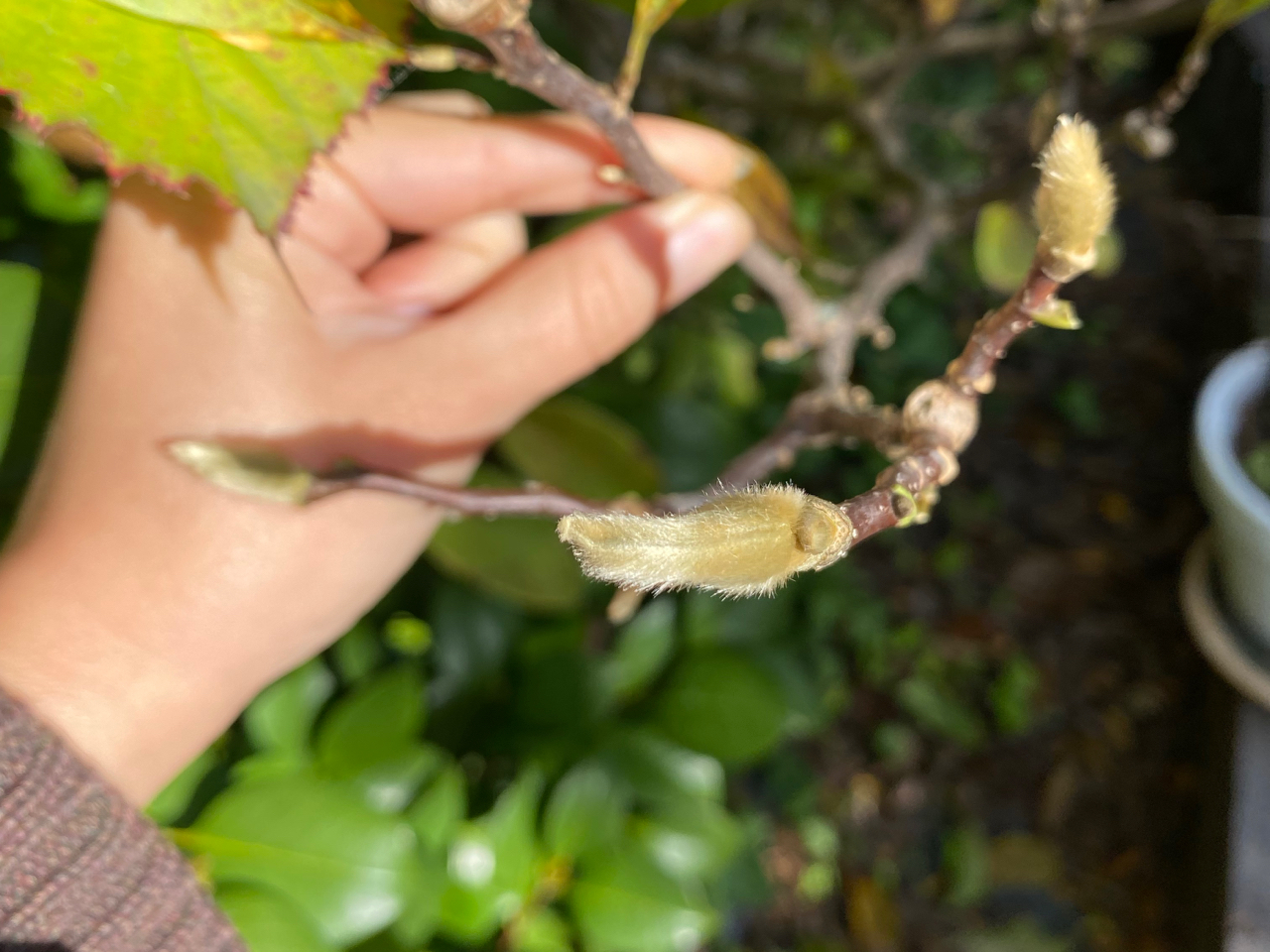 My magnolia lily is already bare in October, but the buds are waiting for the end of winter.
In the United States, one of the most common types of magnolia shrubs is a magnolia liliflora or a cross of Magnolia liliiflora x Magnolia stellata. Unfortunately, because they often grow as shrubs (rather than trees) and because they are deciduous (they lose their leaves in the fall), this type of magnolia usually gets the pruning treatment of fall.
After pruning their magnolias in the fall, some gardeners wonder why the magnolia didn’t bloom in late winter or early spring. The answer is in time.
Like the hardworking plants that they are, magnolias will bloom next year after this year’s blooms fade. So we have to walk a fine line with pruning to get the perfect opportunity. Fortunately, it’s easy to see germs once they form. They look like soft, velvety candle flames at the tips of bare stems.
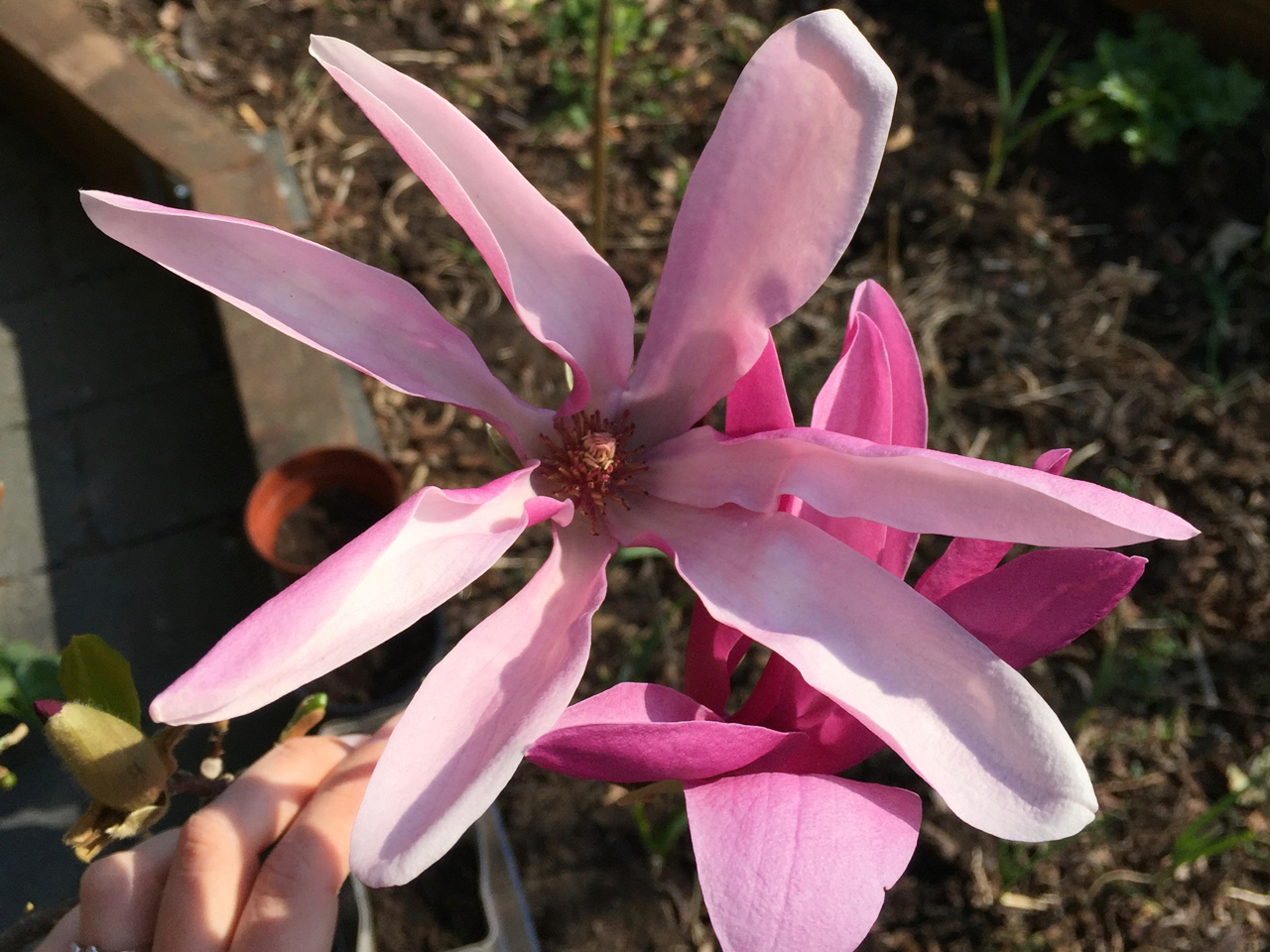 The same bud in full bloom in March.
If you want to give your magnolia lily a treelike structure, cut off a stronger lower branch each year. Don’t cut your magnolia, especially before it has established a strong root structure.
4. Climbing hydrangea
Giving advice on the size of hydrangeas is difficult as there are varieties with different desires. And when people hear of hydrangeas, they jump on the grooming bandwagon without first checking what type of hydrangeas they’re growing.
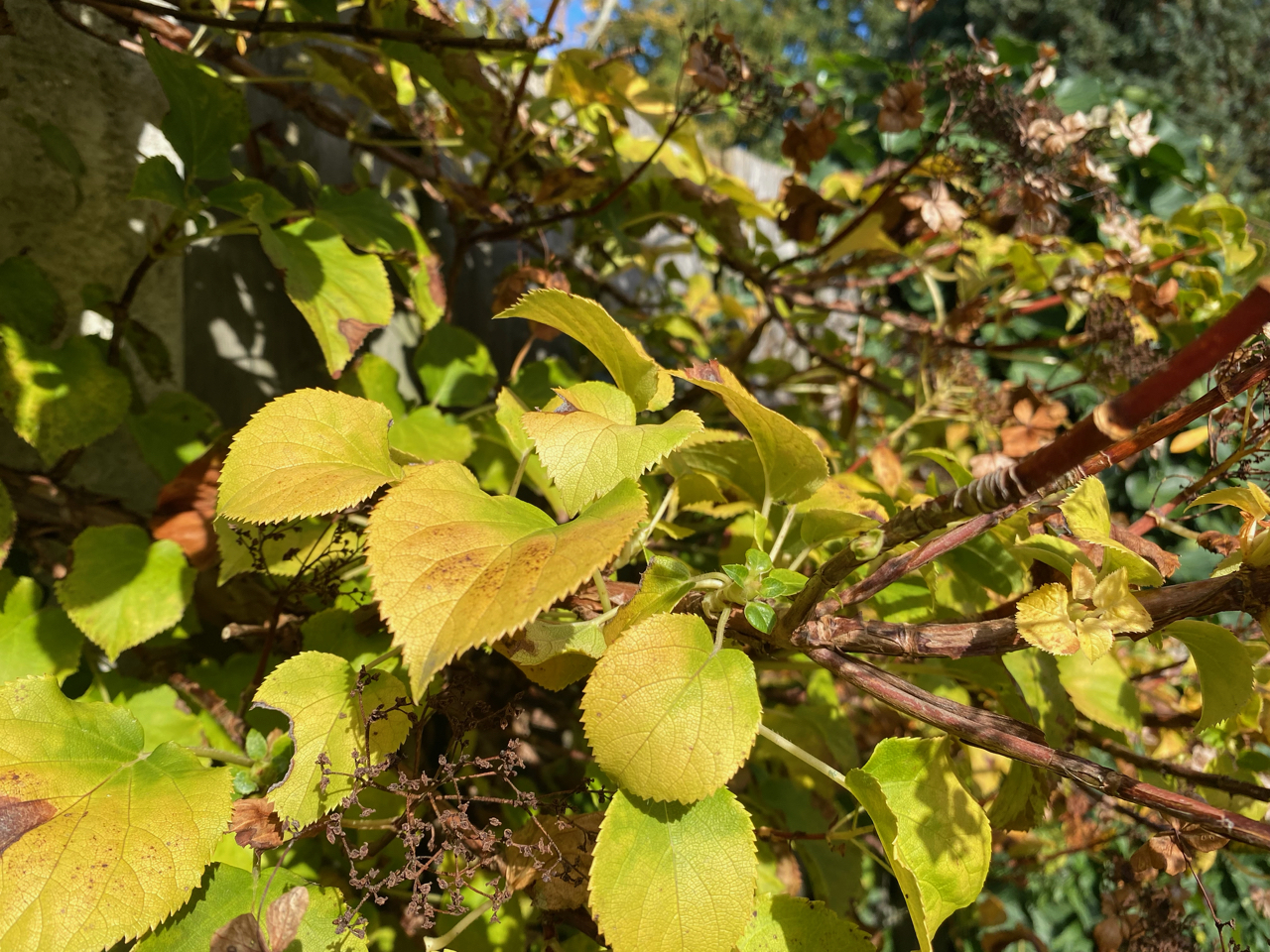 It is not so easy to distinguish all the flower buds of my climbing hydrangea.
So keep in mind that this tip applies to climbing hydrangeas (abnormal hydrangea), mountain hydrangea (Hydrangea saw) and oakleaf hydrangea (Hydrangea quercifolia). All grow on old wood. But unlike all the plants we’ve talked about so far, it’s not so easy to know where the new bloom will come from. The flower buds are very small in the fall and by pruning your hydrangea, you risk eliminating a large part of the bloom the following summer.
As a general rule, these types of hydrangeas should be left alone until they sprout in the spring. Only then can you tell which stems have dried up or died and are ready to be removed.
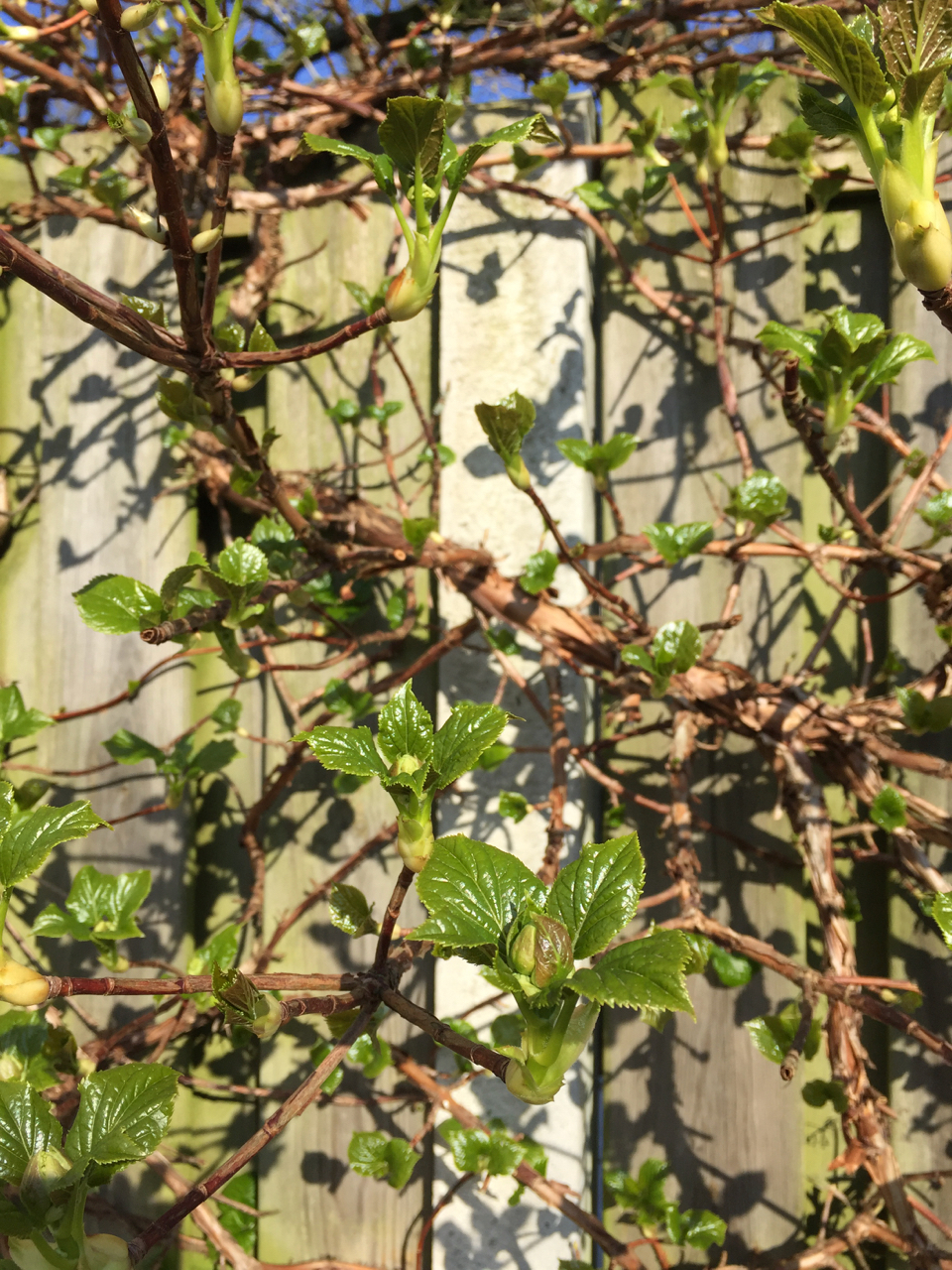 The same climbing hydrangea becomes much easier to “read” in March.
Since I made the mistake of pruning too early (albeit in early spring, not early fall), I can tell you that it’s a bit heartbreaking to cut a branch that looks dry, to find that there is a lot of juice and life in it. Wait a bit to prune these hydrangeas and they’ll reward you with full blooms for up to two months.
5. Lilac (Syringa vulgaris)
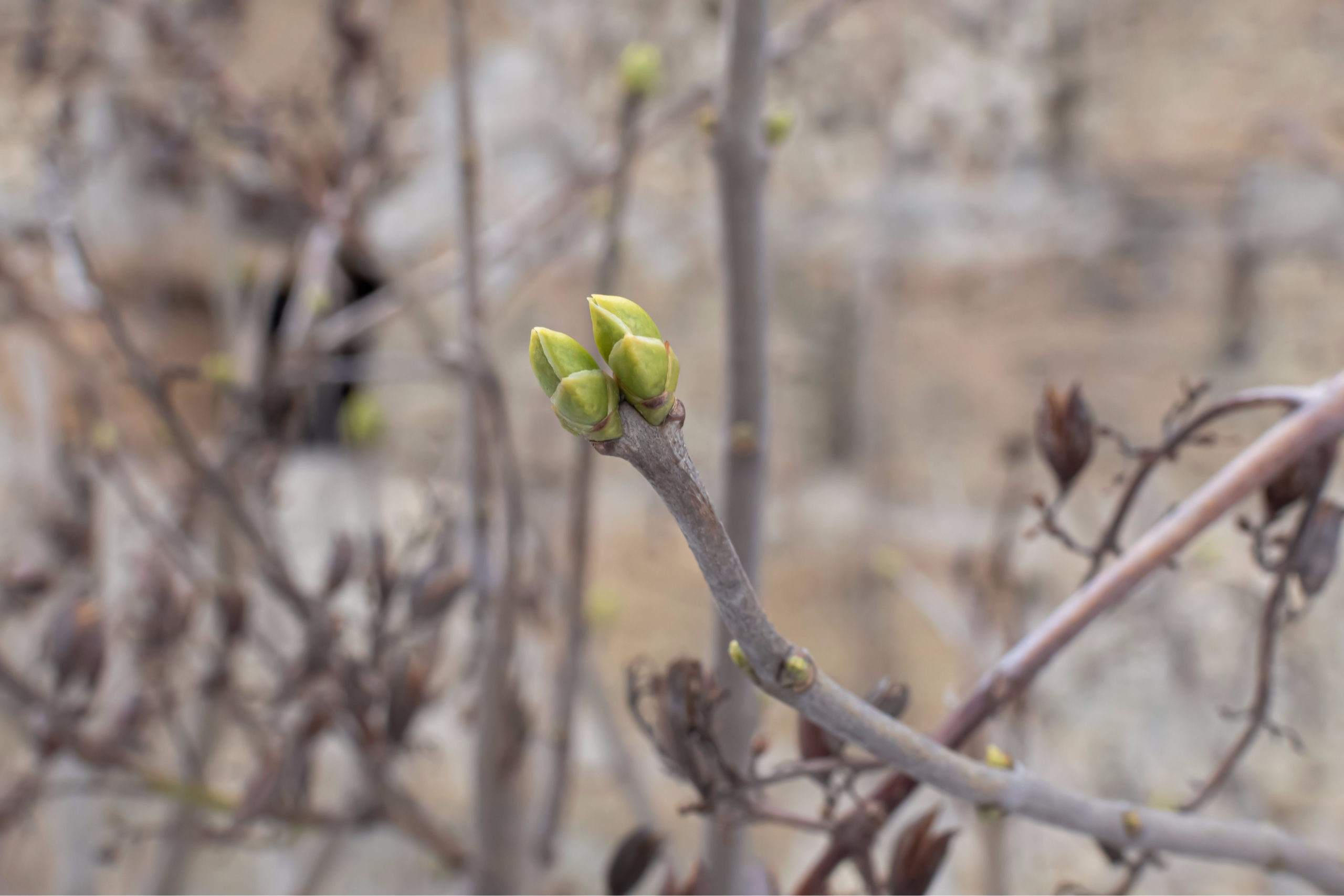 Lilac buds on old wood in spring.
 So far I have talked about no pruning in the fall and pruning lightly in the spring. However, pruning is crucial to keeping lilacs healthy and manageable. Lilac bushes bloom on old wood, so follow a pruning schedule in late spring just after the plant has finished flowering.
Because lilacs grow moderately fast and sometimes have tangled branches, removing the excess promotes good air circulation and keeps growth in check. If you want to turn your shrub into a tree, you can gradually remove the lowest and oldest branches. You can also prune thin branches to get a strong bud and remove old growth along the stem and main branches.
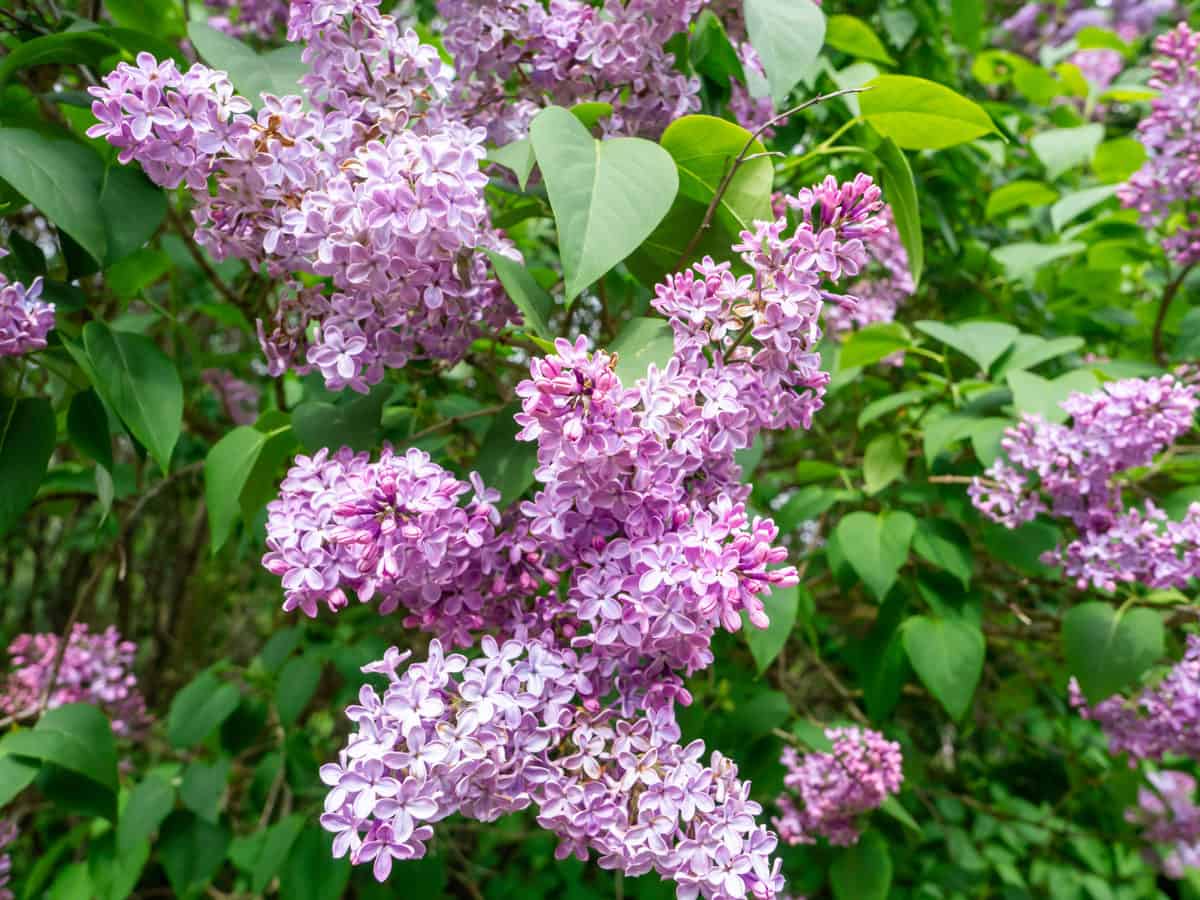 You won’t want to miss this scent.
Although lilacs are hardy, the recommendation to prune no more than a quarter of the bush at a time still stands. Your plant won’t die, but it may take a few years for it to fully bloom again if you prune it too much.
Related reading: How and when to prune lilacs for brilliant blooms every year
6. Forsythia
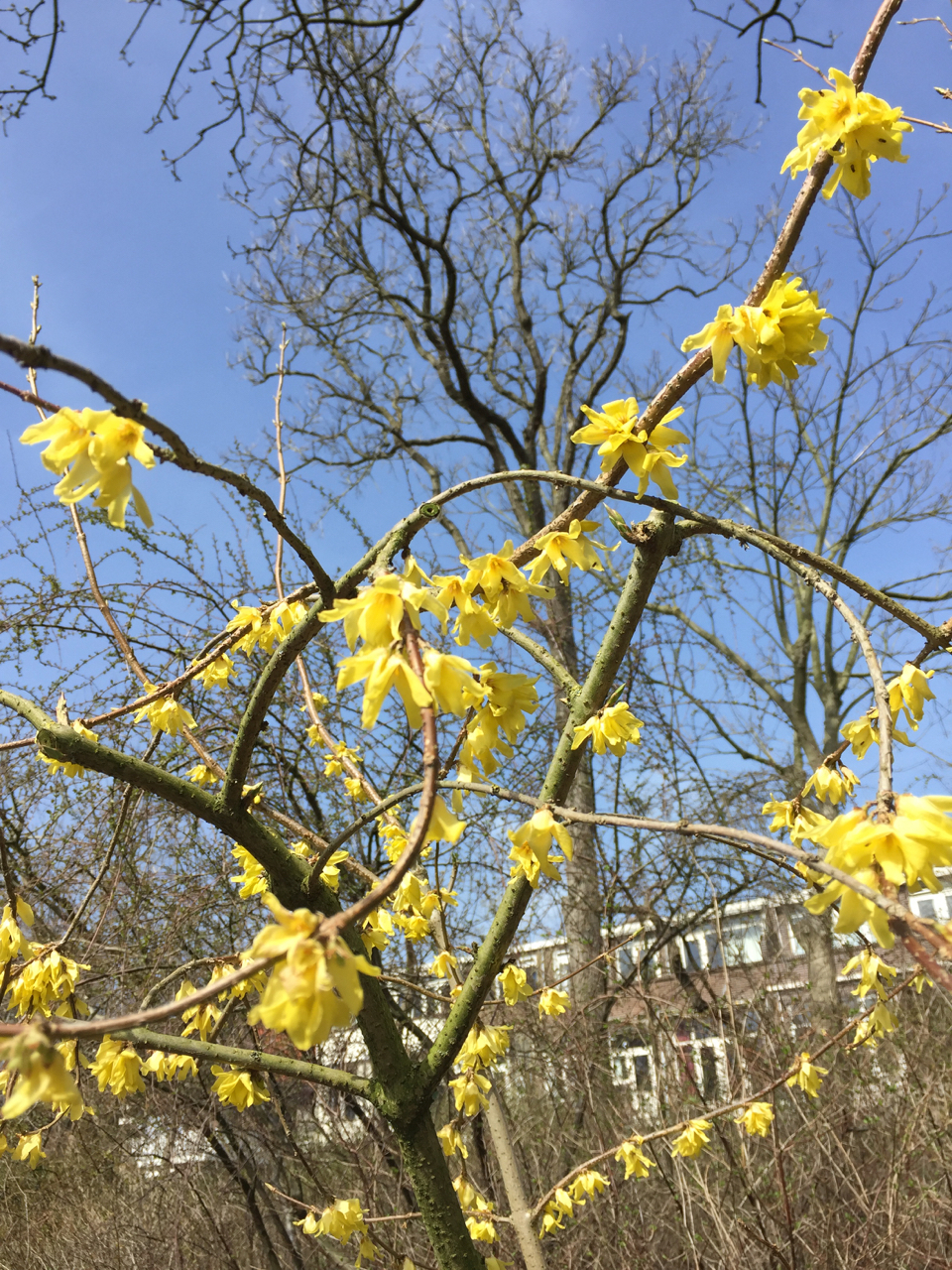 Forsythia buds about to bloom in late winter.
What an absolute delight a flowering forsythia after a long and boring winter! Keep this in mind the next time you plan to prune in the fall. The main reason forsythia can bloom much earlier than other shrubs is because it has been nurturing those buds on old wood for almost a year.
Forsythia grows quickly and can become quite unmanageable if left to its own devices, so don’t skip the pruning part. However, you should only prune forsythia immediately after the flowers have faded. Delaying it too long in the spring will suppress shoots that would have provided a splash of color next year. As with all the other plants on this list, it helps to pay attention to the plant to get the timing right.
7. Snowballs (Viburnum)
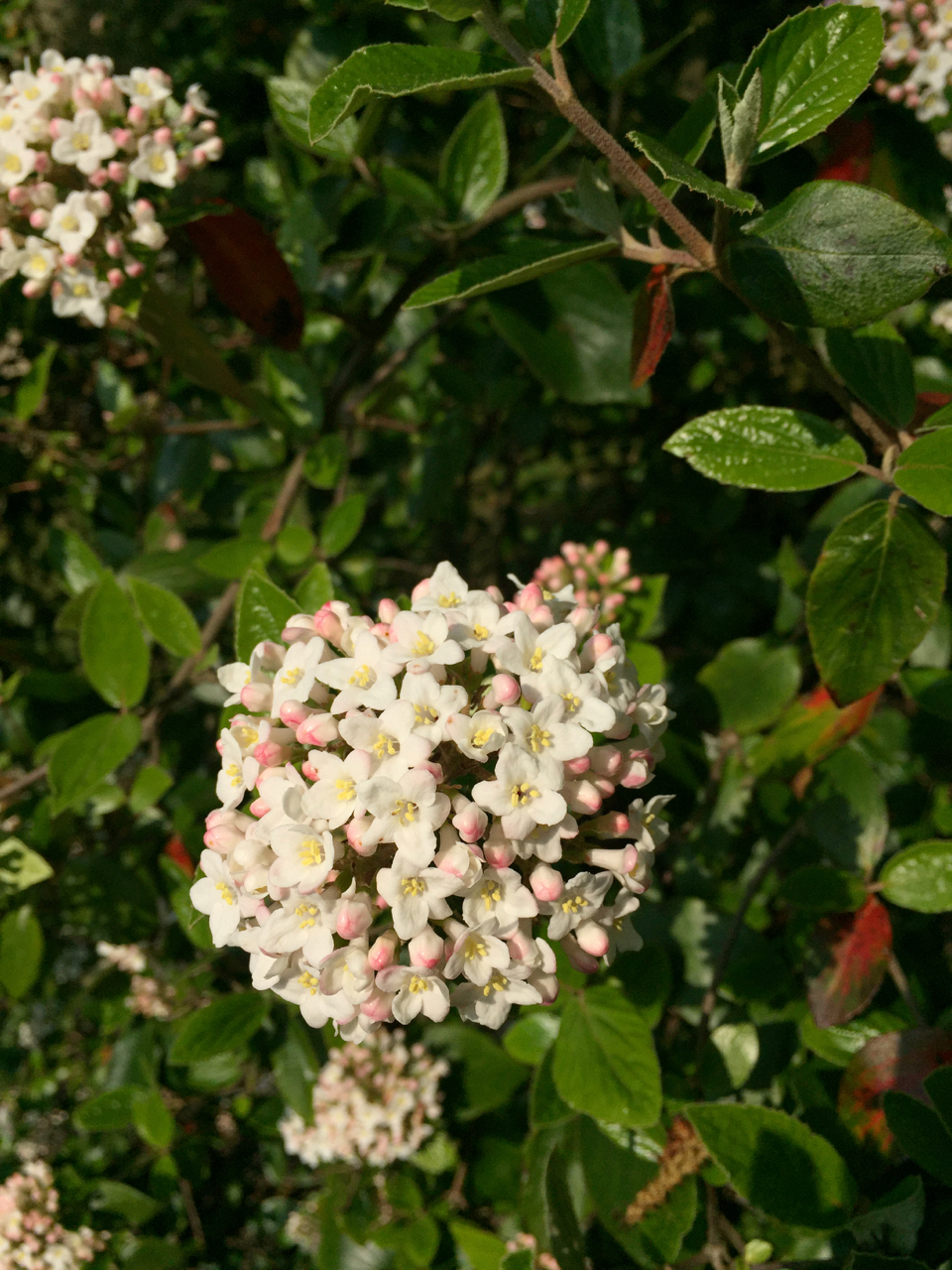 Snowball viburnum opening on last year’s growth.
 Viburnum is such a diverse group of shrubs and has many names. Some gardeners grow them for their huge bouquets of flowers, while others find the colorful berries the main attraction. The nickname “snowballs” is more applicable to viburnum macrocephalya very popular variety which itself has many cultivars in many shapes and sizes, but usually white or vanilla in color.
Viburnum blooms on last year’s growth, so never prune them in the fall. Wait until mid-spring or early summer to prune them. Once the flowers have finished blooming, you have about a month to take action. in this case, therefore, the advice to prune before the 4th of July is useful. Next, cut off a few crossing branches to open up the bush and allow for better air circulation.
8. Ornamental sedge (ex care)
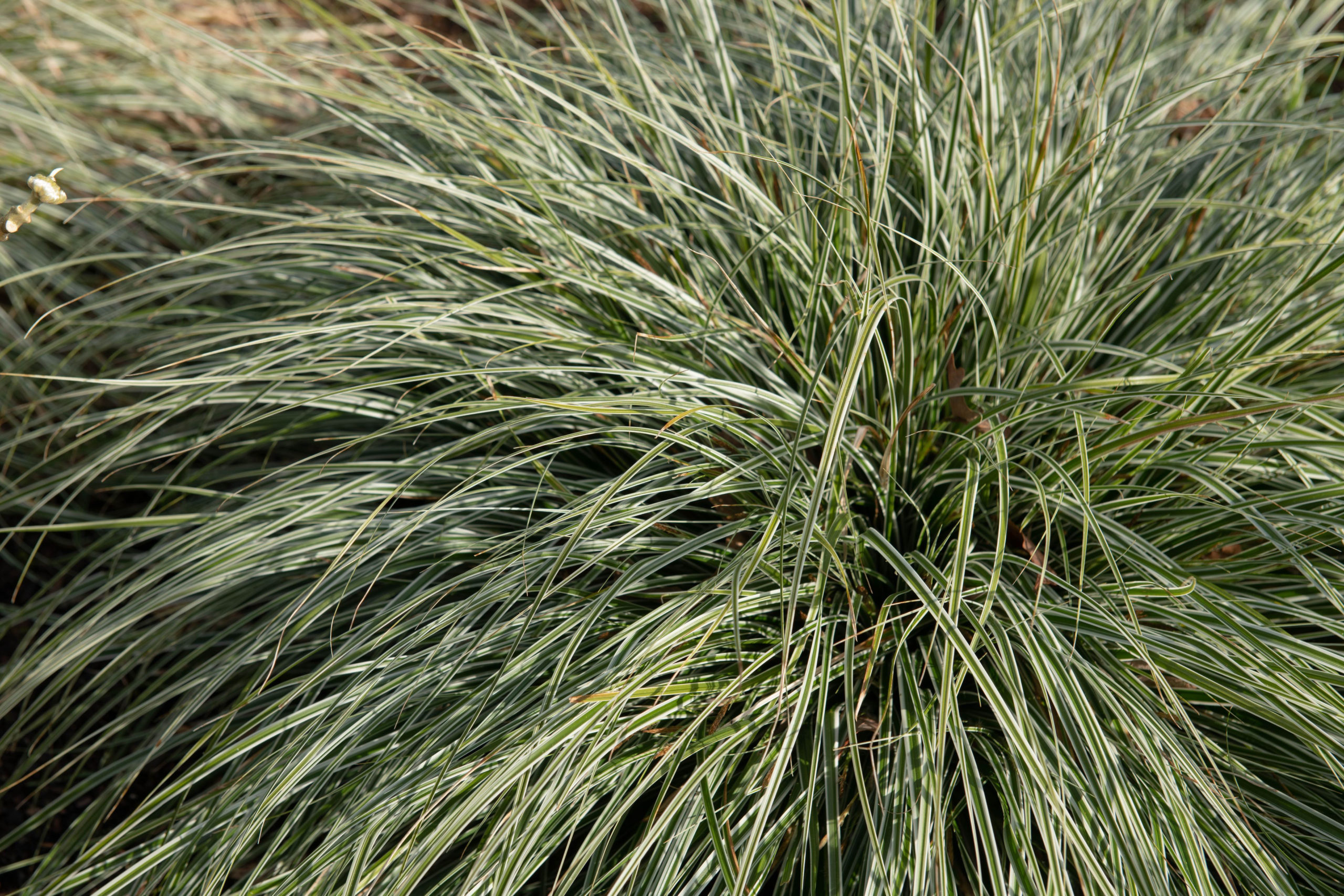 Sedges don’t actually die, so you’ll need to clean them up in the spring.
All of the other plants on this “no fall pruning” list have earned their place by flowering on old wood (last year’s growth). Of course, this is not the case with ornamental grasses. All 2,000 species of sedges are perennials, so they require pruning to remove old plant material and restart their growth.
The reason you shouldn’t prune them in the fall has to do with the structure of the plant. As soon as you open the covers for the winter, the moisture enters the root system and the rot begins afresh. This is not a big problem in the spring, when new growth appears immediately after pruning and there is more sun, which dries out the humidity.
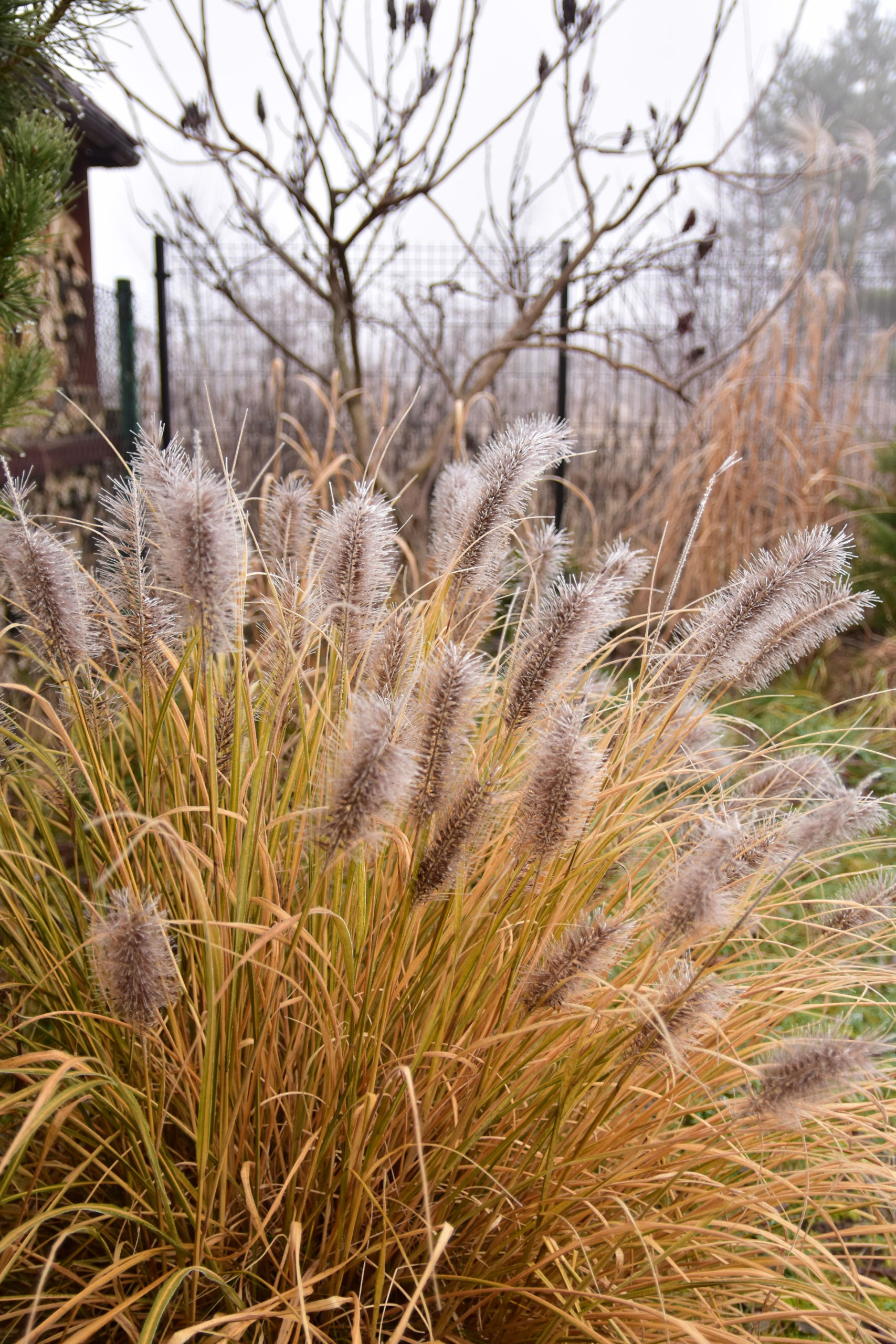
But even in the spring, if you cut these grasses too low, moisture will accumulate around the tops and cause rot. Stick to removing only dead material in the spring.
The easiest way to do this is to run your hand through the sedge (wearing gardening gloves of course) and tug on the blades, but not too hard. This should loosen any dead plant material.
So if you’re overwhelmed with fall pruning chores, now’s the time to pause and ask yourself, “Is it really necessary?” Usually the answer is “no”.
There are perennial plants that what to do need a serious fall haircut – find out what they are in our article below: