
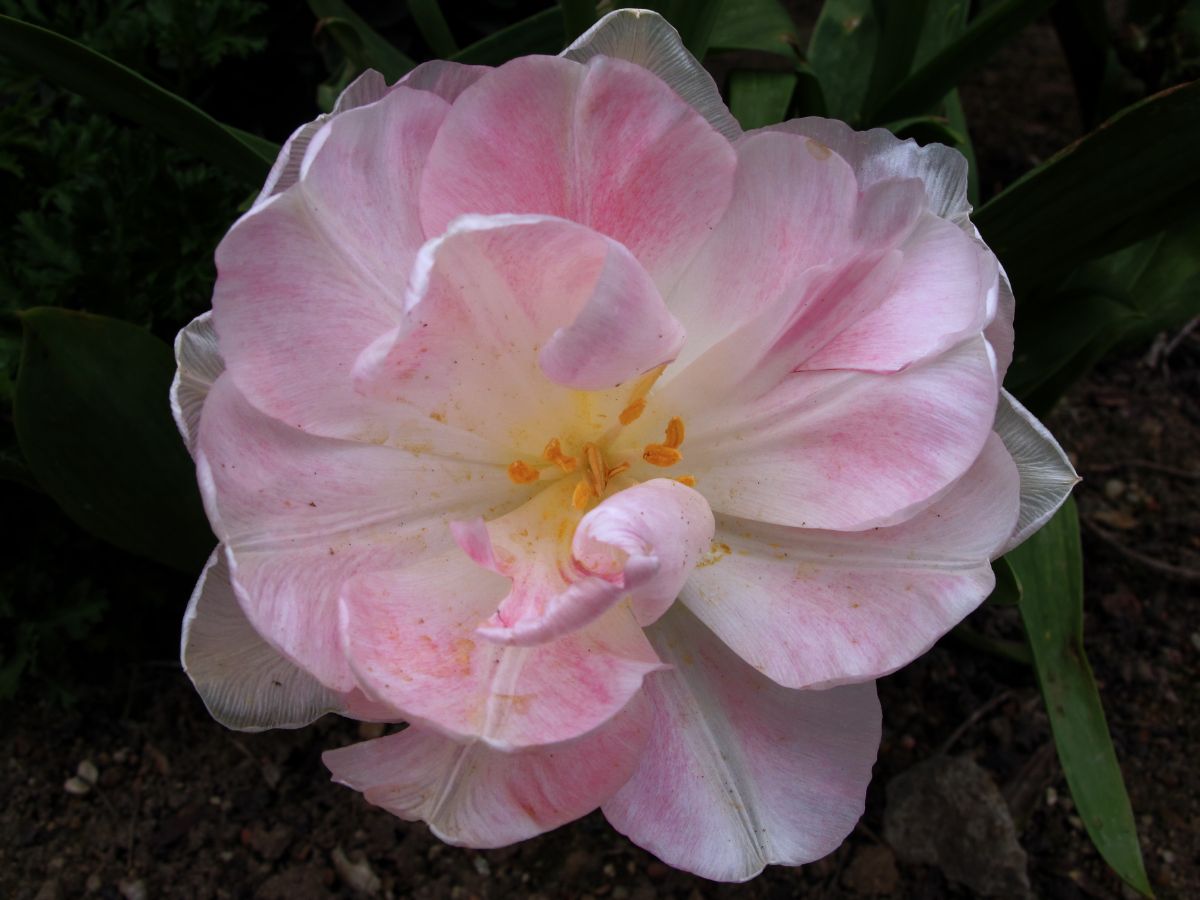
Among the varieties of tulips, some stand out for their beauty. One of them is the Angelica tulip. It is a very striking flower for the garden.
But what do you know about this one? Find out what characteristics the Angelica tulip has and what care it needs to grace your garden for years to come.
How is the Angelica tulip
Source: Pinterest
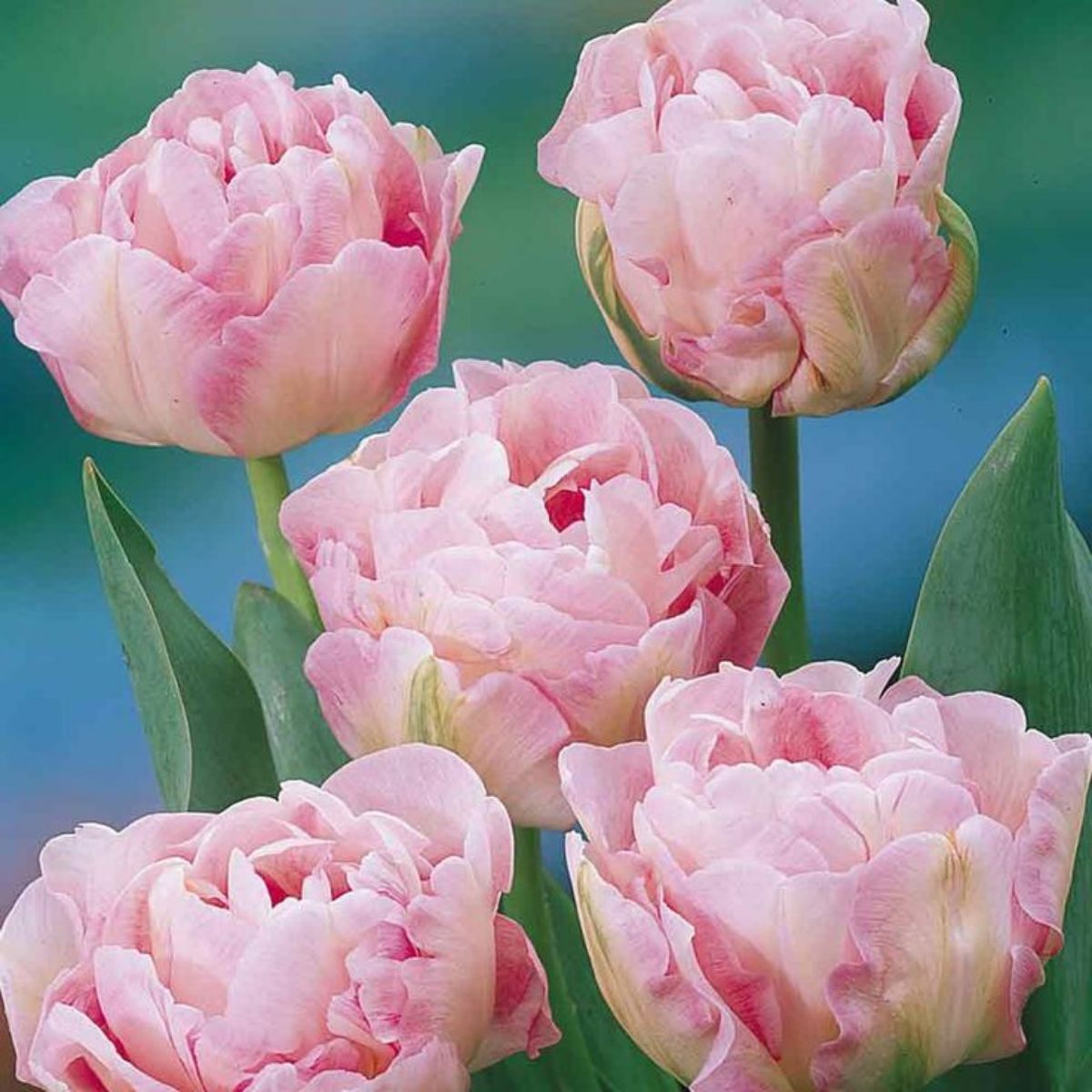
angelica tulip, also called Angelica tulip, it is one of the most beautiful that you can have in the garden. Also one of those that gives a more delicate and innocent look, so it should be used to give a fresh and tender touch to the garden.
And it is that this tulip has double pink flowers that are very delicate. They bloom between April and May, being the month of May when there will be more flowering.
The plant reaches about 45 centimeters high. and its origin is in Europe and Asia.
Tulip Angelic Care

Source: todotulipanes
There isn’t much more information about the Angelica tulip. But we want to give you a practical guide so that you can have it in the garden.
location and temperature
The first thing you need to know about the Angelica tulip is that you can plant it both in the garden and in a pot. Normally it is planted in autumn so that it can spend some time in hibernation. and I can, in the spring, get ahead.
You need to make sure the location is one with plenty of direct sunlight. We are talking about a minimum of 7 hours of direct sunlight. It will also help a lot in getting it to flower properly.
As for the temperatures, the heat has no trouble resisting it. And cold either, as long as it stays above 5°C. If temperatures drop more than this and hold over time, this can cause a problem as it will weaken the plant and it could be harder for it to germinate in the spring or flower.
Substrate
The Angelica tulip needs light soil to prevent it from compacting and damaging the bulb or roots. We recommend using soil with a pH between 6 and 7.
The best substrate you could put is alkaline with coarse sand and topsoil with which the water is well oxygenated.
One of the things you need to keep in mind is that over time, The pH can vary and therefore it is worth checking from time to time that the pH is correct. In case it is more acidic, it is better to apply a little lime.
You can create a mixture with a little universal substrate, earthworm humus, coarse sand and topsoil. In some cases, a little manure is also added to help with fertilization, especially if the soil you are using is rather poor.
Irrigation
In general, tulips are not too demanding on water. And that so much the better. It does not need a lot of water, whether planted in pots or in the garden. It should be watered often to keep the soil moist (you can add a little worm humus to keep the soil moist when watering).
To give you an idea, you should water between 1 and 2 times a week in spring and summer. And when it bloomed, Just keep the soil moist until it dries out on its own. From this moment you will no longer have to water it.
Subscriber
One of the facts you need to keep in mind about the Angelica tulip is that it is intended for one use only. It is it is planted once and when it has finished flowering the bulb is discarded. This is why he is generally not paid during the summer.
Only if the soil looks too bad (which it usually doesn’t because it’s usually planted in the same year) you can use a little compost mixed with the irrigation water (but only in a way sporadic).
Size
Source: Ecebule
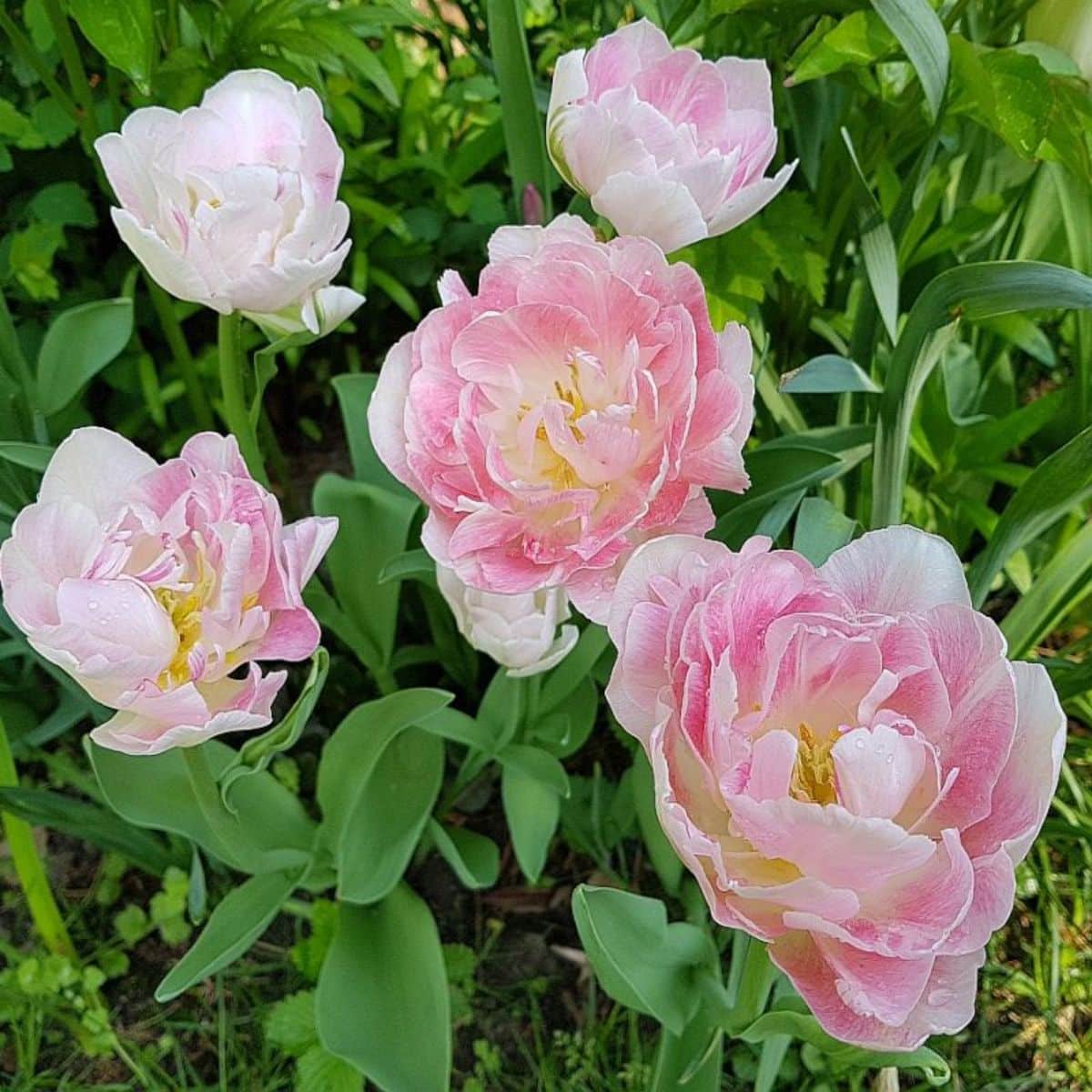
The pruning of the Angelica tulip is based solely on cutting spent flowers, as these tend to consume a lot of nutrients and energy. Therefore, if you cut them, you can get new flowering. From these faded flowers, you can take the seeds and therefore plant the following year.
Once flowering is complete and the leaves are dry, simply cut them off and remove the bulb to discard. However, you can always try planting it the following year. But we do not assure you that it will go ahead.
Plagues and diseases
Among the pests and diseases that the Angelica tulip can have, the most common are wilting (before flowering), lack of watering or brown spots.
For its part, The most common pests are usually snails, slugs and aphids. In this case, to treat it, it is better to prevent the pests from attacking the tulips and, if they are already there, you must use neem oil or similar to clean the leaves and stems.
Multiplication
The propagation of the Angelica tulip, as already mentioned, This can be done by seeds, which you collect from faded flowers. However, this is not the only possibility you have.
Another way to reproduce the Angelica tulip is through the bulb itself. When it develops during the summer It is normal for offspring to appear. When you dig it up after summer, you can take advantage of it and cut off the suckers. Let them dry for a few days so that the wound heals and then plant them in a pot with soil.
It is necessary to protect the bulb from low temperatures (for example, with a thermal mesh so that the earth remains warm). You will need to keep the soil moist and after 2-3 years you will be able to see them flowering.
With these keys you can surely try and buy a plant of this angelic tulip to plant it in your garden or have it in a pot and enjoy the flowers he gives. Do you dare to have it?