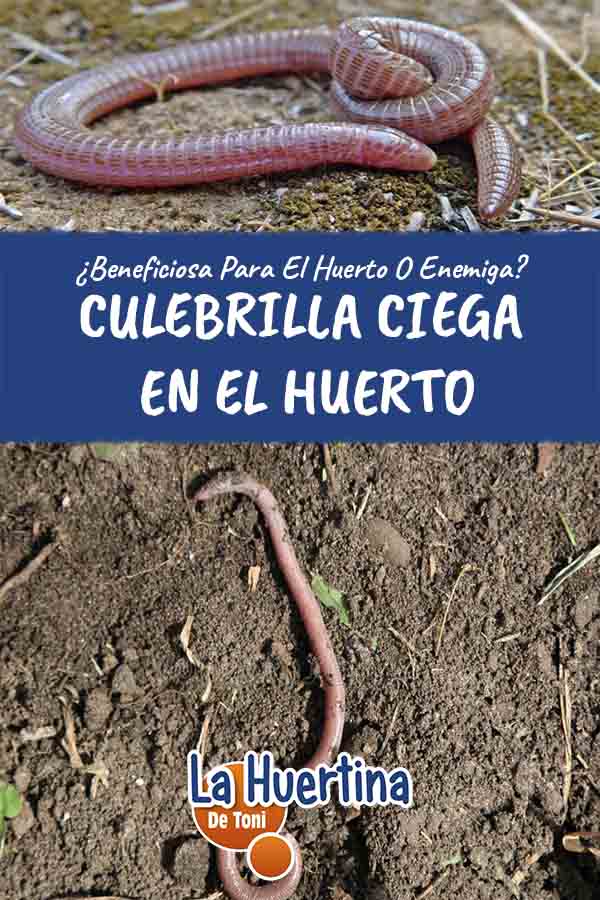
The blind snake or blind snake, sometimes also called blind worm or blind viper, is a species of scaly snake-like reptile that lives in mainland Spain and Portugal, although another species introduced from antiquity has been detected in the Canary Islands in India.


Blind snake: origin and characteristics
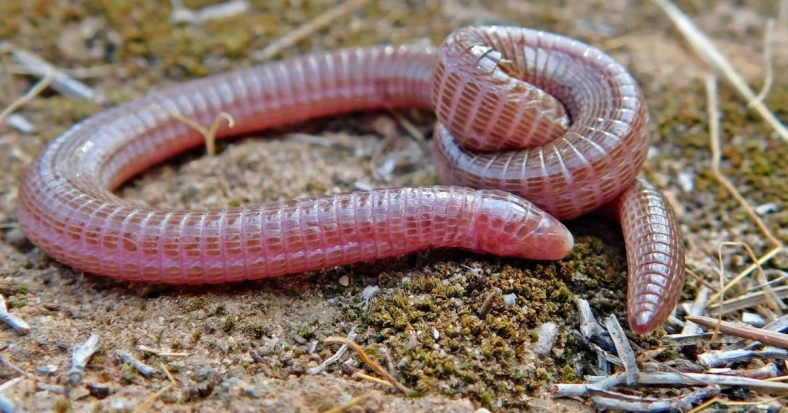
The shingles or blind snake, as its name suggests, is a reptile that cannot see because it lives underground and has adapted perfectly. species Blanus cinereus It is endemic to the Iberian Peninsula, being found in most of the territory except in the north.
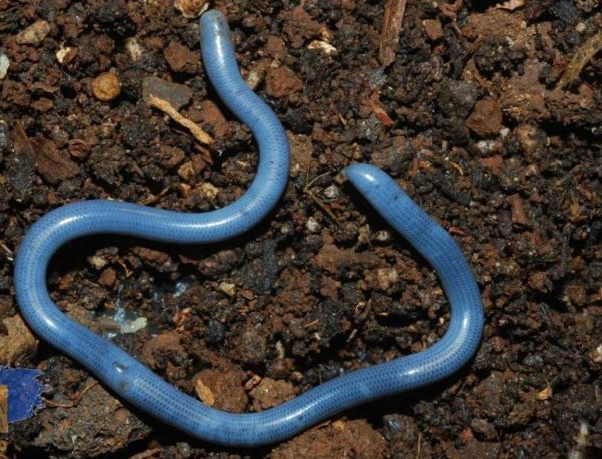
The well-known blind pot shingles is a species that has been introduced worldwide as it is found in potted plants imported from other parts of the world. It is Virgotyphlops braminus and comes from India. It is currently found in the Canary Islands of Spain and has an almost cosmopolitan distribution, as it is also found in the rest of Asia, North America and South America.
Worldwide, there are many species, especially in Africa and South America.
Blind Shingles Habitat
Most of his life, the Blanus cinereus it is underground and it is very rare to see it on the surface. It lives in warm areas, but with high humidity, where it can be found under stones and prefers to live in sandy areas.
As for the Asian species, it is usually found in hotel gardens, apartments or golf courses.
What does the blind snake eat?
The blind snake is an insectivorous predator. It feeds mainly on antsinsect larvae, eggs, beetles, spidersmealybugs, earthworms and even some small reptiles, although the latter is very rarely practiced.
They are harmless because they have no poison. Their prey chases them by biting them and to defend themselves they can try to suffocate their predator.
Reproduction of the blind snake
Male peninsular blind shingles can measure up to 30 cm, and a female reaches 23 cm. It is active in spring and summer, although in warmer places it can be between February and November. They mate in the spring, the female laying between 1 or 2 eggs which they leave on the ground.

As for the species Virgotyphlops braminus cited in the Canary Islands, no males have been found, so it is thought to reproduce parthenogenesis. It can lay eggs without the need for a male, which is why its global distribution is thought to have been so easy.
Shingles Blind Predators
In their natural habitat, shingles can be eaten by many other species such as snakes, birds, wild boars, foxes and scolopendras. The problem is when it is introduced because it has no natural predators.
If you live in an area where there are introduced shingles and you see one, it is best to contact a local animal center so they can advise you on what to do with the captured specimen.
Friend or enemy ?
Many people think that because an animal eats the towards from your garden it is already a bad animal that must be eliminated, but it is not so. In nature there is a balance in ecosystems that consists in the fact that there are predators and prey, being important because the populations remain stable.

Blind shingles is a predator that repels many insectsthey may eat some worms or others, but they won’t eat them all because worms lay eggs with many young ones that will continually repopulate your garden population.
Blind snake: is it poisonous? What are its dangers?
The blind snake is not poisonous, but it can be dangerous. These snakes have poor eyesight, which makes them friendlier to humans, but also more prone to biting. Its teeth can sink into the skin, and since its bite is non-toxic and its mouth is very small, there is nothing to worry about.
What do you think? Did the article help you? Yeah Do you have doubts Where do you want leave a comment you can enter the forum and if it works for you you can still support the channel with a donation or help me spread it by sharing it on social media. If you want to follow me, here are some of the social networks I use Facebook , instagram , pinterest either subscribe to my youtube channel
HERE I LEAVE YOU A POSTER IN CASE YOU WANT TO SAVE IT ON PINTEREST