
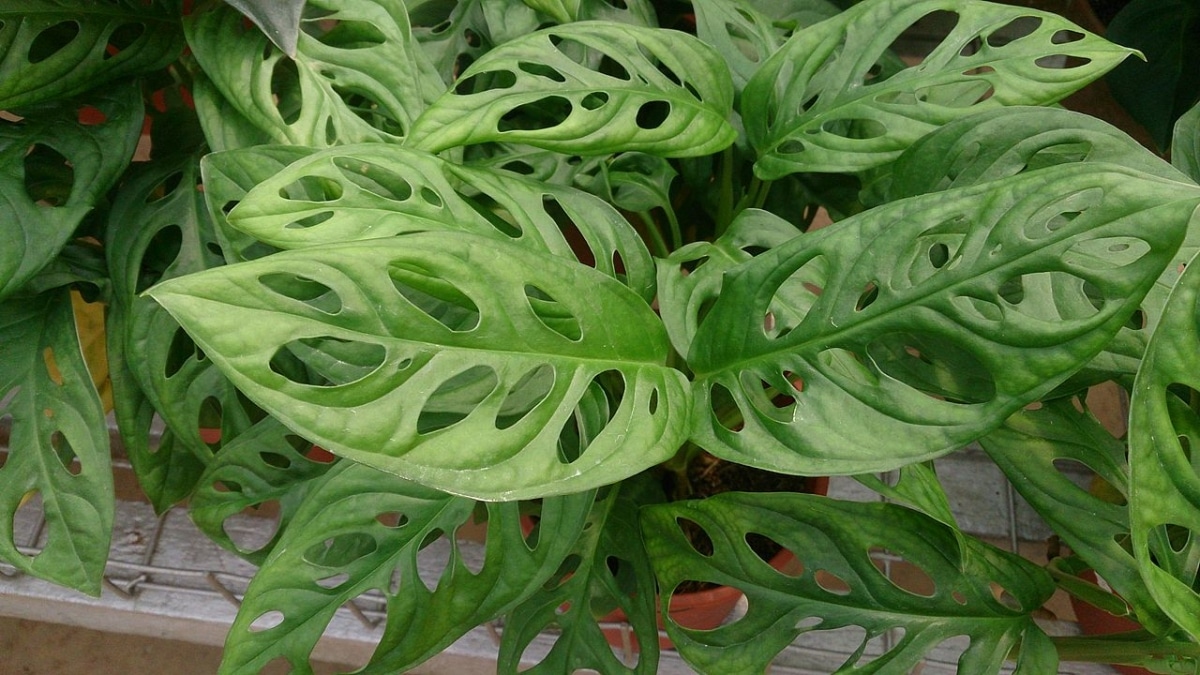
Image – Wikimedia/Mokkie
The oblique monstera it is a tropical plant that can, and in fact should, be kept at home when autumn and/or winter are very cold, because it cannot stand it. But that shouldn’t worry you, because like other species of the genus, it adapts extremely well to living indoors.
Despite its appearance, it is very easy to care for. Also, if you have had or have other monstera, you will see that the care this species needs is virtually identical. But before, tell us what are its characteristics.
How is the oblique monstera?

Image – Flickr/David J. Stang
The oblique monstera It is an epiphytic plant native to Mexico, which it can reach an average height of 2 meters, although it can reach 4 meters. It bears a strong resemblance to the Monstera adansoniibut it is distinguished by thinner sheets (they look like paper), larger and with larger holes, to the point that they are almost completely pierced.
These leaves, as well as the stem, are green.. Indeed, they contain chlorophyll and therefore carry out photosynthesis. On the other hand, it is a species that rarely flowers when it is cultivated, but if it does, it will be seen to be about 4 centimeters high and cream in color.
How do I know if my Monstera is okay?
Before we start talking about care, it is important that we know how to identify a oblique monstera healthy from another who is not. A) Yes, a good one will look green, with stems growing strongly; instead, a sick person will have one or more of these symptoms:
- Yellow leaves, either from lack of irrigation (in which case it would be the most recent leaves), or from excess.
- Yellow spots on some leaves: these are burns. Never place it in front of a window or in direct sunlight.
- Pests: mealybugs, aphids, thrips, etc., on leaves and/or stems.
- sad appearance; that is, with the leaves “fallen” or folded.
What are the care oblique monstera?
If you are one of those who dare to have one at home or abroad, and you want it to last, then we advise you to put our advice into practice:
Where should it be placed?

Image – Wikimedia/David J. Stang
To answer this question, it is important to know the climate of the region. And it is that if for example it is tropical, and there are never frosts, you can have it outside. But if, on the contrary, the temperatures drop below 15°C, then you will have to keep it at home at least during autumn and winter. Of course, another option is to grow her indoors all year round.
Regardless of that, It should be placed in an area where there is plenty of light, but no direct sunlight or sunlight. Also, if you have it inside the house, it will be placed in a room where there are no fans, heaters or any air conditioning unit, otherwise the air currents the would damage, damage the leaves and allow them to dry out.
What size pot do you need?
Much depends on the size of the pot you have before transplanting. Assuming it’s about 4 inches in diameter, the new pot will need to be about 3 inches wider and taller. In this way we will get the oblique monstera It can grow more for about two, three or four years, depending on the climatic conditions and the care we give it.
In addition, it is convenient to choose pots with holes in their base. Never plant it in one that has none, or we will lose it before we know it due to excess moisture in its roots.
When is it transplanted?
Every two or three years you will need to take the pot and see if the roots have started to come out of the holes. If so, you will need to repot it in a larger pot with potting soil like this or a universal potting soil like this. The ideal time to do this is spring..
How do I straighten my monstera?
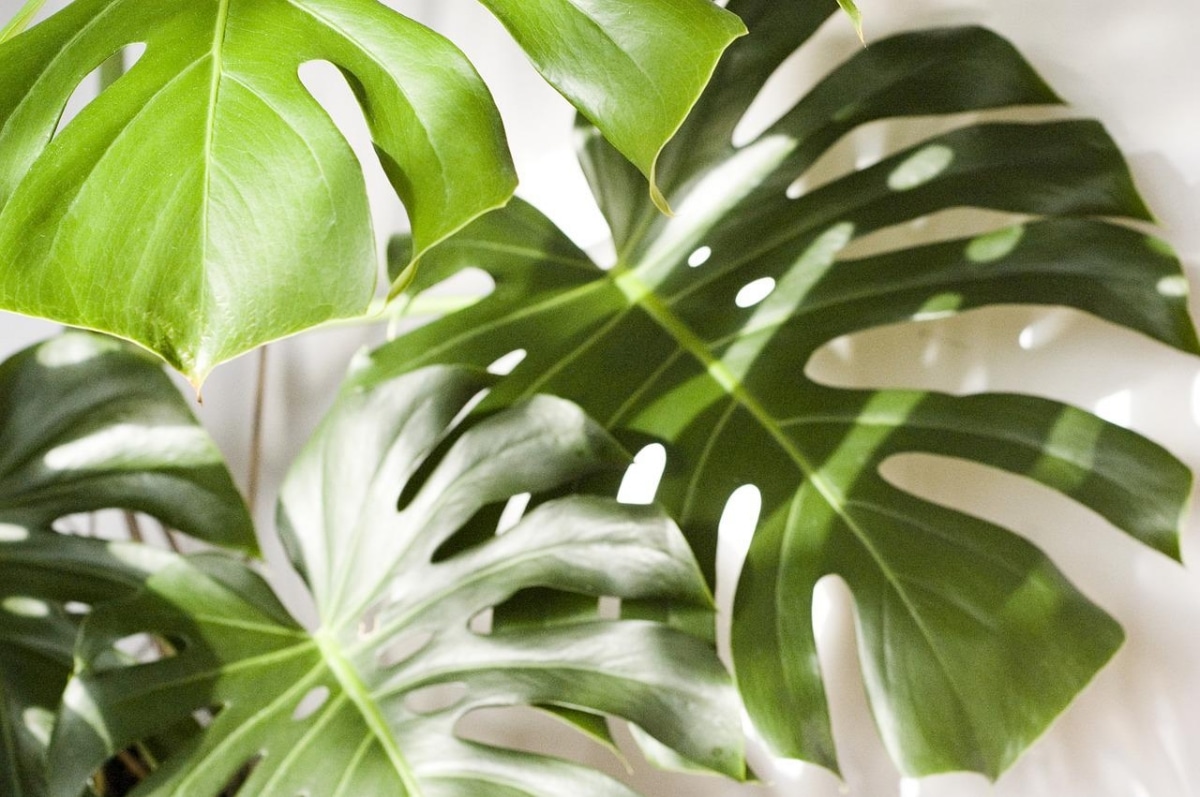
Related article:
When to put a stake on the monstera?
you can have your oblique monstera as a hanging or climbing plant. If you choose the second option, You can put a wooden or thin plastic peg on it and tie it with cable ties, for example. As the stems are much finer than those of the delicious monsteraand the plant in general weighs much less, it is not necessary to put a strong stake in it.
Now you have to pay attention to its placement: it is better to stick it closer to the edge of the pot than next to the main stem, because there is less risk of some roots breaking.
How to avoid having pests?
Although it is resistant, if the environment is very hot, it can have them, such as scale insects. To avoid it, I recommend treating it regularly with diatomaceous earth, or occasionally clean it with beer. In this way, you will surely not have any. In the video, we explain how to do it:
How should it be watered?
And we end up talking about irrigation. Although this is the last point, it is one of the most important, because if it is not watered, or if it is watered too much, the plant will not survive. For this not to happen, what you need to do is check the humidity of the soil by inserting a wooden stick for example; or check the weight of the pot after watering and again after a few days. Since dry soil weighs less than wet soil, this difference in weight can help you know when to water.
The oblique monstera it is a very pretty plant. We hope these tips help you.