
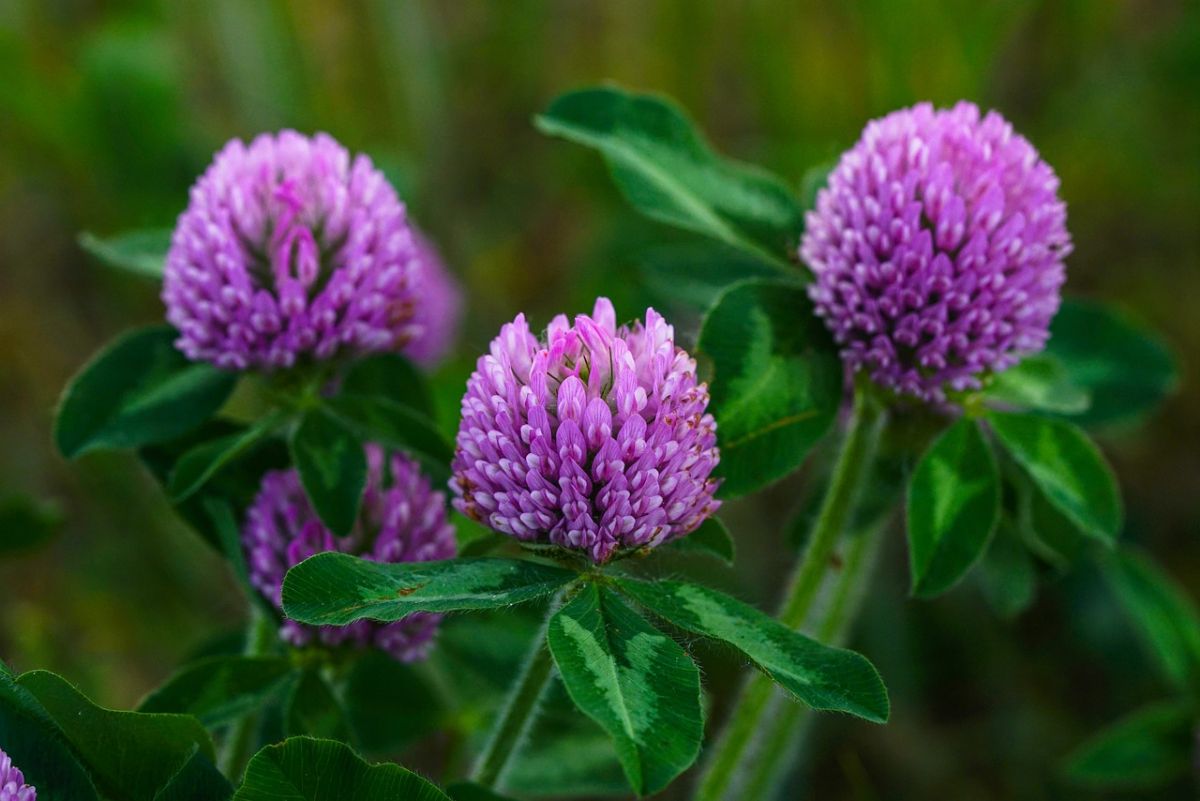
Imagine getting out of bed, opening the blind, looking into your garden and seeing a blanket of colorful purple and violet plants. Do you love purple wildflowers? So why not have some in your garden?
Below we give you a list of hardy flowers that you could use to plant in your garden and enjoy colorful coverage in purple and lilac. What are you waiting for to encourage you to do it?
lavender (Lavandula angustifolia)
If we have a list of purple wildflowers, lavender should definitely be on it. Moreover, it is one of the most appreciated and loved in the garden. Lavender is a perennial plant grown in well-drained, sunny soil. It originates from the Mediterranean and has been used for centuries for its healing and aromatic properties.
As for its flowers, it gives them in summer, always in the form of ears, and of lilac or violet color.
common verbena (verbena officinalis)
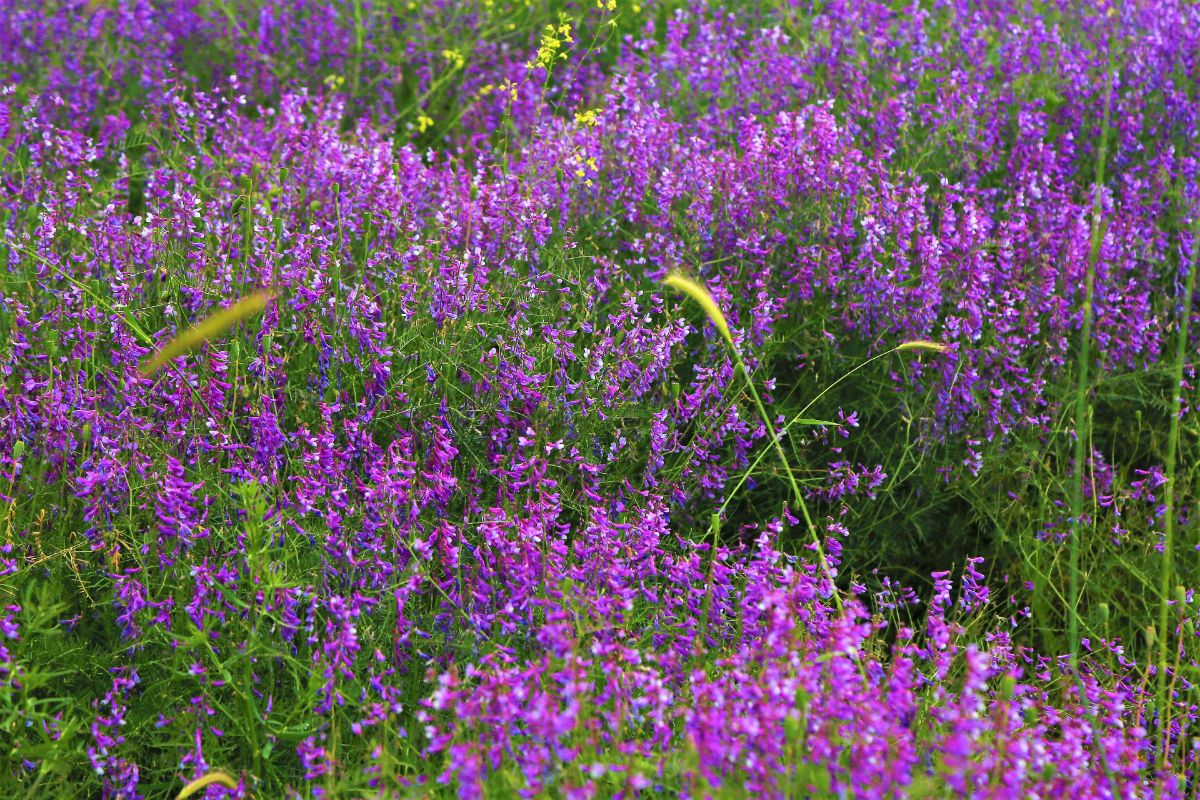
In this case, common verbena is a herbaceous plant commonly found in meadows and roadsides. You may have seen it, even in bloom, and loved it.
Well, you can consider putting it in the garden. It is one of the plants that blooms in summer, with small cluster-shaped light purple flowers.
wise (common sage)
On this occasion we recommend this plant for the violet wild flowers it gives us in summer. Sage is a perennial plant grown in well-drained, sunny soil. It is also native to the Mediterranean region.
One point in favor of sage that may make you opt for it is that when it blooms, if you move it a little with your hand, it will give off a very pleasant aroma. So if you put it in a part of the garden where there is a little breeze, you will surely have this smell all day (and part of the night).
Hyacinth (hyacinth non script)
Be careful, because we are not talking about the hyacinth you usually know, but about the wild one. It is a wild plant that reaches 50 centimeters in height with the flower stalk and gives you many flowers, from 4 to 16. They are not too big and almost fall in the shape of bells. As for the color, they are purple, but duller (almost lilac or purplish-gray). It is a perennial, bulbous plant that flowers from March to May.
knapweed (eritrea centaurium)
We can tell you about centaury that it is a herbaceous plant found in meadows and along roadsides. Its flowering period is in summer and bears small dark purple star-shaped flowers.
Verbacum (Verbascum thapsus)
Of the purple wildflowers we’re going to tell you about, this may be the least purple. Especially since its flowers are yellow.
However, researching a little more about it, you should know that it is a biennial plant commonly found in meadows and roadsides. It blooms in summer and produces large, showy flowers. Yes, it does in yellow, but they also have purple tones, especially in the center of the flower, which contrasts really well. So if you are looking to give a touch that breaks with so much purple, and at the same time combines, this can be an option.
Violet (Viola odorata)
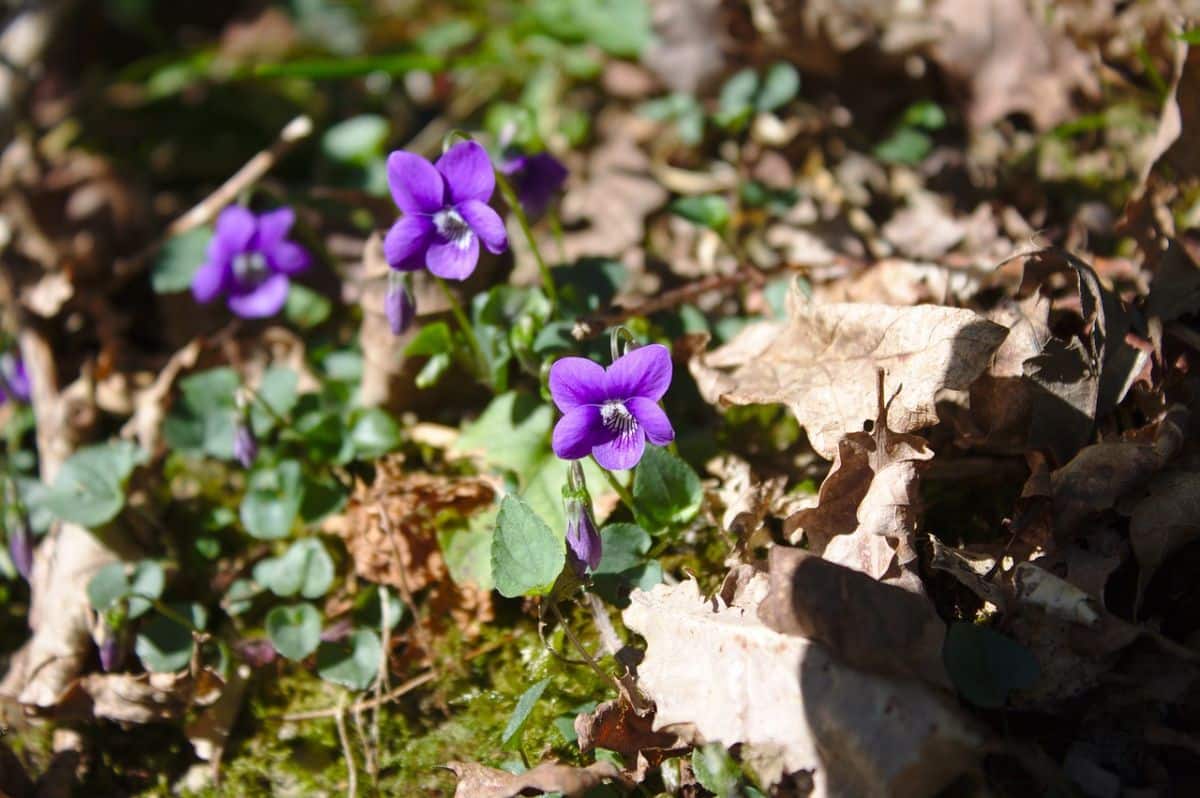
One of the best-known purple wildflowers is the violetera. It is native to Europe and is a common perennial for gardens. As for the flowers, they are very colorful. because you will not only find the color purple, but it also has pink or white. Of course, the shape of them is heart.
Lupine (Lupinus sp.)
Regarding the lupine, you may have found it in the field if you visited it in spring or summer. They are herbaceous plants that have a flower stem higher than their leaves and from which emerge tiny flowers, as if they were peas, which can be purple, but also white, blue or pink.
Once flowering is complete, the seeds are edible. In fact, they are used in some foods and products.
Tinker Bell (Bellflower sp.)
We continue with the purple wild flowers to now tell you about the bell. This wild plant is perennial and is usually found in forests and grasslands.
Its flowers are usually purple, although it also has pink, white or blue. All of them give out in the form of clusters and the flowers are of the bell type.
In addition, it is highly valued for its medicinal properties, especially for treating respiratory and digestive problems.
mauve (Malva sp.)
Mallow, as its name suggests, is another purple flower option to consider. The plant is herbaceous, which makes it very hardy.
Its flowers are cup-shaped in purple, pink, white or blue. In addition, it is used for its medicinal properties, especially concerning the skin or to treat throat problems.
delphinium (consolidates the regalis)
Have you ever heard of the delphinium? It is a herbaceous plant that produces dark purple spur-shaped flowers, grouped in a long, thin inflorescence.
Due to its beauty, it is one of the most chosen to decorate gardens, but it is also widely used in flower arrangements.
St. John’s wort (Geranium robertianum)
In the case of St. Robert’s weed, we are talking about a herbaceous plant with small dark purple or pink flowers.
These have separate petals and are sometimes mixed with white or appear to shimmer like sequins. That is why it is one of the most popular. He usually throws them solitary or in groups of two to five flowers, but not much more.
wild thyme (common thymus)
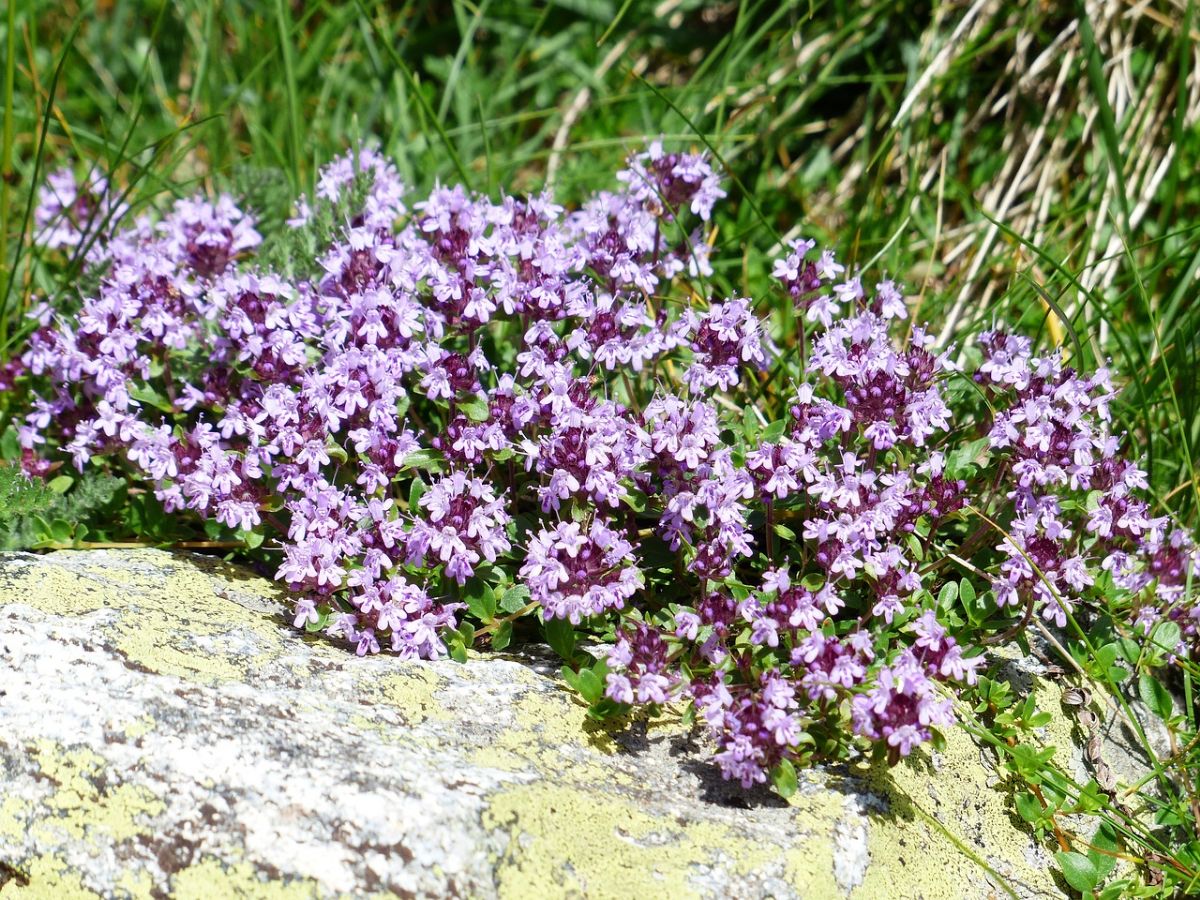
It’s one of our favorite wild plants, not only because of its smell, but also because when it blooms it produces tiny dark purple flowers (they can also be pink).
Its natural habitat is mountainous and dry areas., but you may well have it in the garden. In fact, there are certain varieties of thyme that replace the lawn, leaving a beautiful pink or purple coat in the spring.
Lilac (Syringa vulgaris)
We end up with this purple wild plant. As the name suggests, the flower is lilac, although it can also be found in pink, white or blue. These are shaped like a cob and are quite aromatic, so they would be ideal for a garden.
As you see, there are many purple wildflowers we could name you. In fact, many others have fallen by the wayside, such as Escabiosa, Plantain or Madreselva. Dare you say more purple flowers to plant in the garden?