
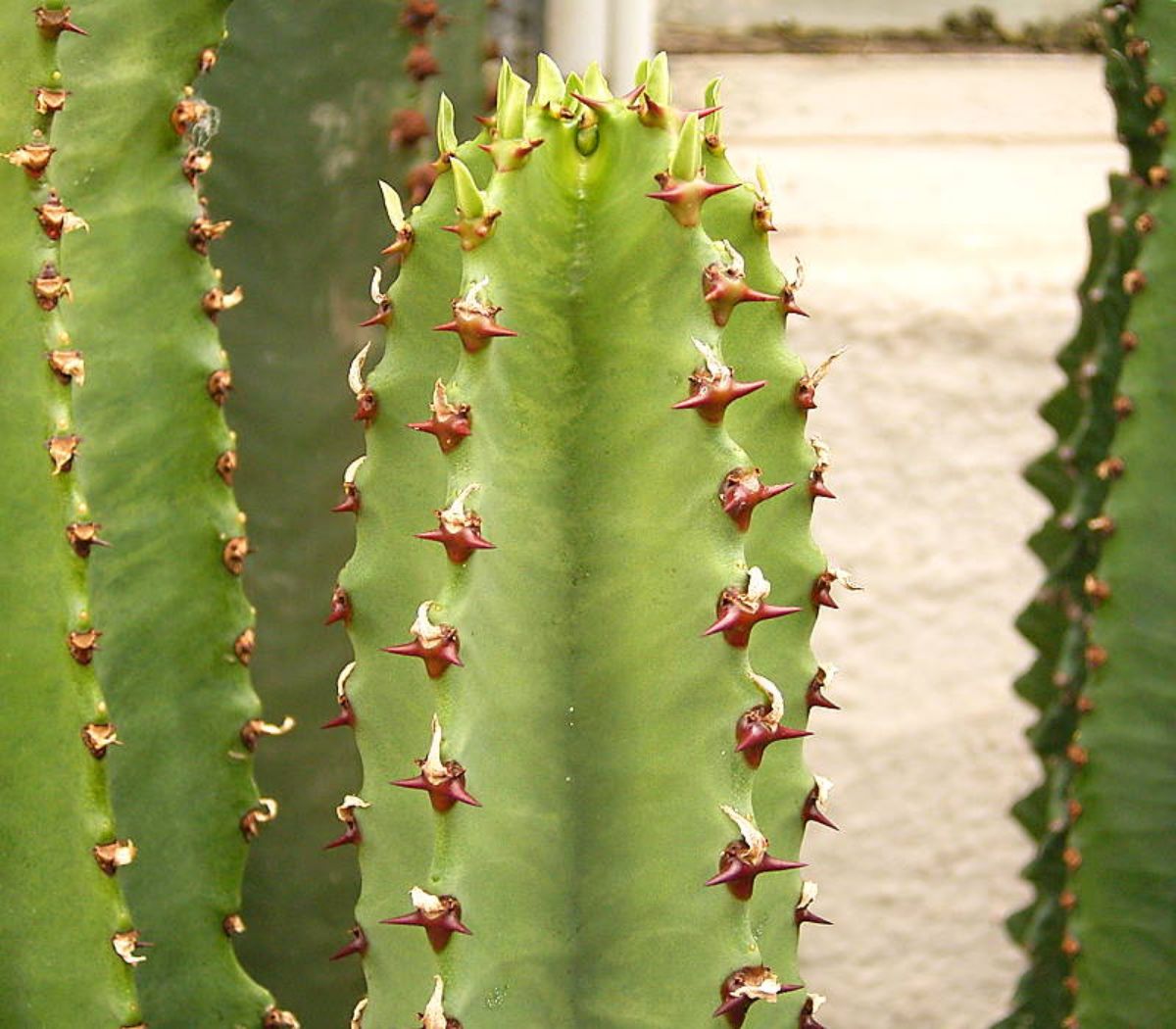
Do you like Euphorbia plants? Do you know any varieties that aren’t too flashy? This is the case of Euphorbia ammak, a little known plant but which can be perfect in a garden of cacti and succulents.
For this reason, on this occasion, we want to tell you about it in depth, so that you know its characteristics and above all what are the main cares to have it in the garden, or in a pot, and that it lasts many years. Go for it?
How is Euphorbia ammak
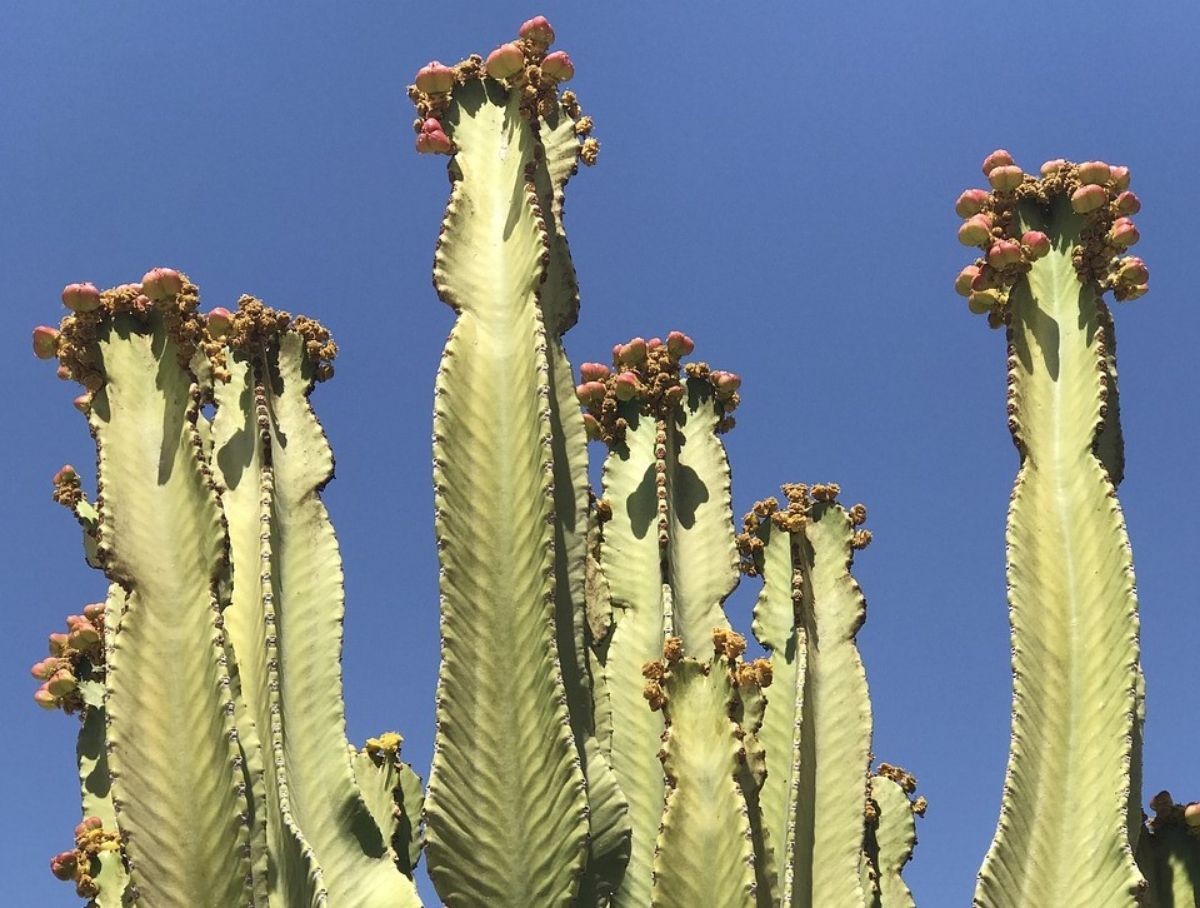
Euphorbia ammak is a succulent, but arboreal. That is, its growth and development will make it look like a tree. It is native to Saudi Arabia and Yemen and was first described by Georg August Schweinfurth in 1899.
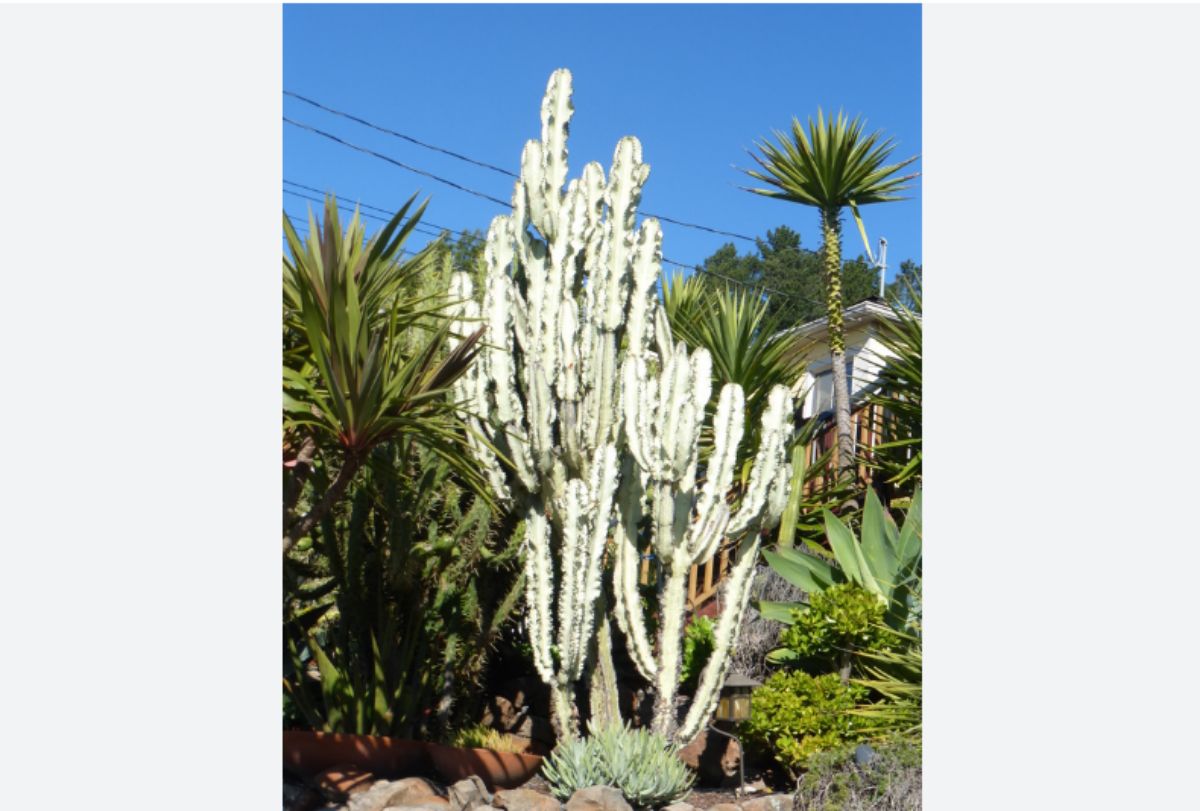
Physically, this plant is very similar to a tree type cactus. That is, it has a trunk from which they will emerge as branches that will continue to grow throughout their lives. In fact, it is also known as the candelabra cactus because it is that size.
These branches are yellowish green in color and quite contrast with the thorns which will be brown.
In its natural habitat, it grows on sloping slopes., because it is accustomed to sloping ground. This is why having it in a pot, or in a garden, can be, in addition to being curious, the best for it to adapt.
ammak spurge care
Source: CalPhotos
Now that you know a little more about Euphorbia ammak, what if we told you about its care? Although it is not easy to find on the market (you have to look well in specialized stores), you will find it and you can have it at home. But, so that it does not deteriorate, what we recommend is the following.
location and temperature
All euphorbias are characterized by the fact that they need as much sun as possible, the better. There are only a few exceptions and in the case of Euphorbia ammak this is not the case. That is, you will have to place it in the place of the house, preferably the garden, where it has more sun, a minimum of 8 hours, but if there is more, it is a lot better.
This already gives you an idea that you will have to exhibit abroad. Now, if you put it in the garden or in a pot, it will be independent. The only thing that will vary is the growth you have (in pot it will reach a maximum of 2 meters; in the garden it can double this height), as well as care in terms of soil and irrigation.
Regarding the temperature, you will have no problem, neither because of the cold, nor because of the heat.. Of course, when the frosts are very frequent and continuous, it can have some problems, especially with humidity.
Substrate
You’re in luck because Euphorbia ammak isn’t very picky about what soil you use with it. As long as you give it well-drained soil, it will withstand anything you throw at it.
In this direction, We recommend a cactus soil mix with extra drainage or a universal substrate. Both go great when mixed with perlite, orchid soil or similar to make it looser.
Irrigation
Although Euphorbia ammak is a succulent plant, the truth is that He doesn’t like spending a lot of time without water.. The problem is, if you go overboard with the watering, it won’t do well either.
Generally, you should water it once a week as it grows. Otherwise, once every 3-4 weeks will suffice. However, this does not mean soaking it with water (this will only rot the roots).
Try to water with little water and always make sure that you have at least the first 5 centimeters of the surface dry.
Now, there is another factor to consider: humidity. During the growth period there will be no problem, but during other seasons it needs sufficient humidity because it can be fed through it.
Subscriber
In general, Euphorbia ammak is not a plant that needs fertilizer to thrive. But if you want to throw it away, you’ll have to wait until you notice the leaves at the base of the plant starting to change, as if it’s starved of nutrients. You will notice this if they start to turn yellow.
Use a liquid fertilizer mixed with water and apply it only once a year (twice if the plant is weak).
Size
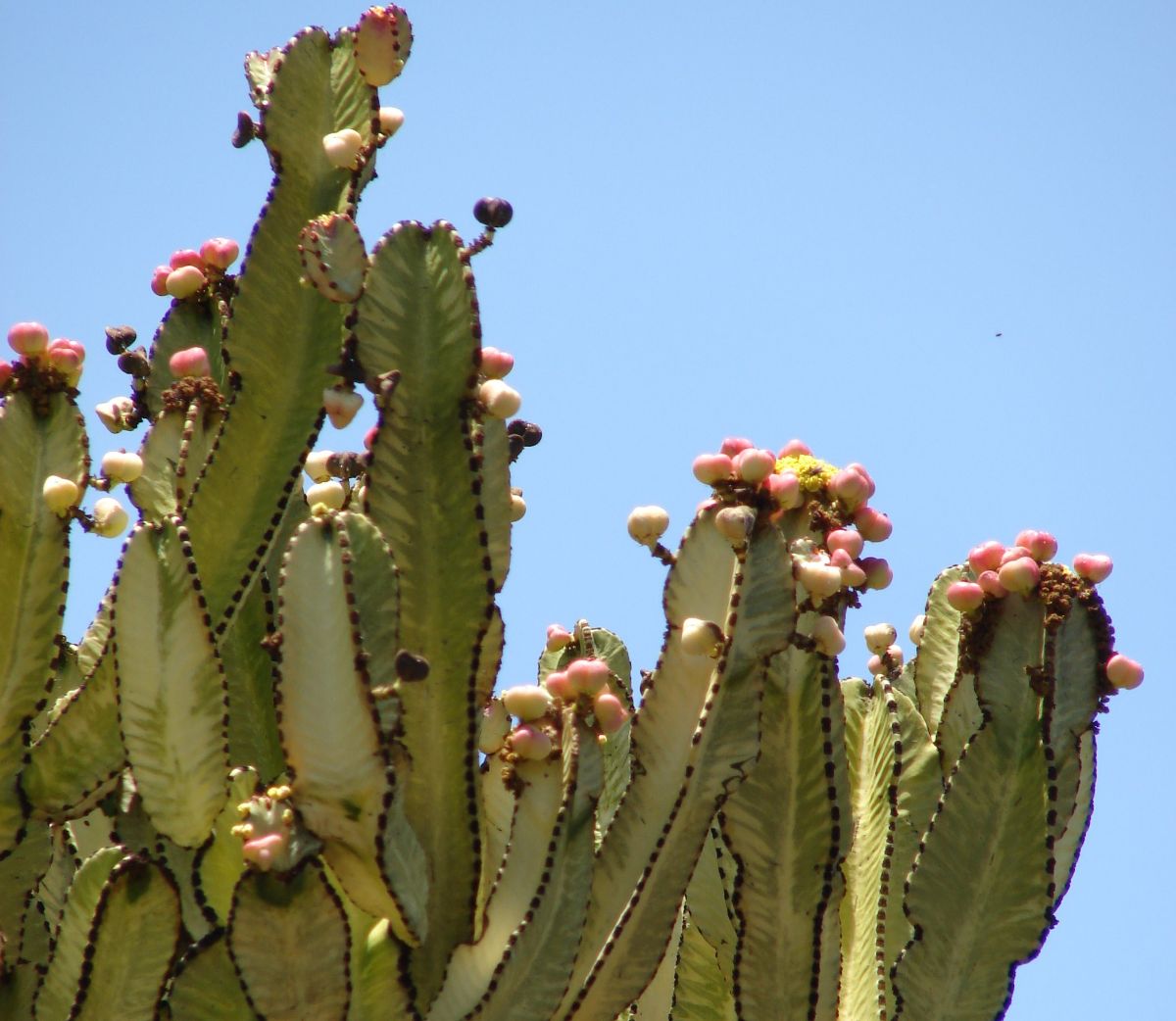
Unlike other succulents, Euphorbia ammak requires pruning, especially if after winter you notice that it has damaged stems. The plant will try to replace them and this will result in lost energy expenditure which can damage the plant and worsen its health.
That is why it is better to cut them. and also you will have to cut a few stems at the time of flowering to prevent it from weakening and at the same time stimulate good flowering and the appearance of new foliage.
This, yes, You must have gloves and gogglesnot only because of the thorns, but because when cut, a milky white substance will come out of the stem, the latex sap, which is quite toxic and irritating.
Multiplication
The propagation of Euphorbia ammak can be done in several different ways. On one side you have the seeds. It is unusual and actually quite difficult to germinate; that’s why experts don’t recommend this method unless you have experience with it.
On the other hand, we have the cuttings, and here you will have much more success. For this, and always equipped with gloves and protective glasses, you will have to cut them (from the size) and let them dry between 2 and 3 days. Then you need to plant them in moss or similar (This is important because on land they would not directly have a chance of surviving).
While in the moss they will develop the root. This, yes, be sure to mist it often so they are always moist. Even with a bag you can create a greenhouse effect; but at least two hours a day you will need to let it air out.
Once they have roots and you see them starting to grow, you can transplant them into a pot.
Do you have any questions about Euphorbia ammak?