The group of arachnids is very broad, not only spiders are included but also mites, reapers, solifugids and scorpions, among others. They are nocturnal hunters who hunt their prey like insects and small invertebrates. They are animals feared for their sting but not all of them are dangerous for humans.
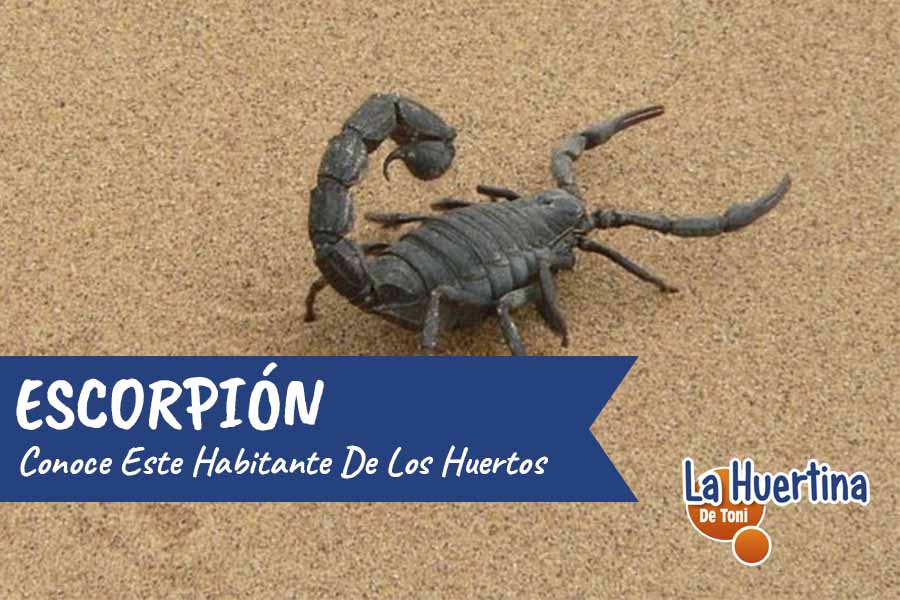

There are approximately 2,000 species of scorpions in the world, of which only around 40 pose a risk to humans.
Meet the Scorpio
They are hunting arachnids commonly called scorpions or scorpions, they have 2 frontal claws to seize their prey and a sting that they use to inject venom and thus paralyze their victims or to defend themselves. The size of scorpions varies greatly depending on the species, from 8 mm to 23 cm. They are nocturnal or crepuscular creatures and remain during the day hidden in crevices, under rocks, in the bark of trees or in burrows. They are fascinating creatures, as some species can withstand temperatures of -30°C to 50°C in deserts.
What do scorpions feed on?
Scorpions feed on various insects such as crickets, grasshoppers, beetles and their larvae, caterpillars, terrestrial crustaceans such as scale insects, other arachnids such as spiders and even some small vertebrates such as mice, baby snakes and reptiles. They can also eat snails and slugs.
Regarding the mode of hunting, some scorpions will wander all night in search of their prey while others lay ambushes while waiting for an insect to enter their burrow. Scorpions have systems for perceiving their prey, noticing their presence if they are close. Smaller animals are killed with claws, while larger ones are grabbed with claws and paralyzed with a sting attack that can reach a speed of 1 meter/second. Scorpions resemble spiders in their way of eating, since they secrete gastric juices on their prey and then digest them in liquid form, as if it were a refreshing drink.
If the environmental conditions are unfavorable, they can go up to a year without eating food, hiding underground.
scorpion life cycle
Most scorpions reproduce sexually, although some species can reproduce parthenogenesis, such as aphids, giving birth to their young without the need for a male. At the time of mating, the female emits pheromones which are picked up by the male who approaches in search of her. Once he locates the female, the courtship dance begins and he begins to swing on himself, grabs the female by the claws and the two swing simultaneously. After spending some time in courtship, the male deposits a packet of sperm on the ground and directs the female towards them to impregnate her. Scorpions are viviparous, which means that they do not lay eggs but give birth directly.
They can be born from 3 or 4 to a hundred new scorpions and the gestation period also varies according to the species, and can be up to a year. During the first days of life they will stay on their mother, because they still have a very fragile skin. They can thus be from 5 to 30 days depending on the species. When the time comes to become independent, they molt and the young individual would be a replica of the adult.

Worldwide distribution of scorpions
They are distributed on all continents except Antarctica, being in Africa and Australia where the most dangerous species are found because their bite is fatal.
Several species are found in the Iberian Peninsula:
- Belisaire Chambeui: It lives in humid forests, it is found in Catalonia.
- Euscorpius flavicaudis: It is present throughout the Iberian Peninsula and the Balearic Islands, they like wetlands associated with man, such as basements. Its sting resembles that of a bee.
- Euscorpius balearicus: Endemic to the Balearic Islands, it is found in humid forest areas.
- Buthus occitanus: It is found in the arid areas of the Iberian Peninsula. Its bite can cause vomiting, dizziness, fever and diarrhea. It is the only species capable of killing young children and the elderly.
- Isometrius maculatus: Species introduced from Asia found in Huelva.
- Gracile centruroids: Species introduced on the island of Tenerife. Sting painful but not fatal.
In Mexico there are several poisonous species located in the regions adjacent to the Pacific Ocean, among which several species of the genus stand out. Centruroids.
In Argentina, the most poisonous species is Tityus trivittatusbecause it is associated with urban environments and has more contact with humans.
In Colombia there are 3 species, Centruroides edwardsii, Tityus antioquensis Yes Tityus führmanni.
These are some examples of scorpions to be careful with, it is better to be informed of the species present in your country and to know how to act in the event of a bite.

Toxicity of scorpion stings
As we have already discussed in the previous sections, not all scorpions are dangerous for humans, since their sting is not fatal, but they can cause certain symptoms, and it is better to always go to a center doctor or call 911.
Some of the most common symptoms after a bite are fever, pain, swelling, vomiting, diarrhea and, in the most severe cases, they can affect breathing and produce tachycardia.
In case of a sting, you need to put on ice and go to the medical center, if possible, take the scorpion in a jar. If it’s urgent, call your country’s emergency phone number.
How to prevent the bite?
Scorpions should not be handled if you are unfamiliar with them and you should always wear closed shoes at dusk and at night as most stings are on the feet. They are necessary animals as they feed on many pests such as cockroaches and in many places they are protected by law. If you find them it is better to leave them alone and if they are at home, shovel and brush and we will release them outside.
If in your country there are scorpions that can sneak into your house, it is better to follow these daily tips:
- Put a guardrail over the door so they can’t get under it.
- Shake out clothes, towels, shoes that have been in prolonged contact with the floor.
- Use screens on the windows.
- Do not accumulate garbage or scraps at home.
- You can call a professional and treat your home if you have elderly people or small children.
What do you think ? Was this article helpful to you? Yes Do you have doubts Where do you want leave a comment you can enter the forum and if it works for you you can still support the channel with a donation or help me spread it by sharing it on social media. If you want to follow me, here are some of the social networks I use Facebook , instagram , pinterest That is subscribe to my youtube channel
HERE I LEAVE YOU A POSTER IN CASE YOU WANT TO SAVE IT ON PINTEREST
