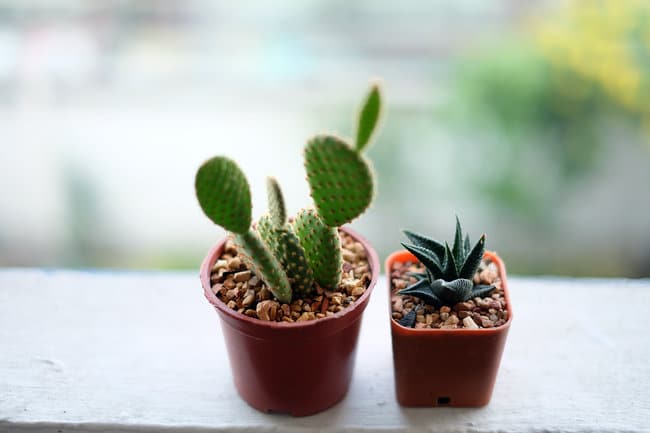
Known for their ability to store water to survive dry conditions, succulents are often associated with intensely sunny desert environments. However, it is a mistake to assume that all succulents need to be in strong sunlight all day.
While succulents generally need a lot of sun, many plants can’t handle too much sun as it can cause sunburn. And there are several types of slow-growing succulents that actually prefer low-light conditions.
Fortunately, for those who appreciate the quirky looks and fascinating textures of this unique group of plants, succulents tend to enjoy the consistently hot, dry conditions typical of indoor environments. And they don’t need a lot of food, water, or cuddles, so getting the right amount of light is often the biggest challenge.
With species belonging to over 40 different plant families, succulents are quite a diverse group. So, to answer the question “How much light do succulents need?” it helps to group them according to your lighting needs.
As you will no doubt notice, many of the succulents and families listed here are included in more than one light group. This reflects the adaptability of these tenacious survivors, which can adapt to different growing conditions complicated by factors such as temperature and humidity.
Sections on the lighting needs of indoor and outdoor plants are followed by short discussions on how to recognize when a succulent isn’t getting the right amount of light and artificial light.
Outdoor Succulents: Full Sun Vs. Shade
Full sun succulents are those plants that benefit from direct sunlight for eight or more hours a day. This group includes hardy desert cacti and other succulents that tend to take on bright colors in response to strong light.
Outdoor shade plants are plants that grow well in less than eight hours of sunlight or prefer outdoor locations with indirect or dappled sunlight. While they can thrive in low-light conditions, these succulents won’t necessarily make good permanent houseplants if it’s a type of plant that needs the full spectrum of light it needs. they can only get outside.
Most of these succulents are best grown outdoors during the warmer months and brought indoors for their winter dormancy when temperatures drop below 40 F (about 5 C).
When overwintering indoors, give these succulents as much direct sunlight as possible. Then, as you move your plants from lower light to brighter outdoor light in the spring, make the change gradually, increasing the time the plant is exposed to brighter light by 30 minutes. every few days. The reason for this is that plants, like humans, can burn if they are not used to the sun’s rays.
succulents in full sun
- aeonios
- agaves
- most aloes
- most cacti
- sedums
- Hens and Chicks (Echeverias, Sempervivums)
- Blue chalk stick (senecio snakes)
- ghost plant (Graptopetalum paraguayense)
- moon stone (Pachyphytum oviferum)
- Pallet plant (Kalanchoe luciae)
- burning sticks (Euphorbia tirucalli)
Succulents for outdoor shade
- aeonios
- aloe vera
- Crassule Fairy (Crassula multicaval)
- blazing katy (Kalanchoe blossfeldiana)
- foxtail agaveAgave atuata)
- gasteraloes
- gasterias
- Haworthias
- jade plant (Crassula oval)
- Mistletoe (Rhipsalis)
- Night-blooming cereus (epiphyllum)
- vine rosary (Ceropegia woodii)
- Sansevierias
- sedums
- Pearl necklace (Curious Rowleyanus)
Indoor succulents in full sun
Succulents that are popular indoor plants don’t need as much sunlight as full-spectrum outdoor plants, but plants in this group still need plenty of bright light.
You may have noticed that indoor succulents are usually green in color. This is no coincidence, as green plants are more efficient at photosynthesis and their color remains vibrant and healthy when they adapt to indoor lighting conditions.
These plants like to be on a warm, sunny windowsill or other location that receives direct sunlight for at least four hours a day. Note that if you are in lower latitudes where the midday sun is very intense, cacti will do just fine, but other succulents should be placed in a window that bathes them in less bright morning light.
This list includes families of succulents and plants commonly used as houseplants that generally thrive in full sun:
- agaves
- Aloe
- cactus mytril
- parodies
- Hens and Chicks (Echeverias, Sempervivums)
- Cushion cactus (Mammillaria)
- bunny ear cactusMicrodasys Opuntia)
- donkey tail (Sedum Morganianum)
- Crown of thorns (Spurge milli)
- golden rat tail (Cleistocactus winteri)
- jade plant (Crassula oval)
- horsetail palm (beaucarnea recurvata)
- spider cactus (Gymnocalycium denudatum)
- tiger jaws (Faucaria tigrin)
Indirect or Filtered Sunlight Indoor Succulents
This group includes some of the most popular indoor succulents, such as snake plant, zebra plant, and Christmas cactus. They are slow growing and easy to care for, so they are great houseplant choices for those new to indoor gardening.
To keep these succulents happy and healthy, place them in a window that receives direct sunlight or filter direct sunlight with sheer curtains. Or place them in a bright spot a short distance from a window with direct sunlight. See below for a list of commonly used indirect or filtered sunlight succulents.
- aloe vera
- gasteraloes
- gasterias
- christmas cactus (Schlumbergera buckleyi)
- blazing katy (Kalanchoe blossfeldiana)
- panda plant (Kalanchoe tomentosa)
- snake plant (Sansevieria trifasciata)
- zebra plant (Haworthia weakens)
How do you know if a succulent isn’t getting the right amount of light?
Knowing how much light a succulent plant needs is not an exact science, as every location and situation is different. So the best thing to do is to follow the general guidelines and test a promising location, keep an eye on the plant and let them tell you how it goes. Compact growth patterns, sturdy stems or leaves, and bright colors are signs that all is well.
Browning and rough texture indicate that the fabric is burnt due to too much lighting. If this happens, prune the damaged area of the plant and move it to a low-light area.
You’ll know if your plant isn’t getting enough light if it starts to have long, weak legs as it stretches for more light. If you notice this, you should cut off a stem or leaf and start a new plant to place in a sunnier location.
Artificial lighting for indoor succulents
If you don’t have enough light for your succulents in your home, consider using fluorescent grow lights. The white light they emit provides a broad spectrum of light that is great for overwintering succulents and complements the natural lighting of your favorite indoor succulents.
Providing 14-16 hours of fluorescent grow light per day will ensure your succulents are getting enough light for their needs and you can place them anywhere in your home or office without worrying about quality or quantity of sunlight. entering through the windows.
If you want to learn more about caring for succulents, check out my guide to caring for indoor succulents. This covers all the bases to make sure you can keep your succulents thriving indoors.