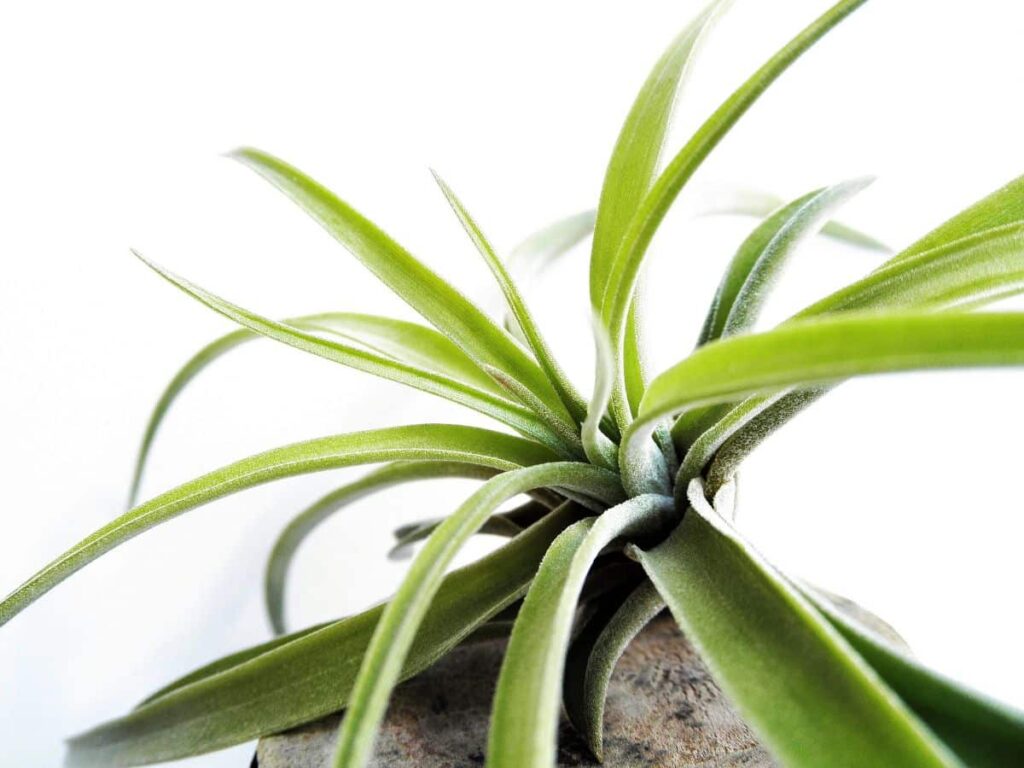
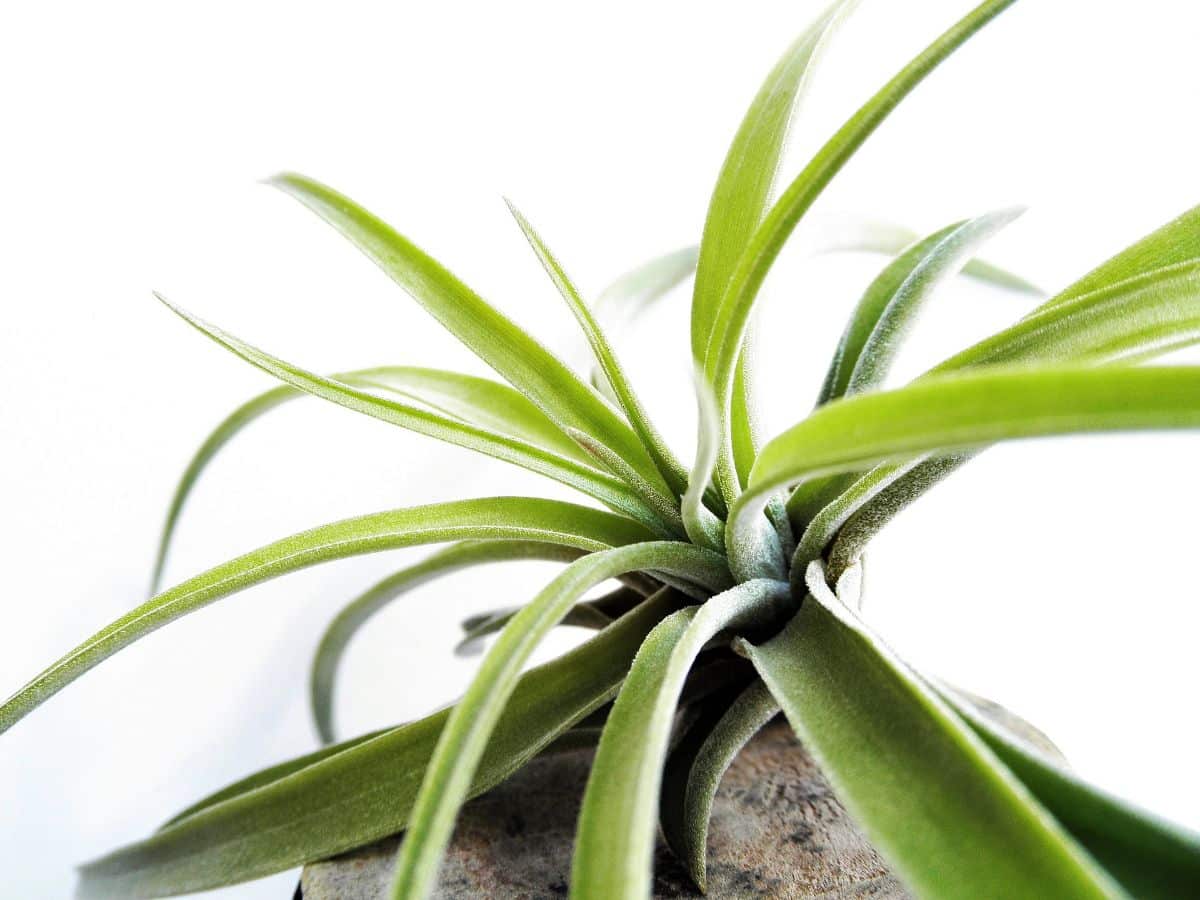
One of the strangest and at the same time most beautiful plants you can have at home are air plants. These do not need a pot to have them and yes, they live on the air, or rather on the humidity that is in the houses.
But, when buying one, what should you look for to do so? How to buy them? Are they easy to maintain? All of this and more is what we want to talk about next.
Top 1. Best Air Plants
Benefits
- It comes with a stand included.
- Total height of 110-170 mm.
- Handmade product.
the inconvenients
- It cannot be easily removed from the bracket.
- If it grows, the support can be knocked down.
selection of air plants
Here we leave you other air plants that you can easily have at home and that you will like very much when you see how they change.
Plant Tillandsia caput-medusae, large size
The tillandsia caput-medusae is one of the most appreciated for the shape of its leaves and that particular shine. You must be careful because this product also incurs shipping costs.
Natural Air Plant Color Red
It is one of the best known tillandsias, Ionantha, and the most common. In this case, this plant produces purple flowers.
DECOALIVE Set of Two Tillandsias or Air Plants (1 Green and 1 Red)
It is a pack of two tillandsias, one with green leaves and the other with red leaves. However, it must be taken into account that the color of the leaves depends on the temperature and the lighting, since when they turn red, it is because they are going to bloom.
Pack of 5 air plants tillandsias air carnation varied natural
This is a set of five different tillandsia plants. These plants are common species, so it is not possible to choose the varieties that will make up the pack.
Plant in a Box – Tillandsia Plant Mix – Set of 5 – Real Air Plants
It’s a set of plants (although later he tells you the number is 6 and in the photo there are 6 different ones). All of them are different from each other and can measure from 5 to 15 centimeters.
Air Plant Buying Guide
Buying air plants is not difficult. You just have to choose the one you like the most and buy it. But it is true that, like other plants, some are more delicate or need conditions that you may not have. Therefore, it is worth taking this into account when deciding what to do. Have you ever wondered what factors influence?
Specifically, it is these.
Kind
We start with the type and in this sense we can understand it in two different ways. The first is to decide if you want an artificial or natural plant. In other words, if you want a real or a fake air factory.
We are not going to deny that finding artificial air plants limits you a lot when choosing, since it is not usual to see varieties in this option, but they have the advantage that, whatever you do, they do not will not die and decorate, they decorate the same way.
On the other hand, you will have to choose the variety of air plant you want. And there are many, hundreds, and each is different from one another. It is true that many look alike, and are even hybrids between several species, but they change in themselves. Some look like bushes, others are very hard, including the “leaves” they have, others are cascading… The truth is that the choice is yours.
And not just because of the shape, but also because of the type of bloom they throw at you. The normal thing is that the flowers are purple, but you can also find pink, white, yellow, green…
Cut
The next thing you need to choose is the size. At any air plant store, you will see that they sell different sizes, with S being the smallest and XXL being the largest. And they are very big. Everything will therefore depend on the space you have to set it up.
Price
Finally, you have the price. In general, many plants will cost around $4-5 in small sizes, some even half that. As they increase in size, their price also increases.
For example, some may cost 30 euros or more because they are rare species or of considerable size.
What are air plants?
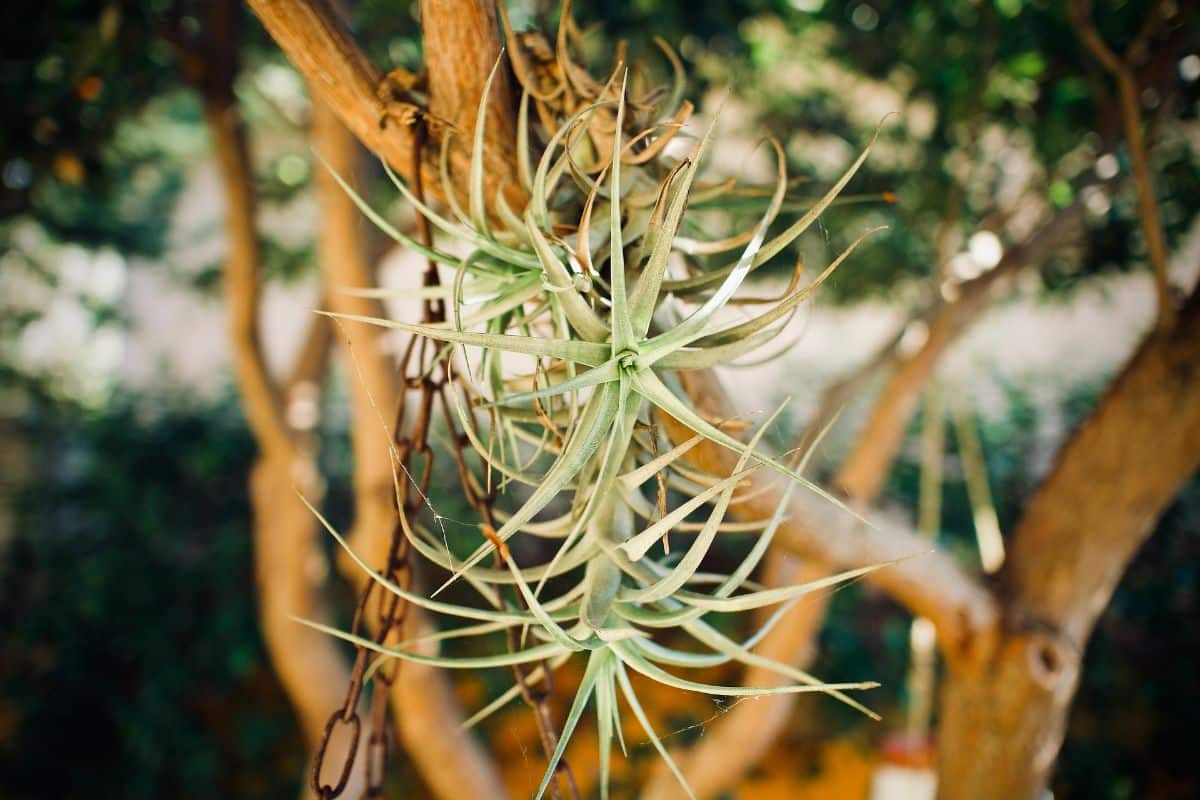
Air plants, also called tillandsias, are a type of plants that are characterized by the fact that they do not need soil to survive, but rather feed on moisture and the environment. In their native habitat, they are usually epiphytes, that is, they are anchored to other plants without feeding on them.
These are part of the bromeliad family and there are approximately 650 different species of them worldwide.
Where do air plants grow?
Wondering where air plants grow in their natural habitat? Well, you should know that they live above all attached to other plants, trees, rocks or to the sand itself. Its roots, which are tiny, only serve to anchor it, but it is not really an element that they use to feed themselves, they do so through the leaves they have.
They are native mainly to Central America and South Africa, places that are both deserts and jungles, or mountainous and semi-arid areas. In fact, they can adapt very well to any environment you give them.
What care should be taken?
Now, what care do they need? As we have already told you, they are plants that adapt to everything. We could say they are something like SUVs. And it is that they do not need much care to maintain themselves, quite the contrary. If you are new to gardening, or if every plant you touch dies, know that with this one everything will be easier.
In general, they will need the following:
- A bright and well-ventilated place. This does not mean that it tolerates drafts (which dry out the environment and will make your plant ugly. But it needs a lot of light, not direct, but maximum hours for it to be beautiful.
- Humidity yes, irrigation… We said it that way because these tillandsias prefer ambient humidity to irrigation. Indeed, with irrigation it may happen that they rot because the water remains between the leaves and is unable to absorb it. Therefore, in this sense it is better to spray water once a week (twice a week if the summer is very hot) and that’s it.
- Subscriber. Yes, in this case it should be given a little fertilizer from time to time (at least once a week in summer and once a month in winter). Also in this way, he will receive nutrients, which, if there are none in your house, will be useful to you.
- Cut. The normal thing is that these plants are not pruned. But beware. They have a limited lifespan, after this type they die, but before they do they reproduce on their own, such that the offspring (one at least) come out of the “mother” structure, so when it is bigger, you could cut the drier parts of the plant.
Or buy?
The last thing we have left is to tell you about where you can buy these air plants. Do you want to know? We have chosen the most searched stores on the Internet but we will also offer you another option.
Amazon
Amazon is where you’ll find the most variety, both in bundles and in separate tillandsias. Of course, the price is often a drag because these are more expensive here than if you went to buy them.
Ikea
We searched for air plants and tillandsias in their search engine, but they did not appear, so we understand that at least online they do not have this product in their catalog.
Leroy Merlin
Seven options are what we found in Leroy Merlin. However, you should look for them as tillandsia, because when putting air plants we do not get them. Among the options, only four of them are sold by the store, the rest are from an external seller (before buying, it is better to see if this one on their site has better prices).
Specialty stores
If you do a search on the Internet on tillandsias, it is very likely that you will come across several stores specializing in these plants (and only in these ones) or that certain garden centers carry them. They are cheaper than other places and you can choose sizes as well.
Have you already chosen your favorite air plants?