If you purchase an item through links on this page, we may earn a commission. Our editorial content is not influenced by commissions. Read full disclosure.
Certain vegetables and fruits have fallen out of favor over the years for various reasons, and quince is one of those plants. This was mainly because the older varieties of quince were far too tart to be eaten fresh and were only really suitable for jams and jellies.
Lately there has been a resurgence in quince cultivation thanks to wonderfully flavored new varieties, and as more and more gardeners focus on unique fruits for preserves.
If you want a fruit tree that’s pretty enough to grow as an ornamental, try quince. Let’s start.
What is Quince?

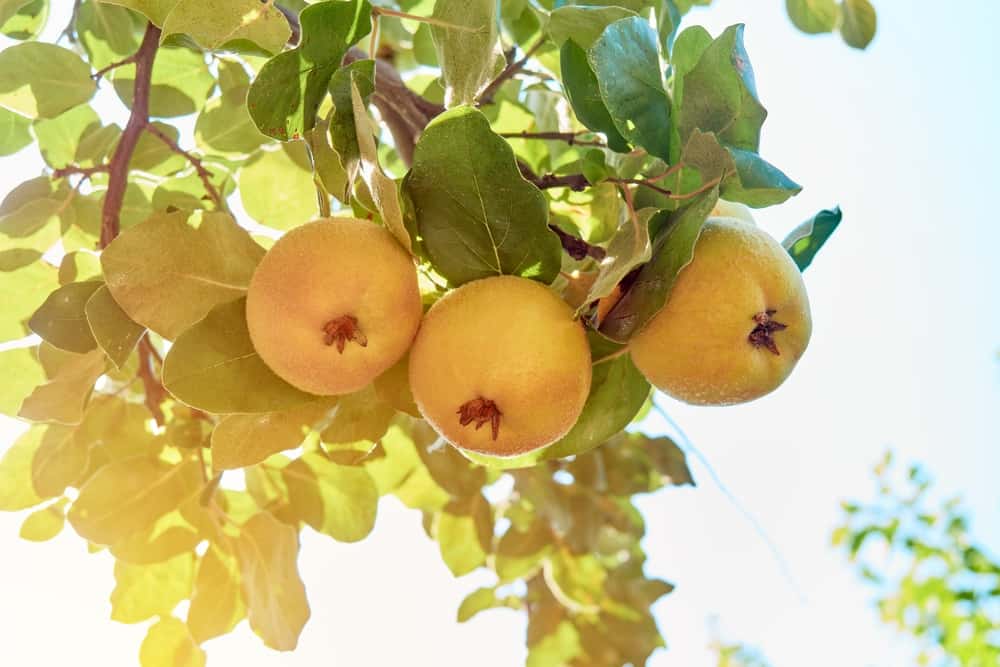
Quince (Cydonia elongated) is a medium-sized fruit tree native to regions around Iran and Turkey. It is naturalized in Greece and, wherever it is grown, is mainly used for preserves and jellies.
Growing quinces was popular years ago when canning and preserving at home was a way of life. They are naturally high in pectin and usually produce a massive harvest, so it makes sense that they are prized.
Growing well in USDA growing zones 4 through 8, quince has fairly specific requirements for sun and cold winter weather.
Quince is part of the rose family (Rosaceae). Although the fruits look like pears or apples, they don’t taste good when eaten raw. Don’t worry, they turn out sweet and sumptuous when cooked.
Quince adds vitamins C and B to your diet in moderate amounts and is said to be good for the digestive system.
Best Quince Varieties

Like many fruits, different types of quince have distinctive characteristics, and many growers have their favorites. Here are a few to consider, but if you know someone who grows them in your area, ask which cultivars grow well.
Pineapple
It is a common cultivar (Cydonia elongated ‘Pineapple’) and actually tastes like pineapple. Pineapple quince is perfect for baking and cooking. It is a smaller tree, usually reaching 10 feet in height.
Orange
C. elongated ‘Orange’ produces a large, round fruit with a light orange tint to the flesh. Most ripe quinces are hard, but the ‘Orange’ quince is much softer. If you want to try eating a quince raw, let this cultivar become very ripe and give it a try.
‘Orange’ will grow up to 20 feet tall. In its natural environment, it is found near water sources, so it likes moist soil.
Champion
C. elongated ‘Champion’ is popular among quince growers mainly because of its delicate lemon flavor. This pear-shaped variety produces fruit well into the fall. ‘Champion’ will reach about 15 feet in height.
Cooke’s Jumbo
This oblong The cultivar is an all-rounder that is perfect for cooking, baking, and making jellies and preserves. The pear-shaped fruit is large and follows a huge bloom of white and pink flowers in spring.
Rich’s dwarf
If you have a smaller area to plant a quince tree, it oblong cultivar is the one for you. It usually peaks between six and nine feet tall and produces substantial fruit.
shams
It is a popular variety in Iran, but reasonably common in North America. It is an extremely sweet variety that retains its shape when cooked. It needs a nice sunny location to bear fruit. Shams will reach around 15 feet in height.
Other common varieties include:
- Missouri Mammoth
- Prolific of Meech
- Rea’s Mammoth
- Smyrna
- Van Deman
- The Kovacs
How to propagate quince
Most people choose to buy their first quince tree, but there’s no reason you can’t propagate yours via cuttings or seeds. Here’s how:
Cuttings
Personally, I would buy a quince tree from a retailer if I was new to growing quince, because I don’t want to wait too long for a harvest, but if you have a variety you like or want to save money , take a cut and see how you go.
- Take a few cuttings from late winter to early spring. The tree should be dormant and not bloom. Adjust your hours for your region if necessary.
- The cutting should be eight to twelve inches long with a few growing nodes.
- Cut at a 45º angle.
- Dip this end in a rooting hormone. It is not always necessary for all plants, but the quince needs it and it will take several more months to form roots.
- Use horticultural sand instead of potting soil or seed mix. Due to the time it takes for the cutting to form roots, it is best used to avoid mold or infection.
- Keep the sand moist all the time.
- In six months, test the cuttings by gently tugging on them. They are ready to be transplanted into larger containers if there is resistance.
Seeds
You can grow quince from seeds collected from the fruit. The resulting plant won’t be the same as the parent plant, but if you’re feeling adventurous, give this method a try.
- Remove the seeds from a quince fruit in the fall and wash off the pulp.
- Place the seeds on a paper towel and let them dry in a warm place out of direct sunlight.
- Fill a zip-top bag 3/4 full with moistened sphagnum moss or horticultural sand.
- Place the seeds in and gently rub the bag to get them into the mixture.
- Put this bag in the refrigerator for three months to stratify. They must have this cooling period.
- After three months, remove the seeds and plant two in each container of seed mix.
- Keep the soil moist and in a location that receives eight hours of sunlight or artificial light.
- When the seeds have germinated and have their second set of leaves, remove the weaker one.
- Harden off the seedlings before planting in the spring when the frosts are gone.
The good thing about quinces is that when you plant them near the seed, you don’t know how good the fruit will be, but they are fine for cooking and storing.
How to take care of the quince
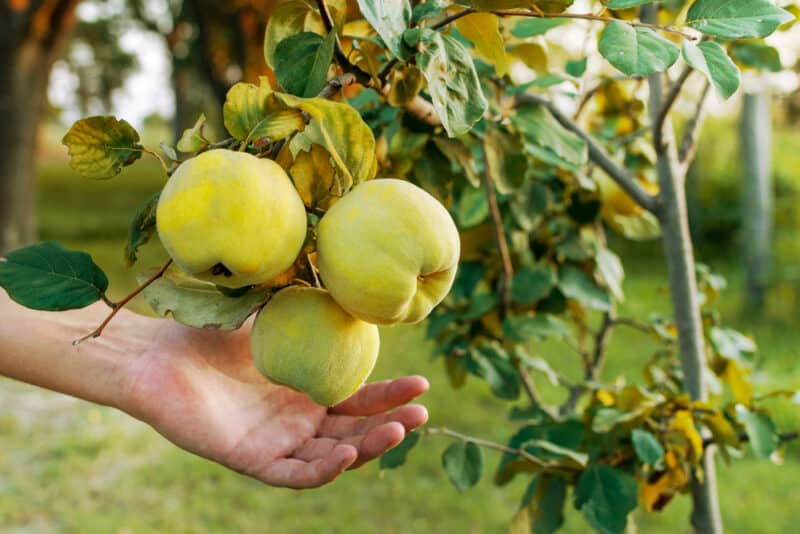
Quinces love the sun. They want at least eight hours of sun a day. This is absolutely necessary for the quince since the sun this year triggers the development of buds the following year. If the quinces don’t get enough sun, they won’t produce flowers next year.
Quince thrives in temperatures between 65°F and 95°F, but remember that you won’t be successful growing quinces unless they have at least 200 hours of chilling time.
Aim for a soil pH of 6.3 to 8. Free-draining soil that retains enough moisture will make your quince happy. If you have sandy soil, quince will still do well. You will need to add plenty of well-rotted compost and some topsoil.
Mulch with straw or wood chips. Fertilize once a year in the spring with a fertilizer suitable for apple and pear trees. Use a low-nitrogen fertilizer if you don’t already have one for apples and pears.
Quinces are self-pollinating, but two trees improve size and quality. Make sure they are within 50 feet of each other.
Best Companion Plants for Quince

Quince will go well with:
Quince Growth Problems and Solutions
Although these trees are generally tough, there are things to look out for when growing quince.
Quince leaf blight
This is caused by a fungus called Diplocarpon mespili. When the season is wet and hot, leaf scorch can cause severe spotting of foliage and fruit.
This causes leaf drop and deformed fruit in the most severe cases. Unfortunately, the most common times for this disease to appear are from spring to fall.
For this fungus, it is not recommended to use a fungicide on a plant where the fruits will be eaten.
- Remove all infected leaves as they fall from the tree.
- Clean weeds and debris around the quince.
- Prune any dead or diseased branches.
- Practice good garden and orchard hygiene
fire blight
Quince is more susceptible to the bacterial disease of fire blight (Erwinia amylovora) than the apple, but not as much as the pear. Severe infections cause severe leaf drop and negatively affect plant health.
Read our full article on how to identify and treat fire blight here.
Night butterfly
Growing quinces are affected by the devastating codling moth (Cydia Pomonella). Check out our article here if you’re having trouble with codling moth, which shows up as holes in fruit.
San Jose Scale
San Jose scale (Quadraspidiotus perniciosus) does not only appear in California. This pest infests trees from sea to shining sea.
Young mealybugs overwinter on quince branches and twigs. When the sap begins to flow in the spring, the scale insect begins to feed on the plant. Females can produce thousands of young in a season, so an infestation can quickly spiral out of control.
The young caterpillars begin to feed on the sap of the tree. Large infestations of San Jose scale can cause twig dieback or even tree death.
The best method of prevention is to encourage or buy beneficial predatory insects and spray dormant oil in the winter. It should be noted that this pest is rarely a problem in organic orchards.
Harvest and use
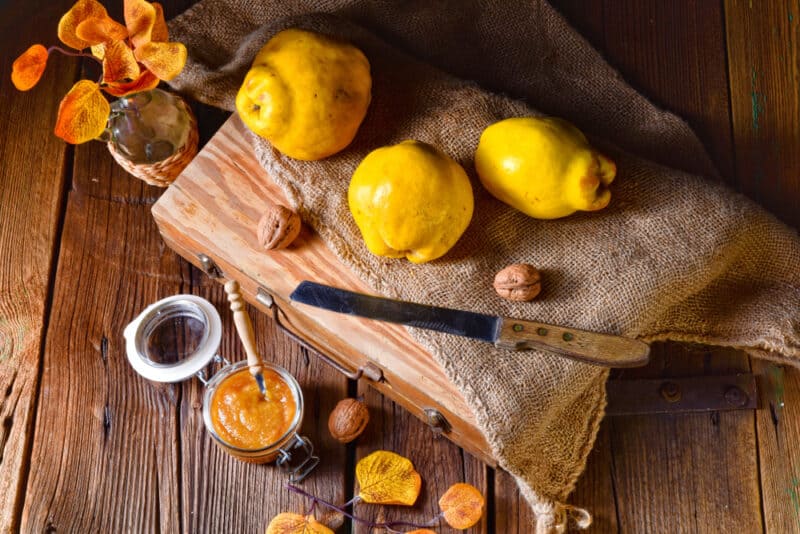
Now for the best part about growing quince. In the fall, carefully pick the fruit from the trees. They won’t be ripe right away, you need to chill them in a single layer for about a month to fully ripen. You will need to rotate the fruit every few days.
After a month, slice a fruit and see if it has reached the texture and sweetness you want.
Remember that these fruits will never be as sweet as a peach, but they shouldn’t be too astringent either.
Difference Between Fruiting and Flowering Quince

If you hear the term flowering quince, it differs from fruit quince. Although both belong to the rose family, flowering quinces belong to the Chaenomeles gender. The fruiting quinces are of the Cydonia gender.
Flowering quinces produce vivid flowers in white, red, orange and pink. People usually grow quinces of this species for the purpose of colorful flowers in the garden rather than fruit.
Some flowering quinces produce fruits, although they are very bitter, although birds like them.
Some flowering quince species produce flowers in the spring and repeat in the fall to provide additional color just before winter.
Propagation is easier by cuttings than by fruit quince.
Flowering quinces grow like boysenberries and spread out. They have lots of thorns so be careful where you plant them. Under a window for security is good, or against a wall.
Was this article helpful?
Yes No ×
We appreciate your helpful feedback!
Your response will be used to improve our content. The more feedback you give us, the better our pages will be.
Facebook pinterest