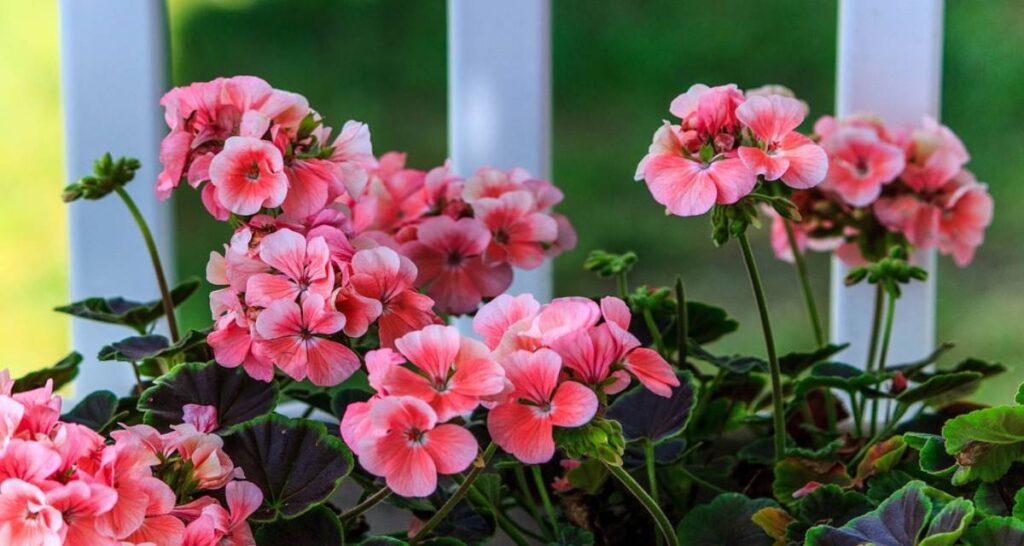
Geraniums form a very large group of ornamental plants common in the Mediterranean basin. Its magnificent, long-lasting flowering and its hardiness (except for certain pests and diseases), mean that many windows and houses have one or more plants.
In addition, the ease of obtaining and produce geranium cuttings It allows to have different varieties with flowers of various colors.
In this article we teach you how to obtain a geranium cutting from a mother plant to obtain a completely identical new plant.
When is the best time to take geranium cuttings?
Cuttings of most plants, including geraniums, are taken when there is active sap movement. This allows rooting to take place.
You therefore have a wide range of time to make the cutting of your geranium, from early spring to late fallbeing preferred in the central spring months and throughout the summer.
Step-by-step guide to getting geranium cuttings
Next, we give you the steps to produce a new geranium plant from another. In a few weeks you will be able to transplant it into a pot and you will notice how fast it grows.
Selecting a healthy plant
To obtain a cutting of geranium, it is necessary look for a healthy stem of a plant vigorous growth.
Look for 1 or 2 good stems, trying to avoid having flowers or many side stems. If nearly all of the healthy stems are in bloom, it won’t matter too much when it comes time to cut them, but it’s a matter of preference.
Cut stems before cutting
With a good pair of sharp scissors or a cutter, cut a stem a few centimeters from the base of the plantby making an oblique cut which will improve the surface area for root production and reduce damage due to water accumulation in the cut of the mother plant.
NOTE: It is recommended that the the geranium cutting is between 10 and 15 cm long, eliminating the very large side stems and the flower bud, but leaving a few leaves on the upper part (2 or 3, at most).
How to plant a geranium cutting
To activate the roots, the best natural rooting agent we can use is water, because without it there is no life and the production of root hairs will not be stimulated.
read more: how to make money cutting down a plant
Stimulate the emergence of roots in the cutting
Therefore, once you have the geranium cutting ready, it is time to put its base in a container with waterby placing it in a low-light area, free of sun and drafts.
Change the water every few days (2 to 3, in general) to recover its properties and oxygenate it.
If you have rooting products, such as rooting hormones, don’t hesitate to use them, as it speeds up the process and guarantees a greater volume of new initial roots.
As we also said in the article, you can generate a natural rooting agent from lentil sproutswhich contains a small fraction of auxins, a natural phytohormone that promotes the formation of new roots, among other properties.
When you see that your geranium cutting already has enough new roots (white, very fibrous), it’s time to transplant.
How long do these roots need to be for transplanting? Use common sense, so new roots of 3 to 4 cm in length will be more than enough.

Preparing the pot and the substrate
To continue to stimulate the development of our geranium cutting, we will transplant into a nutrient-rich substrate (The universal substrate can be a good alternative, although the recipe can be improved by adding earthworm humus and coconut fibre).
We prepare the soil, we make a small hole to introduce the cutting and, with great care, we introduce it, covering the soil until the base is covered.
We will give a good initial watering to ensure that the roots already produced do not die and also to promote their growth and that of new ones to come.
We water until we notice a little water coming out of the holes at the base of the pot.
Place your geranium cuttings in a well-lit area, in the first weeks without direct sun and good ventilation. Later, you can expose your plant to some direct sunlight, so that it acquires the hardiness that we usually know from geraniums.