Geraniums (Geranium) are among the plants that you can propagate very easily from stems (cuttings). If you know how to propagate geraniums, you can grow other favorite varieties to plant the following year in the garden, and in pots or hanging baskets. Let’s look at two easy ways to propagate geraniums using stem cuttings.
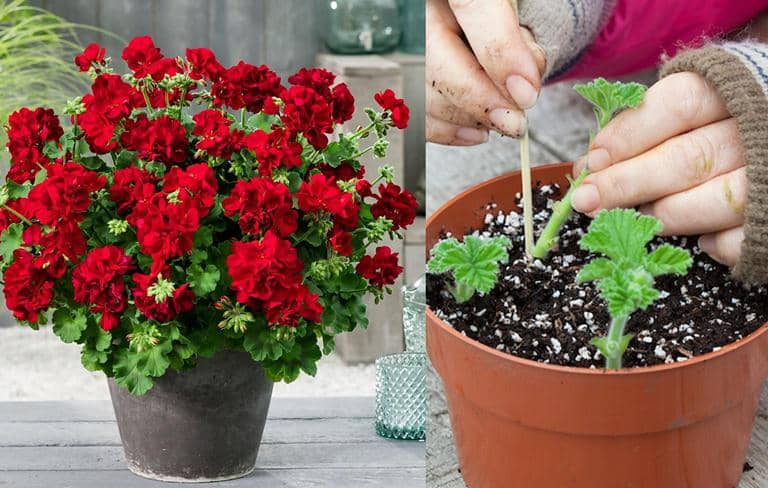
When to Cut Geranium Cuttings
Plan to take your geranium cuttings from a healthy plant while it’s still in bloom and before the weather turns cold, usually in late summer or early fall.
Technically, there is no ideal time, since you can take a cutting any time of the year because geraniums do not go through a period of dormancy. But the ideal is to do it when the ambient temperature is above 10 degrees C.
How to Propagate Geraniums in the Ground

From the main plant, ie the mother plant, choose the healthy shoots near the top, where all the new growth is.
Make sure all the leaves and stems look healthy on the piece you are going to take. Try to avoid cutting the oldest branches. The cuttings do not have to be long, ideally they should be between 10 and 15 cm.
With your sharp, clean knife, make a straight cut above a leaf node. Around the base of the new stem you can cut back to the point where there is another bud or leaf node.
Remove the lower leaves and scrub the remaining stipules. Stipules are raised appendages located at the base of a leaf. Place the cut end of the cutting in a pot filled with moist soil.
Make sure the pot you use has good drainage. The soil should be moist, but not too wet. If the water sits at the bottom of the pot, the stem could develop fungus.
Some plants do well if you dip the tip of the cutting in rooting hormone, but in the case of geraniums, it can soften the stem ends.
A weakened stem can lead to root rot and other fungal diseases. Apparently soaking the tip of the cutting in a solution of water and vitamin C works well.
Caring for Geranium Cuttings

Place your cuttings in a warm, sunny location. Geraniums do not tolerate humidity well, however, make sure the soil does not dry out completely.
After a few weeks, new roots will form. It will be hard to tell, except that your new plant will look healthy and start producing new shoots.
If you are growing a geranium cutting as a houseplant during the winter months, you can plant it outside in the spring.
As your plants grow, you will need to give them a little more water. To encourage the growth of new leaves and flowers, pinch off the growing tips at the top of the plant.
This will help the plant grow bushier underneath, producing a fuller plant, rather than one with long, thready stems.
How to Propagate Geraniums in Water

It is possible to propagate geraniums in water, but they are more likely to rot. Also, at some point you will need to plant them in a pot with soil. But if you are in a hurry, for whatever reason, take the cutting and put it in water.
Follow the same tips above to choose the healthiest stems. Place the stem in a small jar or glass of cool water, making sure there are no leaves in the water. Change the water every few days to prevent disease.
In a few weeks, when you will see that the roots have formed, you can plant your new geranium in a pot filled with fresh soil following the instructions mentioned.
Transplant geranium cuttings

In the spring, you may want to move your healthy little geranium plants outside.
But don’t just pull out the jars and forget about them. When the weather warms up and all danger of frost has passed, you’ll want to get your geranium plants used to outside temperatures.
Take your new geraniums that you grew indoors during the winter outdoors in the spring to use them in potted arrangements or to plant them in the garden. Just be sure to harden them first.
Once your plants have become accustomed to the outdoors, you can transplant your new geraniums. Add them to pots, hanging baskets or a special place in the garden.
Share it on the networks: