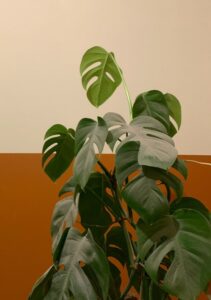
Although light is vital for the growth of your monstera plant, sunburn can occur if your monstera is exposed to an intense amount.
The best way to save your monstera from sunburn is to move its position. If you are near a window that receives strong light, you should move the monstera plant.
It is important to know the light requirements of a monstera plant and the symptoms associated with sunburn.
As you progress through this article, you will learn how to save a sunburned monstera and some preventative steps you can take to avoid this problem.
What are the signs that your Monstera has sunburned?
You may start noticing abnormal physical changes in your monstera and to know if it is due to sunburn you need to know some of the symptoms of a sunburned monstera.
Identifying these symptoms early will make it easier to revive your plant.
Presence of burn marks.
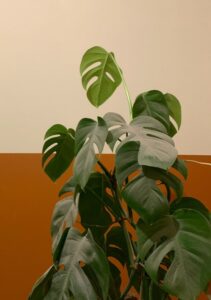 Intense light destroys the soft tissues of monstera leaves, and an indication of this burn is a dry brown spot on the leaves.
Before sunbatheYou will notice a few gray spots which are the first signs of sunburn, and at this point it won’t take much to save your plant as the burn hasn’t gone beyond the level of its leaf tissue.
As the burn deepens, the gray spots turn brown. These spots usually appear on the upper leaves most exposed to the sun.
Monstera leaves are bleached
When exposed to strong sunlight, monstera leaves may appear bleached or discolored.
It will look like the color has been removed and will have a paper-like texture.
It can also be an indication of a potassium deficiency in your soil or overwatering, so don’t misunderstand the signs.
leaf wilting
Your once erect monstera leaves are now sunken from sunburn.
Direct light on your monstera plant causes dehydration, and dehydration is an indication that your monstera leaves are not getting enough water and nutrients are not actively being transported to parts of the plant.
understory growth
As we explained above, exposing your monstera plant to strong light can dry it out.
Water is an important factor that determines the growth of your monstera plant, if you remove water from this plant the necessary nutrients will not be transported with it and with these two basic factors missing in your plant there is will have no noticeable growth.
Yellowing or browning of leaves.
You may see brown spots on your leaves at first, but with continued exposure to direct sunlight, your monstera leaves will begin to twist. Brown That is yellow.
This discoloration starts at the edges and then spreads to the sheets or sometimes stays at the edges.
This effect removes the natural green color of monstera leaves and this green color is a result of chlorophyll helping in photosynthesis. Without chlorophyll, its leaves cannot photosynthesize and gradually begin to die.
Crunchy leaves
When the leaves dry, they are crisp, like paper, and if you touch them, they can break.
This sensation is greatest in discolored areas, at this stage the sunburn damage is severe and cannot be repaired, over time the leaves will drop from the plant.
Other less damaged leaves can still be salvaged.
How to Save a Sunburned Monstera
Noticing any of these sunburn symptoms requires immediate action before the damage becomes severe.
When restoring your monstera plant, you must be patient and follow the techniques used to achieve results. You can follow some of these steps to save your monstera plant.
move your establishment
It has already been established that direct sunlight is the main source of sunlight, the only way your plant can access this amount of sunlight is if it is near an area that receives direct sunlight from the Sun.
A monstera is a houseplant that needs moderate indirect light for good growth and this can be achieved by placing your plant a few feet from your window.
If the light in the final location is still too bright, consider placing a shade over your monstera to control the amount of light it receives. You can find out more about the light requirements for a monstera plant.
1) Use grow lights
Grow lights are artificial light that can be used as an alternative to sunlight.
These grow lights vary in shapes, sizes and forms, they are useful if you live in an apartment that gives very little light, they will also be very useful in regulating the amount of light your plant receives.
Here are some of the The best grow lights for your monstera plants.
2) Give your Monstera plenty of water
direct sunlight this means that there will be less water in your potting soil and that water will not be enough to be delivered to your leaves.
After changing your monstera’s location, you can give it water to rehydrate it and maintain a normal water balance.
Use filtered water and be careful not to overwater this plant. A good way to ensure this is to make sure the soil is moist and not soggy.
3) Provide the correct environmental requirements
In addition to sunlight and water, your monstera plant needs to be grown at the right temperature and temperature. humidity.
The ideal temperature to grow this plant is between 15.5 and 26.6 degrees Fahrenheit (60 to 80 degrees Celsius), and the ideal humidity for this plant should be between 40% and 60%.
If environmental factors fall above or below these ranges, your monstera plant may not fare as well.
4) Fertilize your plant
 If your monstera has been sunburned, it is missing an important nutrient that will aid recovery and growth.
If there is slight discoloration of your monstera leaves, you need to provide your plant with a fertilizer that contains nitrogen and potassium.
Nitrogen helps in the production of chlorophyll which helps in photosynthesis and potassium is important in the utilization of chlorophyll for photosynthesis.
How can you prevent your Monstera from getting a sunburn?
Since strong sunlight is the cause of sunburn, the best solution is to keep your monstera plant out of direct light, but there are other steps you can take to ensure that the sunburn does. sunshine never affect your plant.
1) Place your Monstera in the right window
You may have noticed that the light intensity differs between the windows in your home.
The south window is known to get a lot of sunlight which is not the best for your monstera plant as it can cause sunburn, however the north window gives very little light which will be insufficient for your monstera plant.
This window is the best place to put your plant as it receives a generous amount of morning sun, which is ideal for your monstera. Morning sun is not intense and provides just the right amount of light for this plant.
2) Control the amount of light coming through your window
If the intensity of your monstera plant’s position is high, you can use sheer curtains or simple blinds to control the amount of light your plant receives.
An important criterion to consider is the thickness of the curtain, the curtain should not be too thick, because then no light will be able to reach your monstera.
Another method to consider is to use protective films to filter the light coming from a window. UV protection films come in a variety of strengths, and your best bet is one that lets in enough light.
3) Provide moisture to your Monstera plant
Keeping this plant moist at all times is necessary for growth and good health, it is also a way to keep this plant moist.
Humidity can be added by manually misting your plant from a spray bottle, or you can use a humidifier to do the job.
4) Harden off your plant
Plants usually come out of dormancy after this. winterand at this stage they are more likely to get sunburn.
The best thing to do is to gradually introduce your monstera to the light after this period, you can start by moving it away from a window and then gradually bringing it closer. This makes it easier to adapt to a new light intensity.
5) Fertilize your plant in early spring
Early spring is known as the best time to fertilize your plant. Indeed, in summer, your monstera grows bigger with the application of fertilizers and these new shoots are vulnerable to sunburn.
Should I Cut Off Sunburned Monstera Leaves?
Yes, a completely sunburned monstera leaf should be cut off. The only exception to this is if you have leaves that are not completely affected by this blight, in which case you will need to cut off the affected area of the leaves.
In case the sunburn affects an entire leaf, you have to cut it because the affected leaf cannot be salvaged. Letting it dry out on the parent plant won’t help, as it will eventually wither and fall off.
Will my Monstera recover from a sunburn?
It depends on the level of wound done to the plant If it is light damage, your monstera can recover quickly if provided in the right conditions, but in case of severe damage, it will take some time to recover.
When it comes to damaged leaves that are cut, your monstera plant will synthesize energy to grow new leaves to replace the damaged ones. The recovery of this plant will be rapid in good conditions.
final thoughts
 If you have a monstera plant that has been affected by a sunburn, there are a few steps you can take to ensure your plant recovers from the damage.
We have provided a detailed guide on how to help your monstera plant recover from sunburn and how to avoid this problem in the future.