
Today we want to tell you about the Hoya Kerrii cactus plant, also known as the “heart plant” or the heart of Hoya. This plant is native to Asia and is known for its heart shape, which makes it perfect as a gift of love or to add a touch of romance to any space. In addition to its attractive appearance, Hoya Kerrii is very easy to maintain and is ideal for those who do not have much time to devote to their plants.
Its area of origin is southern China, Vietnam, Laos, Cambodia, Thailand and the Indonesian island of Java.
Characteristics of Hoya Kerri
The Hoya Kerrii plant is a climbing plant with large, soft, heart-shaped leaves. Its leaves are light green in color and have a smooth texture to the touch. Although Hoya Kerrii is a climbing plant, its growth is very slow and usually does not exceed a few meters in length.
The Hoya Kerrii is a very popular houseplant due to its ease of care and attractive appearance. It does not need a lot of light and likes a place with indirect light. It is also drought tolerant, so it does not need to be watered very often. However, it is important to ensure that the soil is kept slightly moist and waterlogging is avoided to prevent root rot.
Another interesting characteristic of Hoya Kerrii is that it can take several years for it to flower for the first time. However, when it finally blooms, it produces small white or pink flowers in clusters. These flowers have a sweet fragrance and last for several weeks.
| Order | Gentianales |
| Family | apocynaceae |
| Genre | pit |
| Species | Hoya Kerri |
Common names:
- Names in Spanish: hoya heart, heart plant, heart plant,.
- Names in English: hoya hearts
how long does it take to grow Hoya Kerri?
The plant Hoya Kerri it grows slowly, so in the first years it can be grown in small pots inside the house, as if it were a cactus. However, over the years and receiving good lighting, it becomes a climbing plant that can reach several meters in height.
When does the Hoya plant bloom?
Hoya Kerri It has a fairly long flowering period, since it flowers from late spring to late summer. Its flowers are absolutely striking and appear to be made of plastic.
The flowers of Hoya Kerrii are small and bell-shaped. They are usually white or light pink in color and have a sweet, pleasant scent. The flowers appear in clusters and can last for several weeks. It is important to note that Hoya Kerrii can take several years to flower, so it is important to be patient and careful with the plant while you wait for it to flower.
Once Hoya Kerrii flowers, it may bloom again every year or a few years, depending on maintenance conditions and the individual plant. It is important to provide Hoya Kerrii with adequate light and adequate watering to encourage flowering.
If you notice that your plant is not flowering, make these changes:
- Increase the disposition to natural light.
- Reduce risk and allow the substrate to dry longer.
- If you notice that your plant is yellow or lacks development, try applying a complete fertilizer.
How to take care of a Hoya Kerri?
Location
Indoor cultivation (pot): It is usually located in the most lit area we have, near advantages or patios, but protected from direct sunlight. Light is essential for proper flowering. In addition, the plant must be protected from drafts, especially those in summer, which are very dry.
Outdoor cultivation (garden): We will place one near a wall or a taller plant, with the aim that it can climb on it when it gains inches in height. It is recommended to plant in a well-lit or semi-shaded area, but without direct sun. It is worth protecting it from frost and avoiding drafts.
temperatures
Although it is a hardy plant, its Asian origins allow it to tolerate high temperatures with high ambient humidity. On the other hand, it is quite the opposite for low temperatures, since it is quite sensitive. During cold winters, protect your plant from temperatures below 0 ºC, in order to avoid serious damage to the aerial part or to delay spring budburst.
Humidity
It can be grown in a wide range of environmental humidity, with the optimum being between 40-70% RH. It can be grown in very humid coastal areas where it benefits from cooler winter temperatures.
Substrate
Potting mix: If you grew your heart plant in pots, choose a common substrate for succulents where excess moisture is easily removed. This mixture can be 50% universal substrate and 50% any material that drains well, such as perlite, vermiculite, sand or coconut fiber.
Improving garden soil: in the garden, it is recommended to provide a good quantity of organic matter well mixed with the soil in the planting hole. About 3-4 kg per adult plant, replacing the same amount every 2 years. A slightly acidic pH favors it, but it has no major problems in alkaline soils, except for possible ferric chlorosis (lack of the microelement iron). You will quickly notice this when, at the start of spring bud burst, the youngest leaves turn slightly yellow.
Irrigation
Irrigation is generally carried out in a spaced and sporadic manner. It is a succulent plant with highly evolved mechanisms for storing water in its tissues, so we only water when the the substrate is completely dry.
Approximately, if we have Hoya Kerri grown in the garden, we speak of 2 waterings per week in spring and summer and 1 watering every 7-10 days in winter, usually with a small amount of water. Like most succulents, Hoya Kerri is a climber quite sensitive to excess water.
fertilizer recommendations
if you have your Hoya Kerri Cultivated in the garden, it is interesting to support the nutrients provided by the soil naturally with fertilizer mixtures. An NPK mixture with microelements is recommended, rich in nitrogen but especially in potassium (NPK ratio 2-1-3).
In this case, you can use both liquid fertilizers (supplied with the irrigation water) and solid fertilizers, in the form of granules, near the central stem. If you use liquid fertilizers, the 2-1-3 nutrient ratio is also recommended, at the rate of 1 ml of fertilizer per liter of irrigation water, 1 in 3 or 4 irrigations.
if you have your Hoya Kerri planted in the garden and you do not have fertilizer injection equipment, it will be enough to supply 50 to 100 grams of granulated fertilizer every 30 days from spring to late summer. We recommend the following mix:
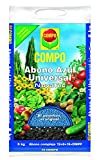
COMPO Novatec Universal Fertilizer Blue, 5 kg
- NPK complex fertilizer (Mg+S) 12 + 8 + 16 (+3+25) with magnesium and sulfur + microelements + nitrification inhibitor, Ideal for all types of ornamental plants, shrubs, green plants, roses, citrus fruits, etc.
- The professional technology with the nitrification inhibitor (DMPP) ensuring the stability of nitrogen in the soil, guarantees the maximum utilization of nutrients in the plants and more abundant flowering. Up to 8 weeks subscription available
- Improved formula, with less phosphorus. Eco-friendly
- COMPO quality: raw materials selected according to the original COMPO recipe, Strict quality controls by independent laboratories and institutes, The best conditions for healthy plant growth
- Contents: 1 x COMPO Novatec universal blue fertilizer, 5 kg
Possible pests and diseases
harmful
This plant with fleshy leaves is susceptible, in spring and summer, to being attacked by Woodlouse. A practically motionless insect that lands on the stems and sucks the sap from the plant, slowly weakens it. If you only have one plant, you can remove these scale insects directly with a cloth soaked in alcohol or vinegar.
In very hot and dry summers, its leaves can be affected by different mites, the most common being the red spider mite. To eliminate it, foliar applications and increased humidity weaken the pest, as well as applications with soap (fairy or potassium soap), or even hydrogen peroxide at 2 ml/litre of water. Of course, try to apply this combination in less than 5 minutes from the moment you prepare it, so that it does not lose its effect.
Finally, watch the substrate from time to time for the possible appearance of snails, especially in the rainy season. the lower leaves of this climbing plant can be affected by the incessant work of these animals, which will not hesitate to slowly destroy the leaves until the plant loses all its foliage.
read more: how to make a snail trap
Diseases
The main diseases that affect this plant are linked to long periods of humidity (usually due to rain), which affect the leaves, such as alternaria, anthracnose or even botrytis.
If moisture is concentrated in the soil, due to over-watering or accumulation during the rainy season in poorly drained soil, we speak of root or vascular fungi, such as Phytophthora.
Most Cultivated Types of Hoya
Hoya plants are a group of climbing plants with smooth leaves and soft, attractive flowers. They are very popular with plant lovers due to their ease of care and ornamental beauty. Some of the most famous Hoya plants to grow include:
- Hoya Kerri: This plant is known for its large, soft, heart-shaped leaves and white or pink flowers. It is very easy to maintain and is ideal for those who do not have much time to devote to their plants.
- Hoya Pubicalix: This plant has shiny green leaves and red or pink flowers with long wavy petals. It is more demanding in terms of care than the Hoya Kerrii and needs more light and water.
- hoya carnosa: This plant is known for its large, fleshy leaves and bell-shaped pink or white flowers. It is more demanding in terms of care than the Hoya Kerrii and needs more light and water.
- hoya linearis: This plant has long, narrow leaves and bell-shaped white or pink flowers. It is more demanding in terms of care than the Hoya Kerrii and needs more light and water.