
There is still a lot of confusion about what cacti, succulents, and succulents are.. And when we think of those stinging plants, like agaves, we usually immediately classify them as “cacti”. And the fact that in addition, in nurseries and garden stores they have them with the latter, does not help much.
And how many people believe agaves are cacti? We don’t know, but I would dare to say that there are many. For this reason, I’m gonna talk about it.
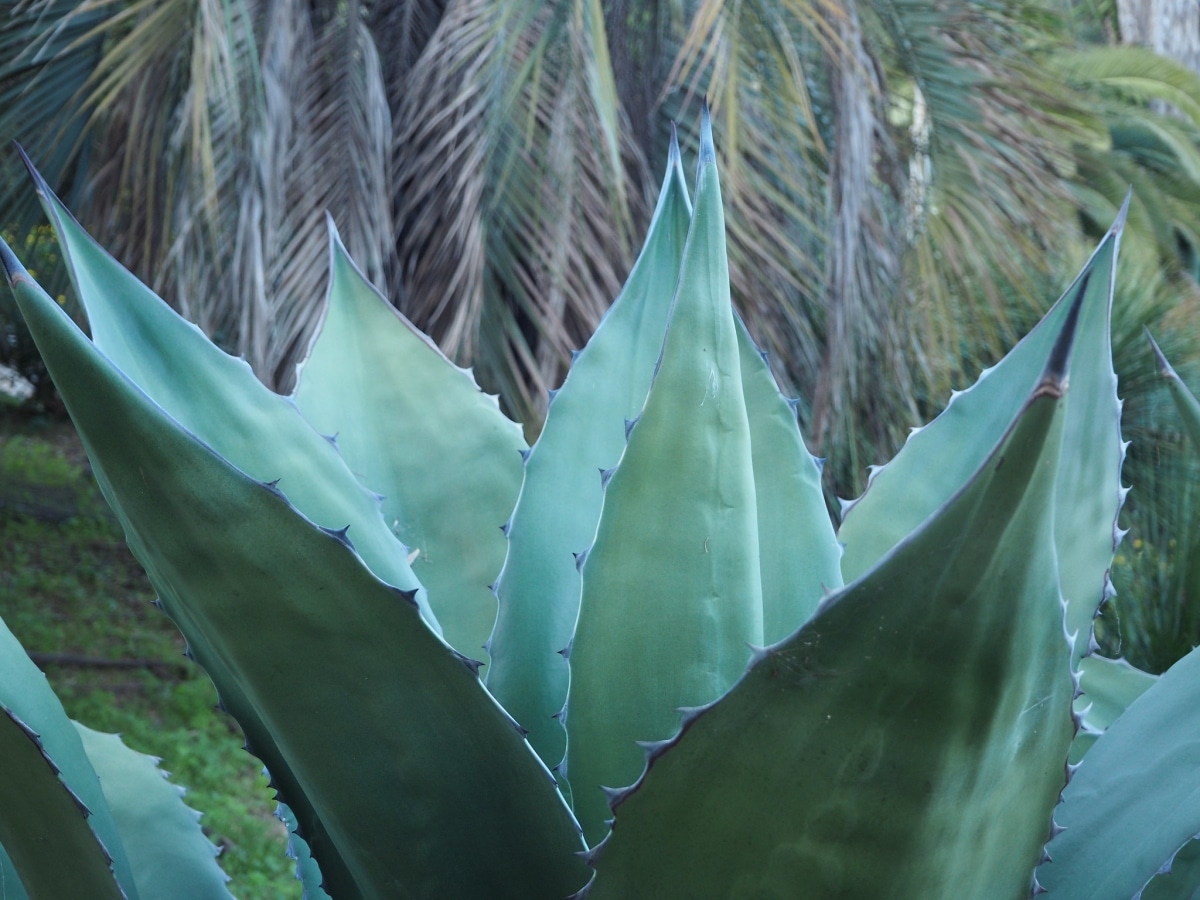
Image – Flickr/Teresa Grau Ros
The answer is no. They share a habitat with many of them, but beyond that they have virtually nothing in common. They are two totally different types of plants, which have developed equally different, unique adaptation and survival strategies. This is why it is wrong to say that they are cacti simply because most species have thorns.
It’s more, even thorns shouldn’t be a feature to look at to know if a plant is a cactus or notbecause not all cacti have them, as is the case, for example, with Astrophytum asterias. And to complicate matters further, there are crassies that have, like Spurge grandicornis.
How are cacti different from agaves?
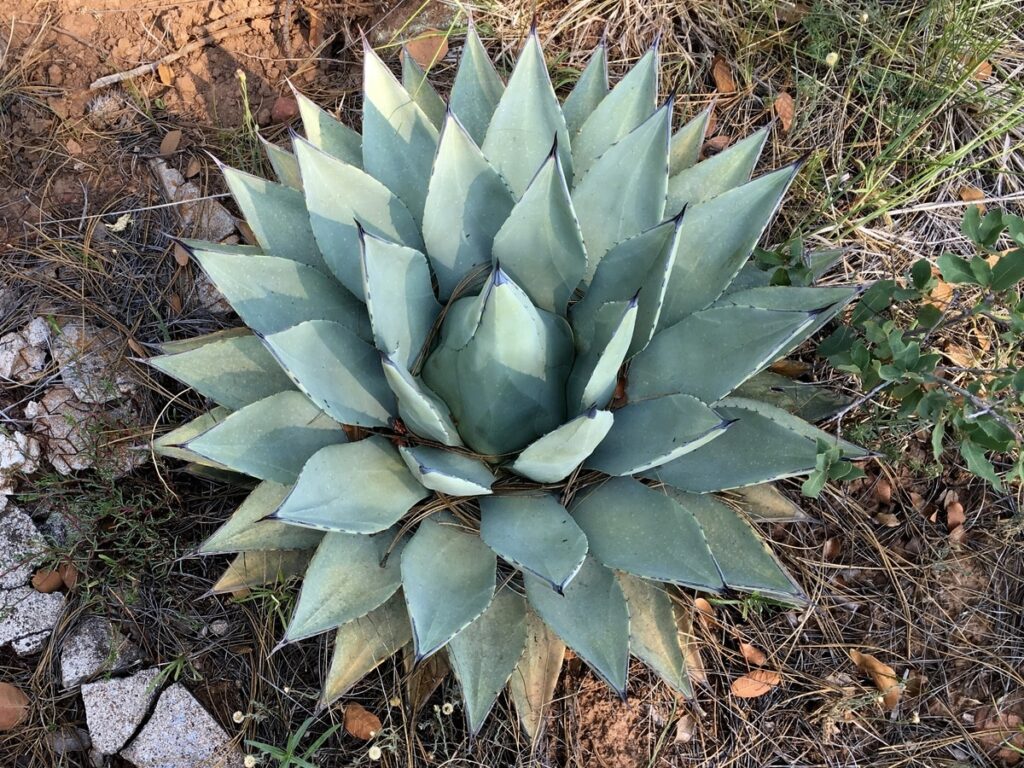
Mainly on one thing: Cacti have areoles, agaves do not.. Areoles are those small protrusions through which thorns (if they have any) and flowers grow. If you look closely, the thorns of the agaves seem “welded” to the leaves, both at the tip and at the edges if they also have them; They do not grow from an areole, but from the same limb that forms the leaf. But that’s not the only difference, there are others like:
- Cacti do not have conventional leaves. (except the Pereskia); the vast majority of agaves have “only” leaves (apart from the roots, of course; and some develop a stem that allows them to grow, such as the Agave sisalane).
- Agaves bloom once in their lifetime and then die.; Cacti, on the other hand, as soon as they do it for a year, we already know that they will continue to do so until they die.
- Still on the theme of flowering, agaves develop a very, very long flower stem (several meters) with many flowers, which eventually produce fruits with seeds. Cactus flowers are much smaller and grow not from a stem, but from the plant itself.
- Agaves produce shoots during and/or shortly after flowering.; Cacti that have shoots have them throughout their life, not just for a specific period of time.
And although I have no proof, from my own experience growing agaves and cacti I would tell you that agaves are much more drought tolerant than cacti. Where I live, in Mallorca, there can be a maximum of 38ºC and a minimum of 22ºC or more in summer, and also during this season it is normal that it does not rain at all.
Well, if you leave a cactus unwatered, chances are it will end up having a worse time than the agave. Although, as I say, I have no proof, the mere fact of seeing wild agaves in the field and not cacti, can already make us suspect that they can resist drought better. For this reason, I recommend them over cacti if you want to have a no-irrigation or low-maintenance garden.
Are agaves succulent?
Before answering this question, let me first explain something that is important:
- Cacti are plants that have areoles on their bodies.where the flowers and sometimes the thorns grow.
- Succulents do not have areoles., so his whole body is, shall we say, smooth when touched. You don’t notice any strange bumps.
- Succulents are all those plants that use their body, or part of it, as if it were a water reserve.such as cacti and succulents.
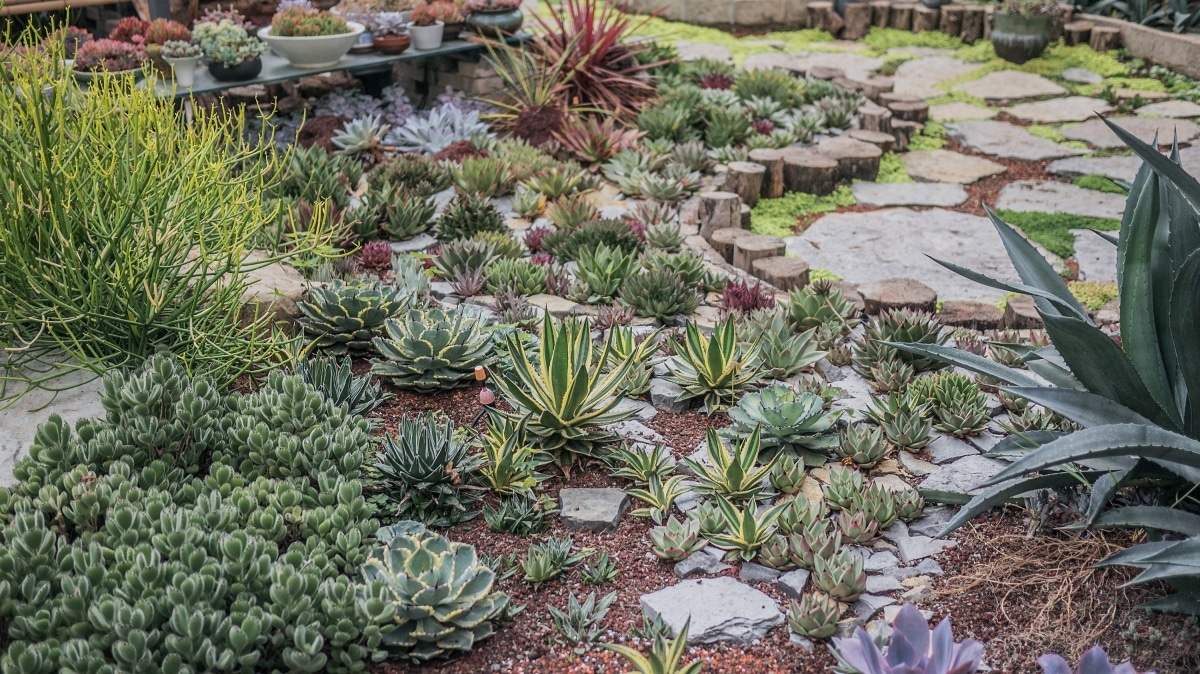
Starting from this basis, agaves are generally succulent herbaceous plantsbecause they generally have thick, fleshy leaves (with a few exceptions, such as the Attenuated Agave who has them thinner). And it is this, the thickness of the foliage, which tells us if it is very resistant to drought, or not very resistant. For example, he Attenuated Agave He is having a bad time if he goes a long time without getting a single drop of water; on the other hand the Agave victoria-reginae resist thirst better.
Thus, taking care of them, we will have to try to water them only when necessary (that is, when the earth has dried out), and plant them in a sunny place so that they grow well, without problems. Thus, we can enjoy its beauty for several years.