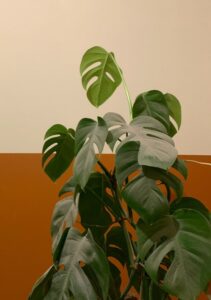
“It’s rolled!” she shouted into the phone, not believing that the monstera she was so anxious to buy was not up to her expectations.
The new leaf was neither hard nor shiny like the rest of the plant. I understood how he felt when I was in his shoes the first time I grew monstera.
It took me a while to get used to it: monstera leaves first curl inwards before unrolling and hardening.
It was a process and all I could do was wait. I explained the same to him and advised him to give the plant time. She called me a few days later, delighted that the plant’s new leaf had opened, and even sent me a picture.
Patience is usually all it takes to unroll and harden monstera leaves. But sometimes, even after weeks of waiting, the blade still does not harden.
Worse still, it may show signs of browning. Why is this happening and what can you do about it?
The reason monstera leaves don’t harden could simply be due to the natural process of leaf formation, which usually takes 1-4 weeks.
If there are no signs of increased hardening or browning after 7 weeks, it may be due to insufficient humidity, insufficient lighting and incorrect temperatures.
Why aren’t my Monstera leaves hardening off?
I can understand the frustration of having to wait for your monstera to develop a new leaf for leaf curling for weeks.
Why does this happen? Sometimes this is due to the nature of your species of monstera. Some plants generally take longer than others.
If the plant shows no signs of distress, this is the probable cause. But if the plant starts showing signs like browning, growth retardationand other unwanted changes, you may want to pay special attention to the following:
The Monstera does not have sufficient access to moisture.
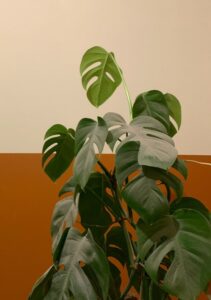 Monsteras grow in tropical climates with high humidity.
Continued transpiration and evaporation activities on surrounding plants help increase water vapor, preventing the monstera from drying out.
But indoors, conditions may not be so favorable, forcing you to step in and change conditions.
He humidity the range should be 70% to 80%. The plant will still do well at 50% humidity, but anything below that will harm it.
The plant is said to have crunchy leaves that won’t open and pop pendant. You can find out the humidity level in your home with a hygrometer. And if it’s missing, you can replace it with:
- Install a humidifier near the plant,
- Leave the monstera in the bathroom, kitchen or other high humidity areas,
- Put a container with water near the plant,
- Nebulize the monstera, and
- Group with other plants.
Also, keep the plant away from windows or doors so that cold drafts do not carry away moisture.
The Monstera does not have enough light exposure
In the wild, monstera grows in canopies with ample access to marbling or screening light. It uses the energy from this light to make food that gives it the energy to produce and expand its leaves.
But what if this light is missing? The plant compensates by using all the energy it has to reach more light.
then start producing elongated rods and can lean towards the light. The deployment fades into the background and the plant does what it needs to do to survive.
How do you know the light is the problem? The plant will generally appear weak despite adequate access to it. The water and nutrients. Monstera may also begin to produce smaller, windowless leaves.
He can also appear falling yellow leaves, do not use a lot of water on Earthand it can slow down or no growth.
Can you solve it? Yes, the monstera needs about 10-12 hours. bright, indirect light a day can be reached by:
- Place the plant near an east or south facing window where the plant will receive some sunlight. In summer, you can place the plant away from the window to avoid direct exposure of the foliage to the weather. Sun shine.
- Supplement natural light with artificial light using grow lights. LEDs are the best options because they last longer and emit less heat.
Keep in mind that too much light exposure can damage the leaves. Therefore, it would be best to balance low and high light exposure.
The Monstera needs higher temperatures
This factor is consistent with the tropical climate in which the monstera grows. When you move the plant indoors, make sure the temperature does not drop below 60 degrees Fahrenheit.
Failure to do so can trigger the plant’s dormant state, resulting in slower leaf growth and development. Instead, you want to mimic optimal growing conditions by:
- Measure the temperature around the plant with a thermometer. If they are ideal, another problem is the lack of hardening of your monstera leaves. If they are lower than they should be, you can add a heater to the room.
- Keep the plant away from doors and windows where cold drafts can reach the plant.
- Make sure that the leaves of the plant do not touch windows or other cold surfaces in the room.
These simple measures are very effective in resolving bloat in monsteras. Try them out and see how it goes.
You may also be interested in: How to Care for a Monstera
How long do Monstera leaves take to harden?
I want to shorten your waiting time by giving you a number. But unfortunately I can’t do that. Your monstera will unroll its leaves and begin to harden off if it is in the right conditions.
The better the conditions, the faster the blade will harden and the sooner you can enjoy the fruits of your hard work. But if the conditions aren’t ideal, it can take over a month for the blade to harden.
In general, wait 1-4 weeks for each new leaf to grow and harden. But if the conditions are bad, you can wait up to 7 weeks.
So the best answer to this question is directly related to whether your plant is having any of the issues I’ve covered above.
How do the leaves of a Monstera harden?
 We’re so used to stepping in when our plants aren’t doing well that this might seem like the logical approach to this problem: open the leaf! But that would be a terrible decision.
The curly leaf is very delicate because it has not matured enough to unfold. Thus, even the slightest manipulation could wound the. The best you can do is:
- Make sure the monstera has adequate access to heat. Keep the temperature within the 70 degree range. You can move your plant to a warmer location or place a heater near the plant. Make sure the monstera is not getting a direct stream of hot or cold air, as this could damage it.
- Place the plant in a location with bright, indirect light. If you can’t find a spot with that much light in your home, you can invest in a grow light for a similar effect.
- Increase the humidity around the plant to maintain optimal rates of transpiration and evaporation.
That’s all you can do to help your plant harden off its leaves faster.
final thoughts
In most cases, your monstera will ask for your patience and it will harden its leaves in due time. But it never hurts to play it safe by incorporating some of the steps in this guide.
Happy gardening!