
Image – Etsy.co.uk
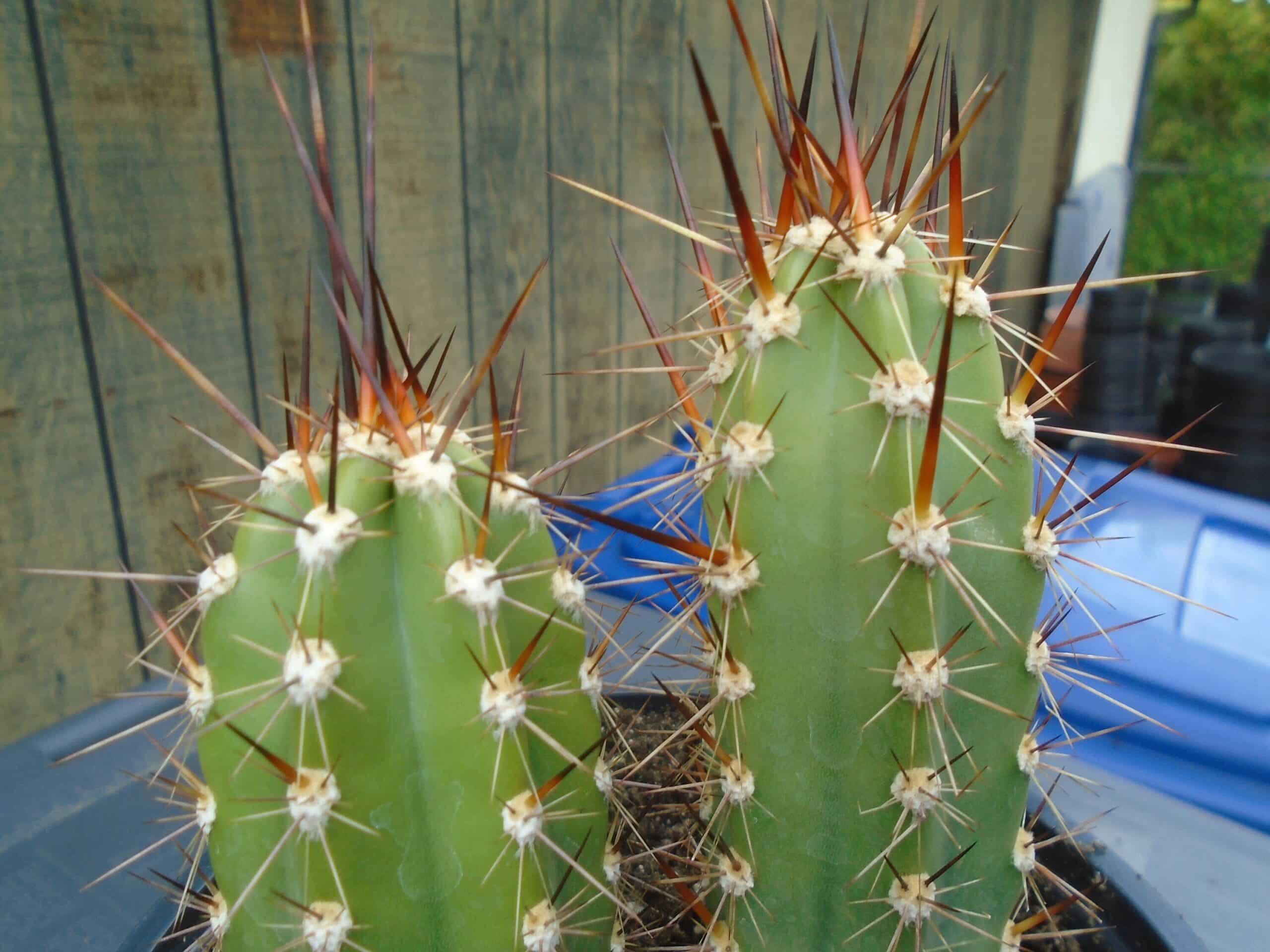
What do you think of columnar cacti? These are plants that usually protect themselves with thorns, especially when young, as they are more likely to reach adulthood this way. Once they have grown in size, they may lose some or all of it, or continue to grow but shorter. In the case of our protagonist, Neoraimondia herzogianaremains a prickly cactus throughout its life.
Moreover, it must be said that usually grows at a fairly rapid rate, unlike other cactus species which are generally slow. Thus, it is certainly very interesting to plant it in a garden.
Where does it come from and what does it look like?
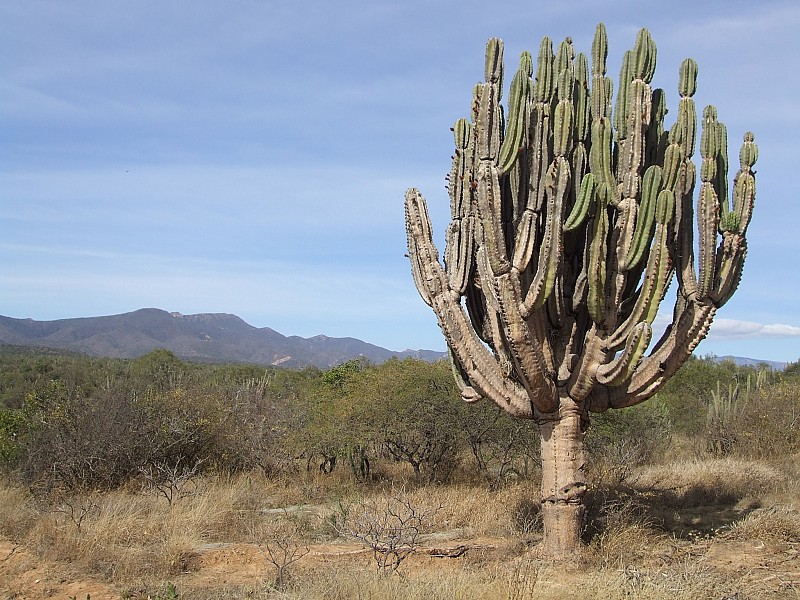
Image – cactusinhabitat.org
The Cactus Neoraimondia herzogiana it is endemic to Bolivia. To be more exact, it grows at altitudes between 600 and 1,900 meters above sea level, so we are talking about a plant that can withstand if not extreme cold. This is undoubtedly something very interesting to know, since you can choose to grow her outdoors throughout the year if the weather allows it.
If we talk about what it is, that is to say its characteristics, we must say that It is a columnar cactus that over time acquires the shape of a candelabra. It can measure 15 meters high, but its main stem remains thin: about 20 centimeters thick. As I said in the introduction, it protects itself with thorns, more precisely, it has about 5 that grow from the center and a dozen that are radial. The latter are shorter than the central ones, measuring only 1 or 2 centimeters long.
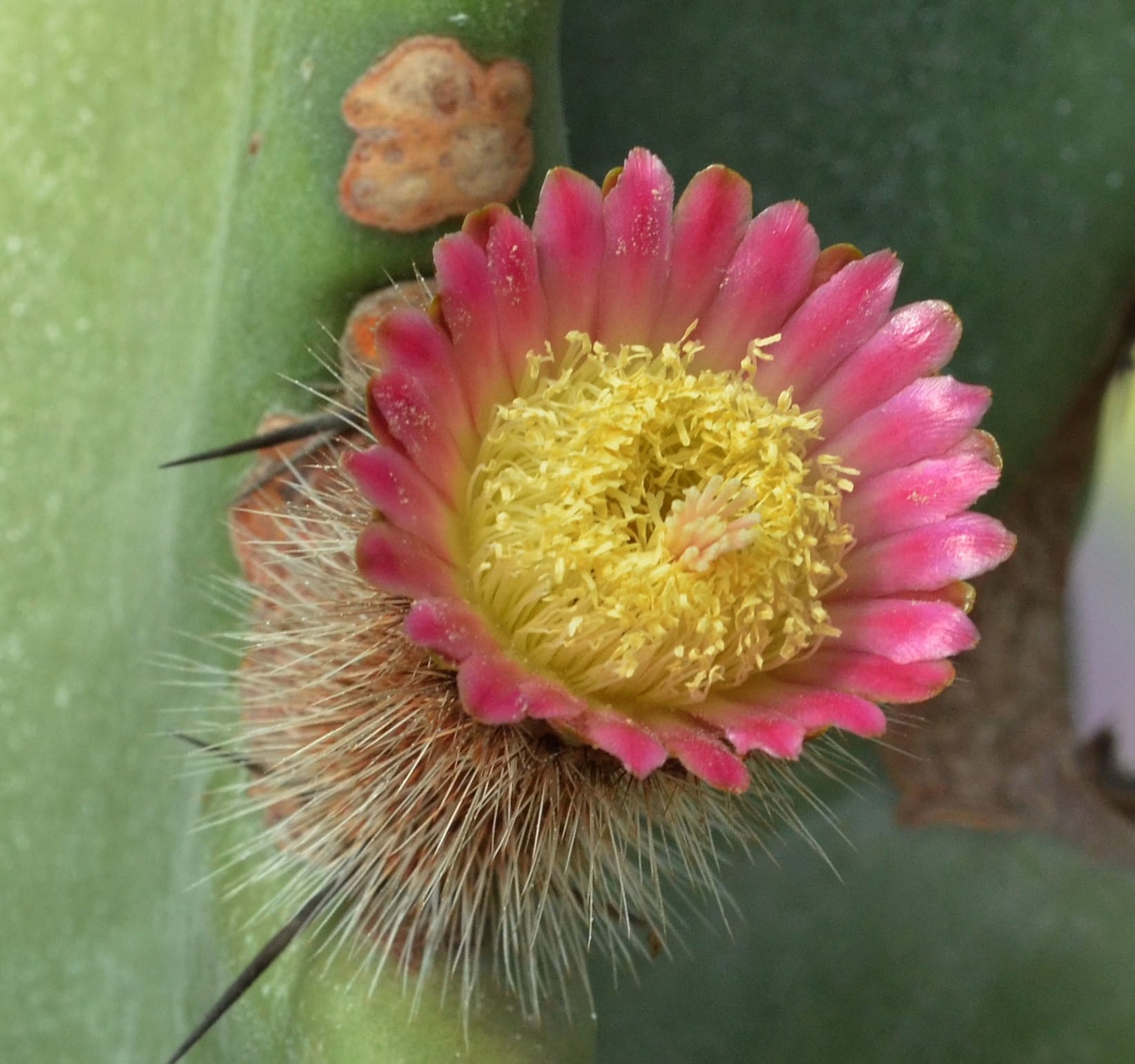
Image – Flickr/Cerlin Ng
Flowers They are only produced by mature specimens. They measure about 6 centimeters in diameter and are white or pink.. Once pollinated, they produce fruit suitable for consumption.
What care does it require?
We are now going to explain the care that must be given to the Neoraimondia herzogiana. And it is that, of course, it is interesting to maintain it for a long, very long time, so it is important that we go to see everything we have to do to achieve this:
Location
It is a plant that requires a sunny exposure from the beginning of its life. But if you bought it in a supermarket (in Spain the chains Aldi and Lidl usually sell young specimens from time to time), or in a nursery where they kept it indoors, you should NOT buy it. expose to direct sunlight as it will burn. In these cases, it is preferable to put it in partial shade, or even in the shade but in an area where there is a lot of light.
When it’s been with you for at least a month, and whenever it’s spring, it’s a good idea to start exposing it to direct sunlight for a while – no more than an hour – every day.
To land
- Flower pot: If you are going to have it in a pot, you must put cactus soil in it. Now I recommend that you plant it in the ground as soon as possible, because that way you will make it grow a little faster.
- Garden: garden soil must quickly absorb and filter water. Cactus roots do not tolerate being always wet. In addition, it is important that they can develop well; this is why the earth must also be light.
Irrigation
The watering of Neoraimondia herzogiana it will be done when the earth is completely dry. This can be once a week, or even once a month if it is winter. It all depends on the weather and the season of the year. If in doubt, check whether it is dry or not by inserting a plastic stick all the way to the bottom.
In any case, when it comes to cacti, often the best in these doubtful cases is to wait a little longer. Of course, if it happens to the extreme that the earth is extremely dry and compact and it is very difficult for it to absorb water, what you have to do is immerse the pot in a basin of water for half an hour.
Subscriber
When to fertilize the cactus Neoraimondia herzogiana? It should be done in the middle of the growing season, which begins in spring and ends in autumn. when temperatures begin to drop below 15°C. To do this, you must use fertilizers indicated for succulents, otherwise we could provide more nutrients than you really need.
Of course, I advise you to use organic fertilizers to take care of the environment, and above all, always follow the instructions for use that you will find on the product.
Multiplication
It is a plant that It propagates both by seed and by cuttings. throughout the spring, and you can even in the summer as long as it’s not done during a heat wave.
hardiness
Cold resistant, but only down to -3°C and occasionally; That is, if in your area there are frosts every year, and they occur several times during the winter, it is better to put the cactus inside the house. But if the frosts are very rare and also very weak, then you will have the opportunity to keep it outside.
you knew the cactus Neoraimondia herzogiana?