
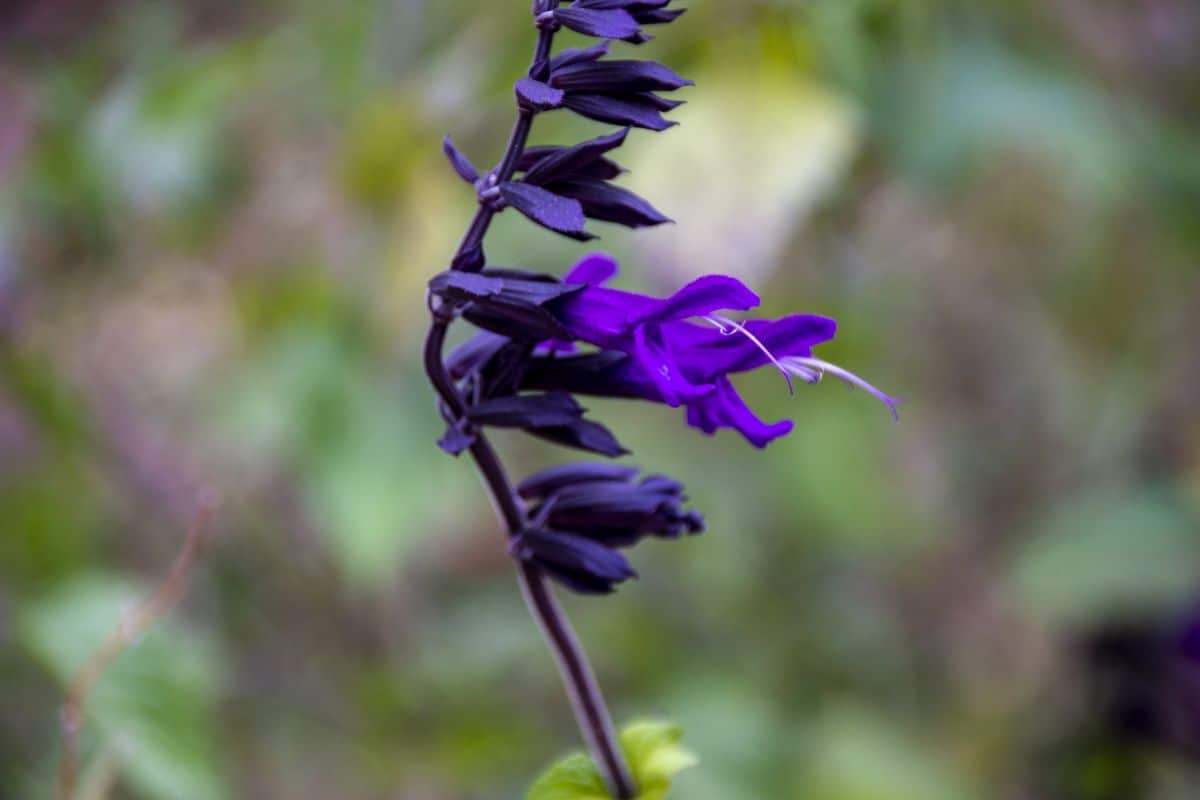
If you love plants in your garden, you surely have some common ones, but have you ever heard of blue salvia? With the botanical name Salvia farinacea, its maintenance is very easy to respect and in return it offers you a vision in the form of beds or striking pots with the most beautiful flowers.
If you want to know more about this plant, and especially to find out what are the simple care you must be happy, then we will tell you everything. Dark?
How is the blue sage?
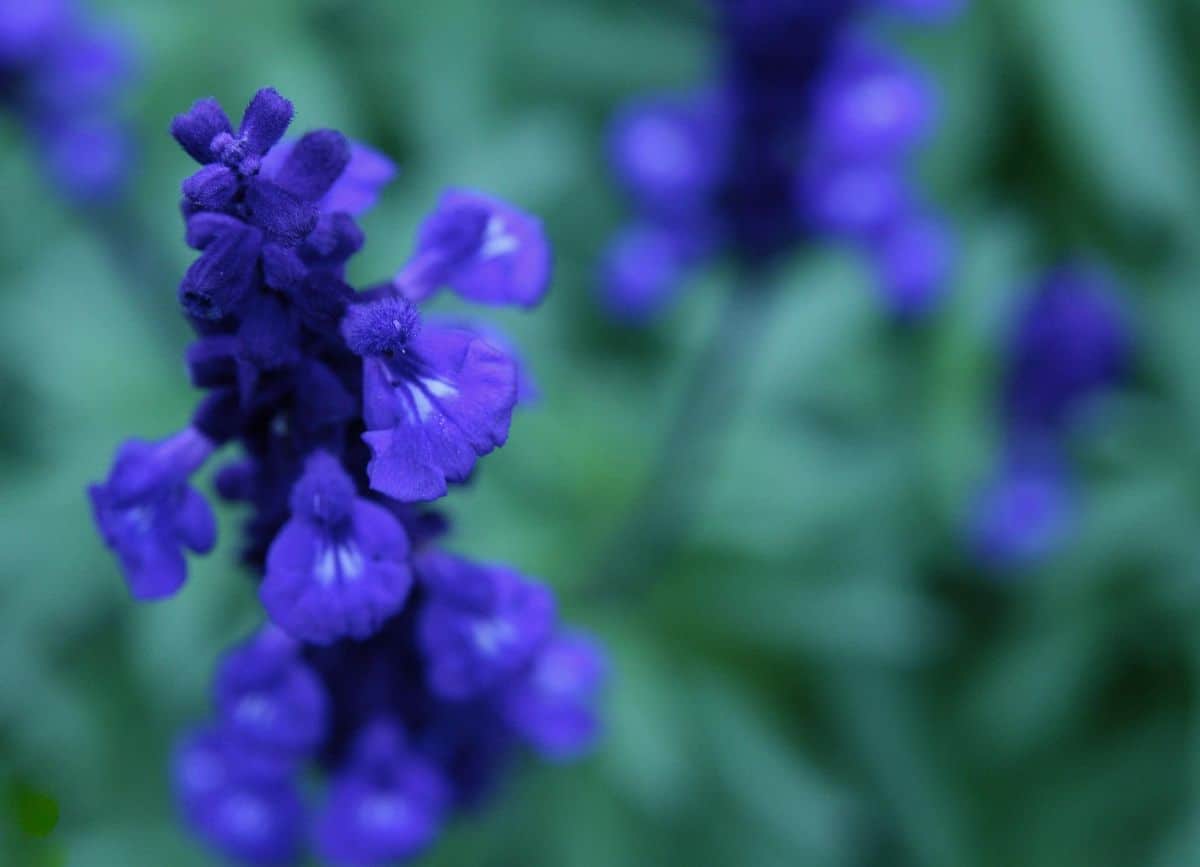
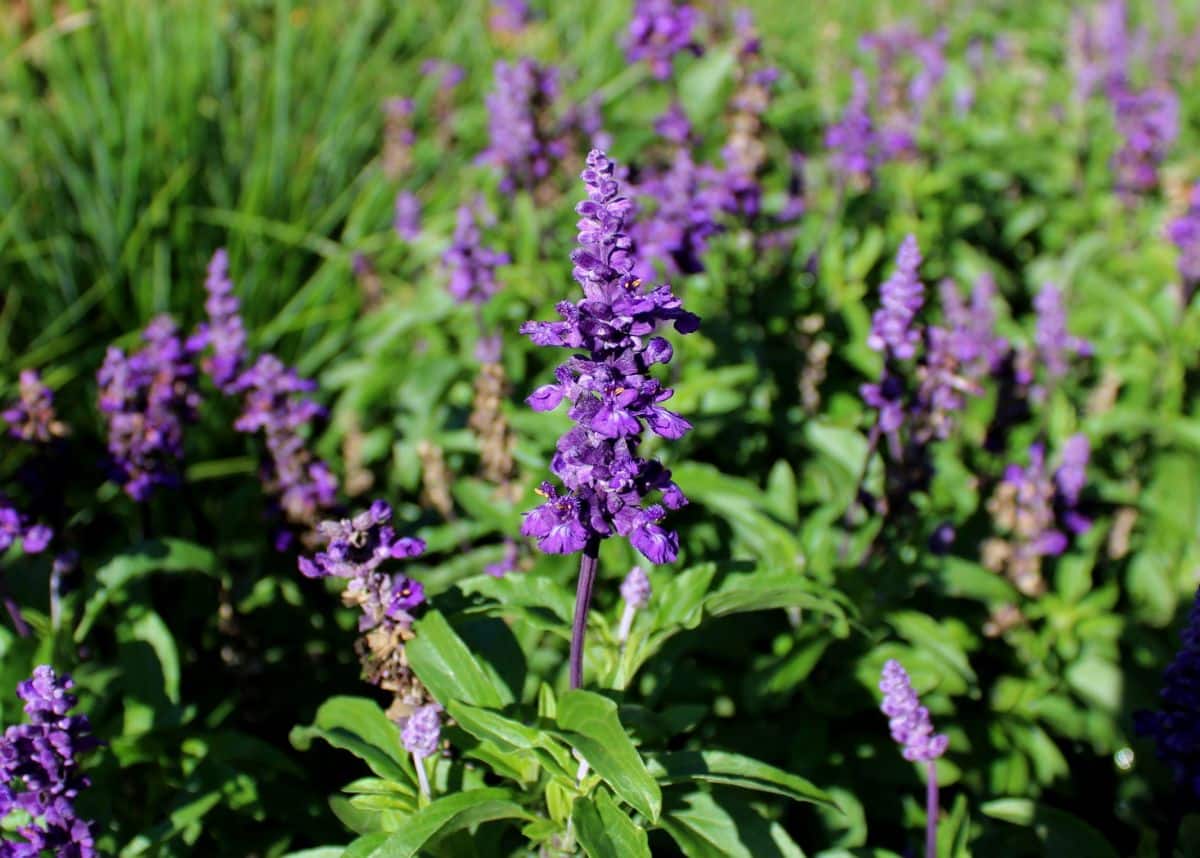
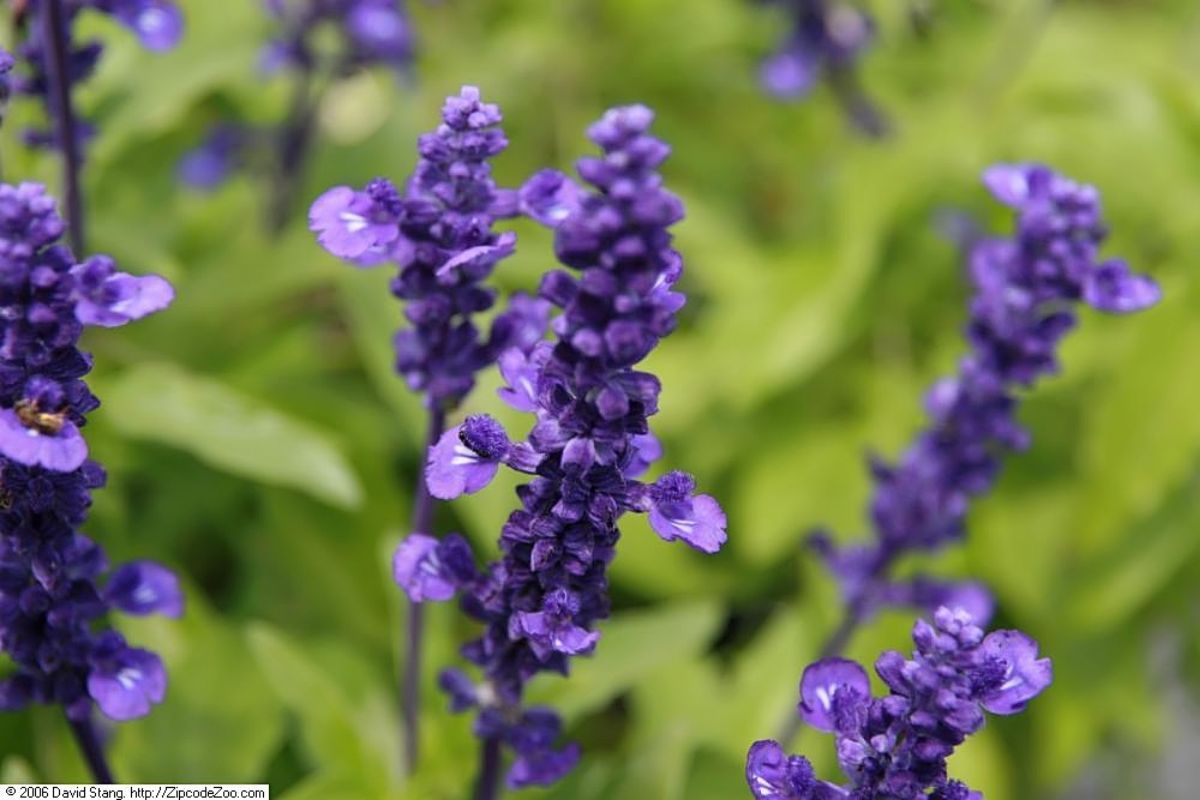
The origin of Salvia farinacea lies in Mexico and the United States. It is a herbaceous plant which has as main feature some pretty flowersfrom the end of spring to the end of summer or even until autumn, of a very beautiful indigo blue color.
The plant does not exceed 90 centimeters in height and it has elongated, shiny leaves, from which the flowers come out. In addition, it tends to attract butterflies, but also bees (be careful if you don’t like these insects).
Salvia farinacea care
Now that you have an idea in your head of what Salvia farinacea looks like, it’s time to tell you about the care it will need. It must be said that it is not a plant that requires a lot, quite the contrary. But it is convenient that you know what is needed so that it does not fade.
location and temperature
The first thing you need to know is where the blue sage will be best. In this case, it will depend on the climate you have. If it is cold, it is better to place it in a well protected place (because it does not tolerate low temperatures) and where it receives the most direct sunlight.
Now, if you live in a hot climate, a semi-shaded area is best where it gets direct sunlight in the morning, but not in the afternoon.
From what we said earlier, this sage does not tolerate low temperatures, so if you see that he is losing all the leaves and part of the aerial zone, he is in pain. Don’t worry, because in the spring it should recover if you protect it.
Speaking of temperatures, we can tell you that below -2°C you will need extra protection. On the other hand, the heat supports it much better; that yes, the only thing that will ask you is that you water it more times, but other than that, you will not have anything else.
Ground
The ideal substrate for salvia will very much depend on whether you plant it in the ground or in a pot.
If it is in a pot, it must be provided with very fertile soil that is as drained as possible. This implies that you should use nutrient-rich soil which you should mix with perlite or similar so that the soil is looser and the roots of the plant can easily spread through the holes.
What if you had it in the garden? If possible, it is recommended that the earth is also fertile and that it is a little loose, but the truth is that it can get used to it, at least if it is already an adult specimen and that he has been in the same area for a long time. Even so, it is best to fill the hole with mulch or similar to feed it for the first few months.
Of course, if you are going to plant several salvias, make sure there is one. minimum distance of 30 centimeters between them so that they do not interfere or invade the space between them.
Irrigation
One of the most important cares for Salvia farinacea is irrigation. You don’t have to worry too much because it’s a plant that doesn’t need to keep its soil moist all the time. But it does not like to suffer from drought, so you have to control the precise moment to water it.
In case you have it potted, it is best to wait to see how the soil dries before watering it. If you planted it in the garden, you will have more freedom because it tolerates a short dry spell in these cases. Indeed, when it is watered it must be abundant because the roots of this sage are quite deep and the water needs time to reach them.
Subscriber
As for “extra” energy, it should be considered that the plant will be much more active in spring and summer than in autumn and winter. This means that you will have to pay it during those months.
The best fertilizer for Salvia farinacea is humus or earthworm manure. if you apply it every 15 days your plant will thank you.
Plagues and diseases
It should be assumed that this is one of the Salvia farinacea treatments that should worry you the least, as it is very resistant to both problems.
Now, that doesn’t mean that nothing can attack it; in fact, it is customary that aphids delight in tender shoots, That’s why you need to monitor the development of your plant so that nothing happens to it.
Multiplication
If you like blue sage, you might want to breed it. And the truth is that you will be able to do it in two different ways. On the one hand you have seeds, that for this you need to bloom and collect them. Of course, it is recommended to keep them cold for a week, then plant them.
We do not assure you that they will all germinate, as it is a somewhat complicated process. For this reason, the following that we explain to you is better.
And it is that, on the other hand, the way to reproduce the Salvia farinacea can be by cuttings. This form is quite simple and is based on cut a piece, always at the end of the branches (Choose a mature plant to have a better chance of success). Once cut, just plant it in the ground so that it can take root.
As you can see, the maintenance of Salvia farinacea is not complicated at all, and in return you will get a plant with beautiful blue flowers, something unusual in the plant kingdom. These plants are not easy to find but if you search a little you will find it. Do you dare to try to take care of a blue sage?