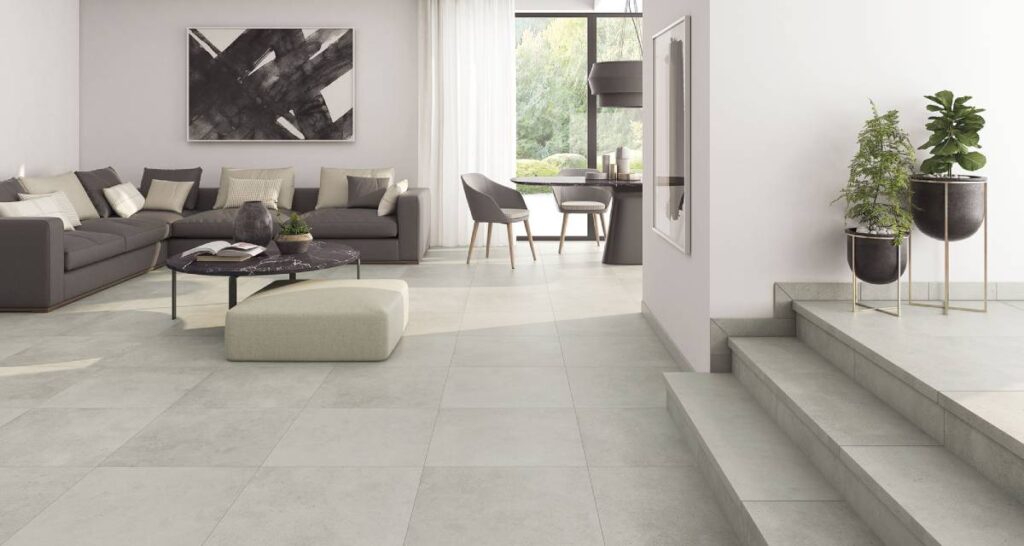
The ceramic stoneware flooralso simplified to sandstone, is a material composed of a mixture of clay and mineralswhich is characterized by its tenacity and strength. It is commonly used in flooring because it is very Easy to clean and maintain. In addition, porcelain flooring is resistant to humidity and heat, making it ideal for any type of environment that requires quality, resistance and comfort when walking.
If you are planning to renovate the floor of your home or just want to give it a touch of style, stoneware flooring is an excellent option. Then we will tell you everything you need to know about this material so that you can choose the one that best suits your needs.
The best of all is that today you can design your home practically without leaving it, by consulting the online catalog, by going to the stoneware flooring store or by drawing inspiration from hundreds of photographs of houses and garden environments.
Benefits of porcelain stoneware for your floor
Stoneware flooring is one of the big winners when it comes to choosing a material with an attractive price and high resistance. Some of the advantages offered by this type of flooring are:
- Endurance: porcelain stoneware offers great hardness, resistant to weight, shocks and even falling objects due to dead weight.
- Many options to choose from: You can choose from a large number of stoneware catalogs with different designs, colors and finishes. Textures that imitate wood, perfect for the interior of the house, such as rustic stoneware, ideal for rural or country houses.
- Easy cleaning: It is a very easy material to clean and maintain, as it is perfect with any neutral pH soap, even using more aggressive products than with other types of ceramics, and we dare not no longer do it.
- Ease: It is one of the most used materials in the world, largely thanks to its ease of installation, even above a paving already laid on the ground.
Porcelain stoneware or porcelain stoneware?
It should be noted that, although there is a lot of confusion on the Internet, the porcelain stoneware is not the same as porcelain stoneware. Although both materials come from clay, in porcelain stoneware it is much more refined, offering different characteristics from porcelain.
Being more refined, porcelain stoneware is recommended inside the house or in areas where we are looking for more delicacy in the processsuch as living areas, hallways and bedrooms, although it is valid for the whole house without any problem.
In fact, one of ceramic stoneware textures The most interesting is that of wood, since a high degree of purity is achieved in the imitation (with all the grains and textures) and it gives a very interesting tone of warmth to the house.
With porcelain tiles you can achieve a wide variety of colors and textures, but since the clay is not purified, its touch is coarser and less warm, being more recommended for outdoor spaces in the garden, patios and porches. However, in the latter case, we will always recommend thickened stoneware as the first option, due to its excellent conditions of resistance to temperature changes and its non-slip surface.
differences
- Porcelain is more resistant: It is more suitable for transit areas or outdoors, being also resistant to temperature changes.
- Porcelain stoneware offers more quality underfoot: ceramic provides a tread of greater warmth and more feeling of comfort.
- Porcelain is more expensive: there is a slight difference in price, with porcelain being a bit more expensive than ceramic.
- Porcelain stoneware is more realistic in the finish: When it comes to mimicking colors and textures, such as wood, the finish of porcelain stoneware is superior to that of porcelain.