
If you purchase an item through links on this page, we may earn a commission. Our editorial content is not influenced by commissions. Read full disclosure.
Why are some yarn projects wonderful and others rough? Why do some look fabulous and some look cheap? There are many wonderful types of yarn, from alpaca wool to acrylic, and each creates a different look and feel.
If you’re new to knitting and crocheting, it can be overwhelming to see all the different types of yarn in store. You must choose the right variety to succeed in your project.
In this guide, you’ll learn about the wide varieties of yarn and how to use them in your creative journey, as well as how to choose the best yarn for your project. Let’s dive!
What are Yarn Fibers?

Before choosing your yarn for a new project, you need to understand yarn fibers and how they influence your knitting or crochet projects. You will find both natural and synthetic fibers when searching for yarn.
Each of these types of threads has advantages and disadvantages, which we will discuss shortly. There is no perfect type for every project.
The fiber of the yarn will determine the texture, shape and color of the final piece, so it is essential to pay attention to the type of fiber when selecting skeins (balls of yarn). To put it simply, fibers are divided into animal, vegetable and synthetic types.
Here is a list of the most common animal fibers:
- Silk
- Alpaca
- Wool
- Cashmere
- Angora
Plants include:
The last type of yarn fiber is made of synthetic materials:
Synthetic yarn is the best choice for beginners who don’t want to invest too much money at first and want a wide choice of colors.
In the long run, these yarn fibers aren’t as durable as plant or animal fibers, but they’re great if you want to teach kids or experiment before committing to a complex project.
Advantages of wool, cashmere and alpaca
Wool is one of the most popular yarn choices because it is soft and comes in so many varieties. For example, there are several wool yarns, such as:
These woolen yarns are perfect if you want to make a garment like a sweater, as they are durable, dirt-resistant and flexible. Wool is more likely to last for decades with proper care and maintenance.
The only downside to wool is that the texture can be itchy on sensitive skin. If you have skin problems, wool can be irritating, so it’s important to smell them and choose a mild variety.
Cashmere
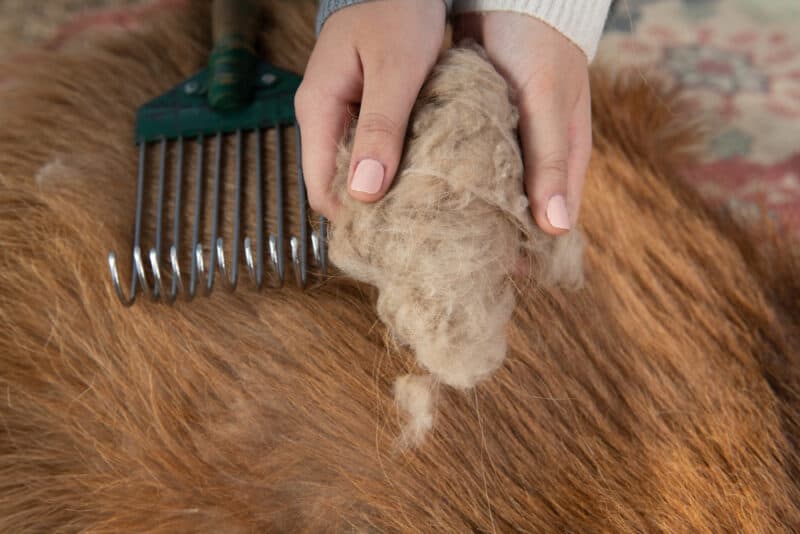
Cashmere is one of those types of luxurious yarns that instantly feel like wearing a fluffy cloud. If you’ve ever smelled cashmere, it’s hard to forget its beautiful texture.
When looking for a yarn for gifts, cashmere is a great choice. You can gift your loved ones a luxury product and provide something comfortable for the winter months.
You can also make cashmere items for summer days as it is lightweight. But it has excellent insulation and is incredibly soft.
Even though cashmere can be expensive, it’s worth the investment if you want to buy a soft and versatile yarn that will take your pattern to the next level.
Alpaca

Alpaca yarn is a great fiber if you need a hypoallergenic material. You can’t go wrong with an alpaca scarf or blanket as it is good for keeping warm in cold weather as alpaca fiber is made up of hollow voids that trap air while remaining lightweight.
Alpaca can lose its shape because it lacks the elasticity of some other fibers like merino wool. Alpaca can be rough on the skin and it costs a pretty penny.
But it’s breathable, water-resistant, and retains heat, making it perfect for blankets, ponchos, and sweaters.
If you’re interested in dyeing yarn, alpaca is also great for experimenting with colors!
Are vegetable fibers better?
Vegetable fibers are ideal for summer creations where you need a light material. You can also use bamboo, linen, cotton, or a blend for a soft texture and lightweight fabric.
Cotton
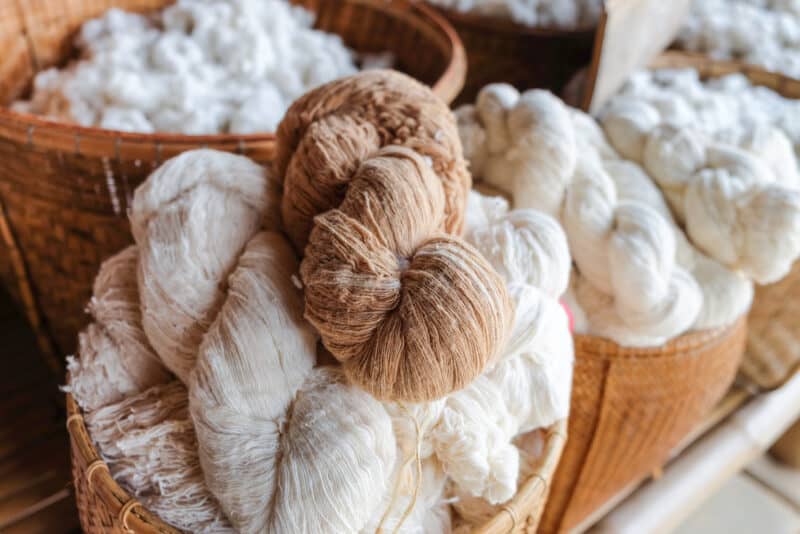
Similar to wool, there are several types of cotton available in the yarn market. Look for Egyptian, Pima and American cotton. Typically, people use Egyptian cotton for soft items like pillows, but it is the most expensive variety of cotton.
American cotton is the standard choice as it tends to be more affordable and is available in a wide range of colors. If you love making colorful projects and want lightweight yarn, stock up when you find it on sale.
Cotton is also convenient because you can wash the material in the washing machine, so you don’t have to worry about ruining your finished project once it needs cleaning.
Bamboo
Unlike other yarn fibers like cotton and wool, bamboo is a recent trend in the yarn world, but there’s a good reason for its growing popularity. Made from bamboo plant fibres, this yarn is ideal for making delicate summer items and is eco-friendly.
Bamboo yarn is a little more expensive than synthetic yarn, but it lasts longer and is gentle on the skin. Bamboo yarn isn’t as warm as wool, so it’s not the best option for winter wear or blankets.
You can keep a combination of bamboo and wool yarns on hand, so you can choose according to the season and your needs.
Use synthetic yarn as a beginner
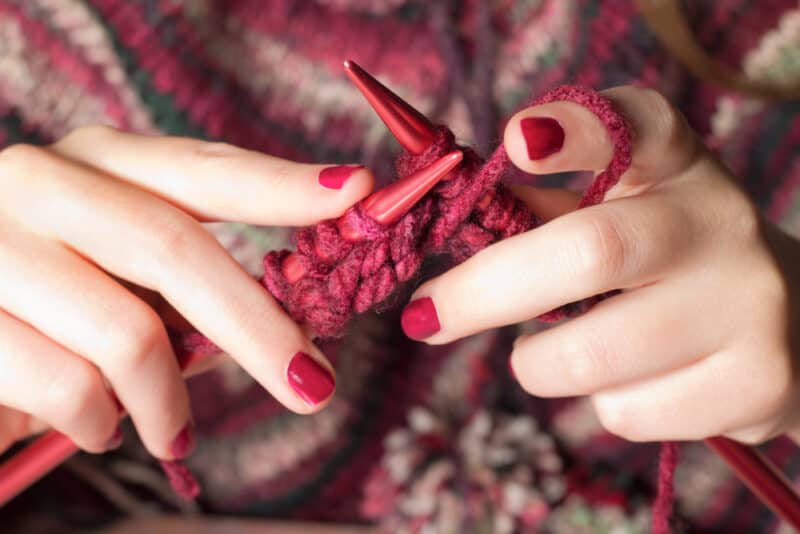
Your stage and skill level will influence the yarn you buy to crochet or knit. You don’t want to spend a lot of money on an expensive skein of yarn for your very first project. It will be a waste of money.
The best advice for new crocheters or knitters is to start with acrylic, rayon or nylon yarn and practice your stitches before investing in a nice yarn. You can also use polyester, which is usually a mix of man-made and natural materials.
If you’re new and looking for budget-friendly options, synthetic fibers allow you to create new patterns and increase your yarn budget as you learn. They are available in a huge range of colors, so you won’t run out of color choices.
Alternatively, you can use a blend of polyesters, acrylics and wool. These options are less expensive than pure yarn balls, so you can still get that luxurious feel without spending a lot of money.
Fancy and specialty yarns
Beyond the material the yarn is made from, you can also find novelty types like faux fur, chenille, tweed, heather yarn, and more. These are usually made from artificial materials,
Tweed is a yarn with flecks of color and chenille has short strands making it super soft and fluffy. The faux fur is made of acrylic and recreates the feel of soft, luxurious fur.
The heather yarn appears to be a solid color, but is actually a blend of similar tones to give the appearance. The self-striping yarn has variable colors throughout, so the finished piece has an interesting color pattern.
The weight of thick/thin yarn varies so that your finished piece will have a thick area contrasting with a thinner area.
Marbled yarn has different colors of yarn twisted together
Once you start buying yarn, you will continue to discover new varieties as you go. You will always come across new threads that you have never seen before!
Steps to choose your thread
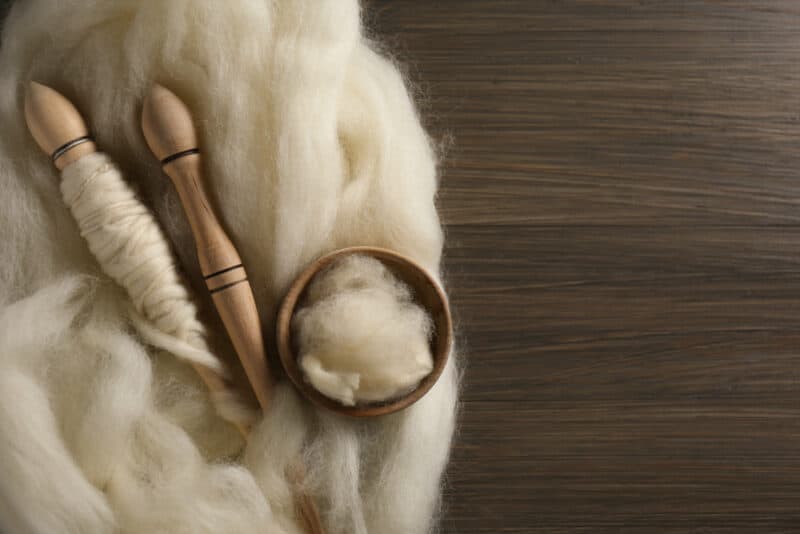
In addition to the fibers, another characteristic of the yarn is its weight. It just means how heavy and chunky the thread is. The command goes:
- Lace (weight 0)
- Super fine (1 weight)
- Fine (2 weights)
- Lightweight (3 weights)
- Medium (weight 4)
- Bulky (weight 5)
- Super bulky (6 weights)
- Jumbo (weight 7)
Depending on the weight, you will need different sized needles. You cannot use a size 3 needle to knit jumbo yarn. Instead, you would need something like a size 17 needle.
Choose a thread
Here are the main questions you should ask yourself when choosing yarn:
- Will you carry the final article?
- How much does the yarn cost and how much will the project cost?
- Does the final item need to be machine washable?
- Are there many colors in the pattern?
The last thing you want is to throw a delicate fiber in the washing machine and watch your work unravel. Be sure to read the washing instructions before making a purchase and be realistic about your needs.
After asking yourself these questions, it’s time to think about the model. Most of the time, you can find the yarn weight requirements on the knit or crochet pattern, where you will also find hook or needle size information.
As a beginner, these details may not seem important, but they will determine whether or not the finished project looks like the original photo. You can easily get the dimensions and gauges wrong without the correct wire.
Choose the yarn you like
This article gives you an overview of the different yarns and their benefits, but the choice will ultimately come down to your preference. Ideally, you can visit a store and feel the yarn between your fingers and see the colors in real life.
It is also good to look at the label to find details about the type.
If you order online, you can check the reviews to make sure it is a good quality yarn. Then place an order and experiment with your new yarn!
Was this article helpful?
Yes No ×
We appreciate your helpful feedback!
Your response will be used to improve our content. The more feedback you give us, the better our pages will be.
Facebook pinterest