When I asked her if she loved or hated peonies, a gardener friend of mine (who had been growing peonies for a few decades) simply said “yes”. And it made perfect sense!
What’s not to love about peonies?
Its showy, colorful flowers would make any skeptical plant fall in love. One of the frustrations of growing peonies is their susceptibility to diseases such as bacterial leaf spot and fungal rust. And peonies can have irregular blooms if not fertilized properly.
Here’s our little guide to the best practices for fertilizing peonies in the spring for bigger, more impressive blooms.
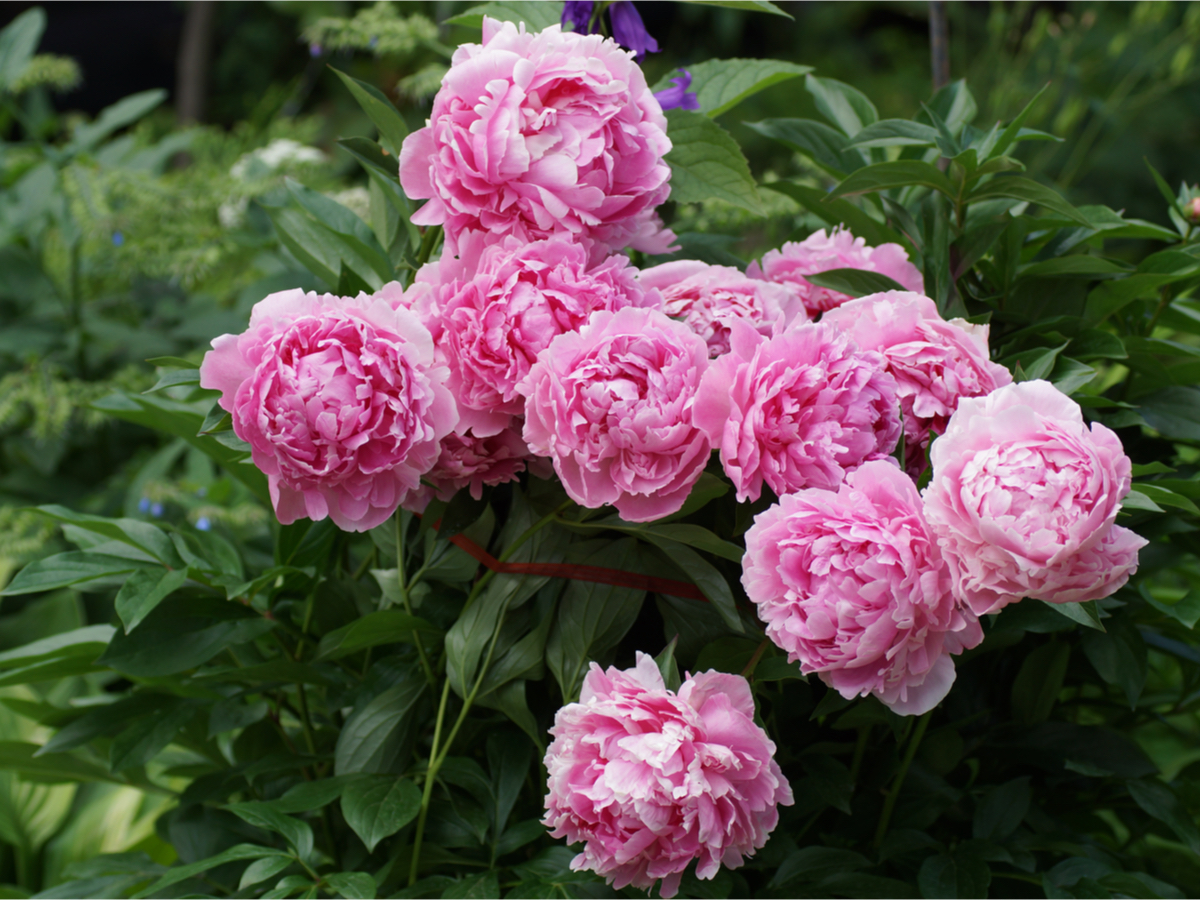 A bush of double pink Sarah Bernhardt peonies in bloom
When should I fertilize peonies?
First, let’s talk about when not to fertilize peonies.
Experts at the University of North Carolina Cooperative Extension go so far as to recommend not fertilizing peonies until they have been in the ground for at least five years.
But other experts believe that by the third year the plant should be established enough to withstand light fertilization. Most peonies may not bloom in their first spring and bloom only sporadically in their second year.
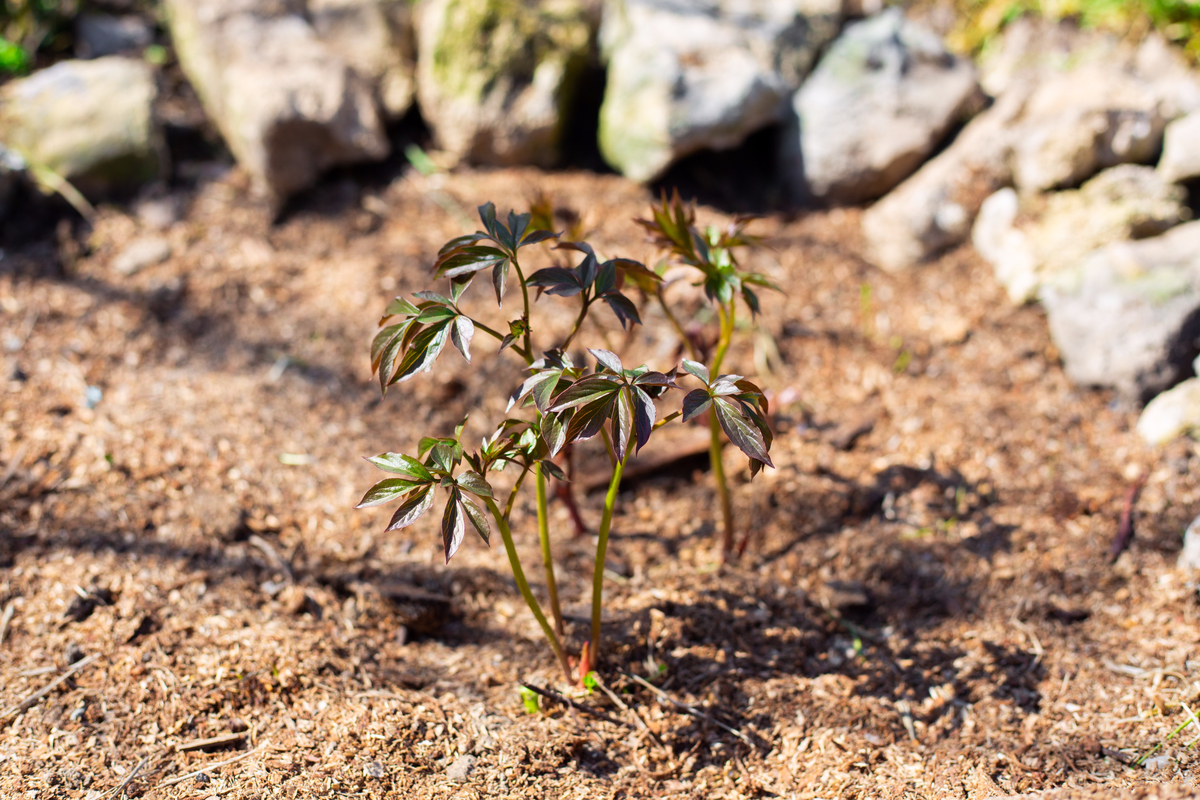 Young peonies will probably not bloom the first year.
If your peony flowers in its first year, you can even remove the flower buds to allow the plant to maximize its root and leaf growth in its first growing season. I know cutting small flowers doesn’t sound like much fun, but consider it an investment in the future well-being of your mature peony plants.
Once your peonies are established, there are two main times when you should fertilize them: pre-bloom and post-bloom. In most climates, this translates to early spring and late summer (or early fall).
 Peony ‘Garden Treasure’ in the spring garden
In the spring, your peonies use a lot of energy to produce new leaves and prepare to bloom. When they start to flower, they need plenty of readily available food.
Think of your peonies as lanky teenagers going through a growth spurt who will eat you up all over the place. The best time to apply peony fertilizer in the spring is when the stems are about 30cm tall.
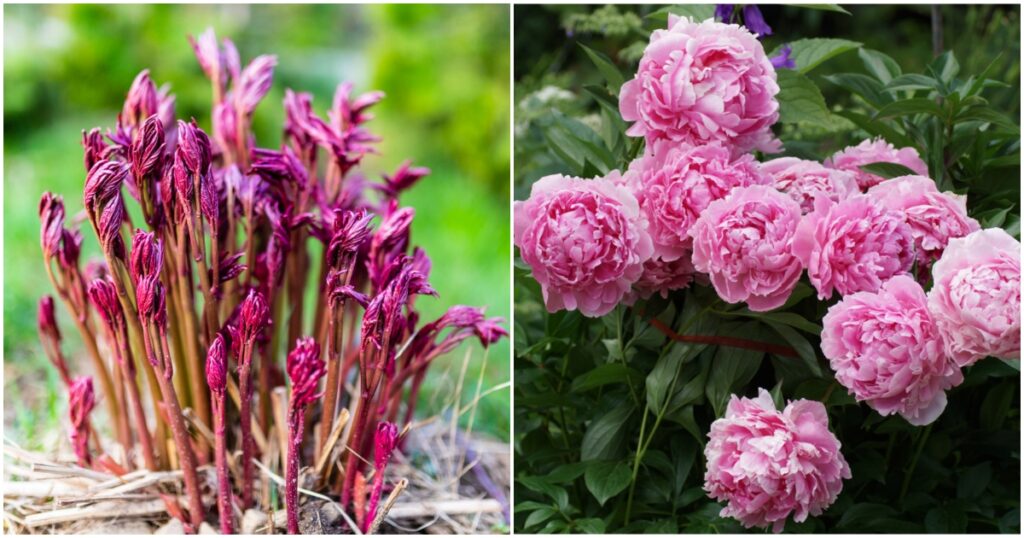
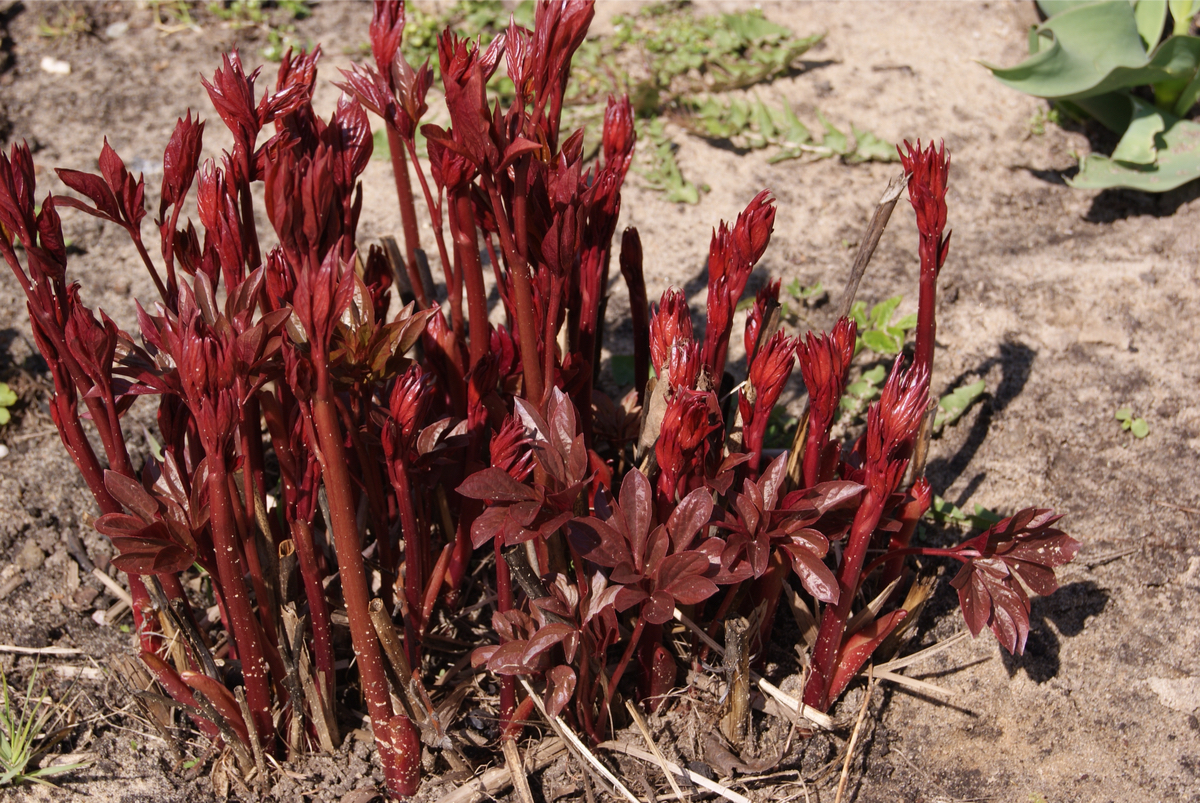 Young shoots of a peony in early spring in the garden.
In the fall, plants store energy and nutrients for flowers and foliage that will sprout the following year.
What type of fertilizer should I use for my peonies?
There are several fertilizer options you can use for your peonies:
1. Fertilize peonies with organic compost.

Sprinkle a handful of finished compost in a circle around your plant’s drip line. Peonies don’t like to be buried too deeply, so keep the compost layer light and avoid compaction.
This compost top dressing should be applied very early in the spring.
If you have your own compost pile, you’re off the hook. If you don’t have your own source of homemade compost, you can buy some from your local garden center, making sure it hasn’t added nitrogen (more on that later).
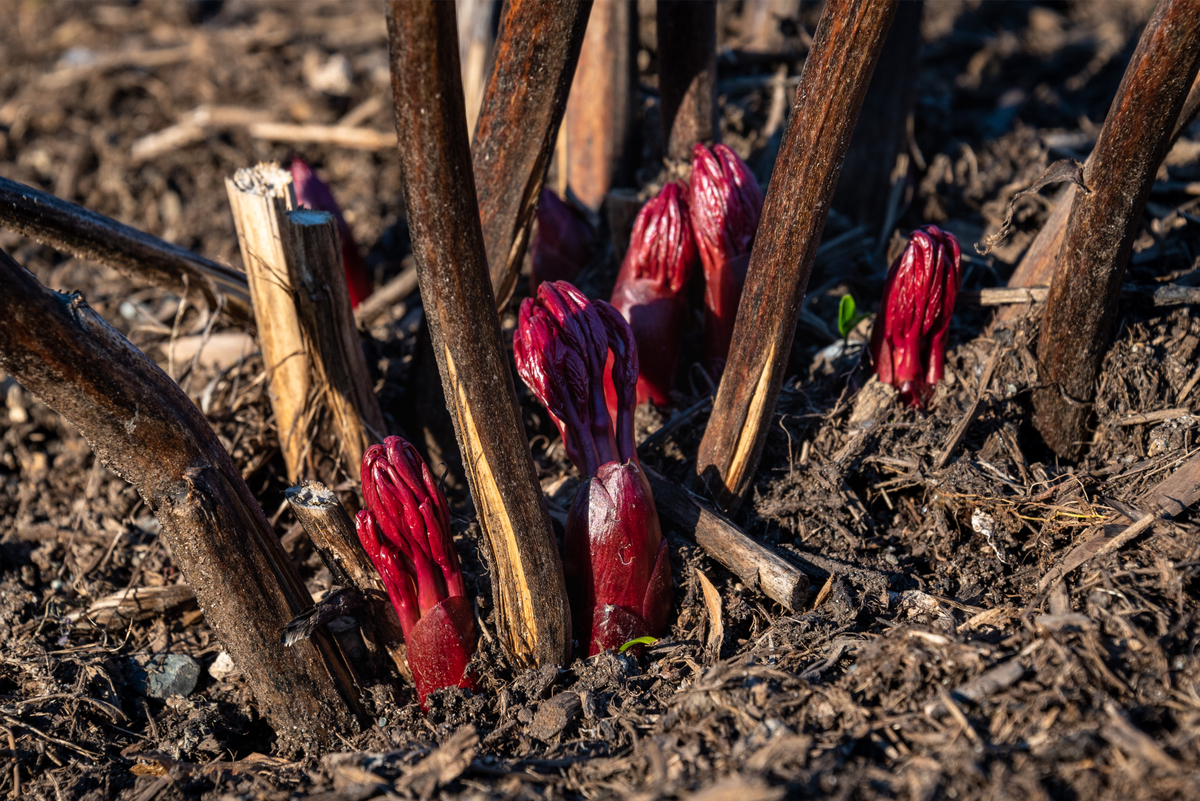 Ground peony roots and young shoots
2. Fertilize peonies with a slow-release organic fertilizer.
Apply the slow-release compost at least one month before the flowers appear. Dust lightly around the plant’s drip line (where the feeder’s roots are) and gently press it into the ground with a hand or finger rake. (Be sure to wear heavy-duty gardening gloves.)
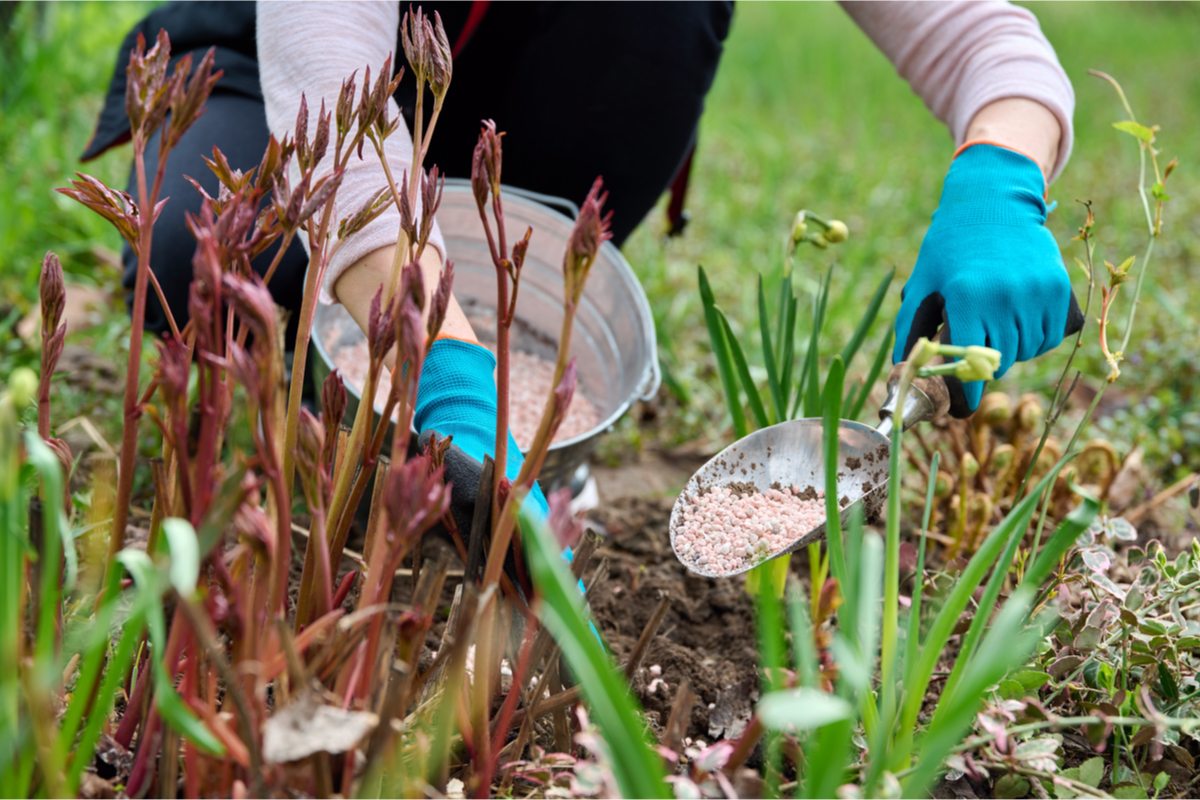 Sprinkle the fertilizer around the drip line of the plant.
There are a wide variety of slow-release fertilizers available on the market, so follow the package directions to get the right amount. This often depends on the size and age of your plant, whether it’s in a pot or a garden bed, and even depends on your climate and how much rain it receives.
The advantage of slow-release organic nutrient fertilizer is its increased availability during the growing season. In other words, your peony won’t be showered with a feast as soon as you feed it, but rather will have access to nutrition throughout the blooming season.
University of Illinois gardeners warn against over-fertilizing peonies. This is because too much nitrogen fertilizer promotes leaf growth, which has the side effect of reducing the number of flowers.
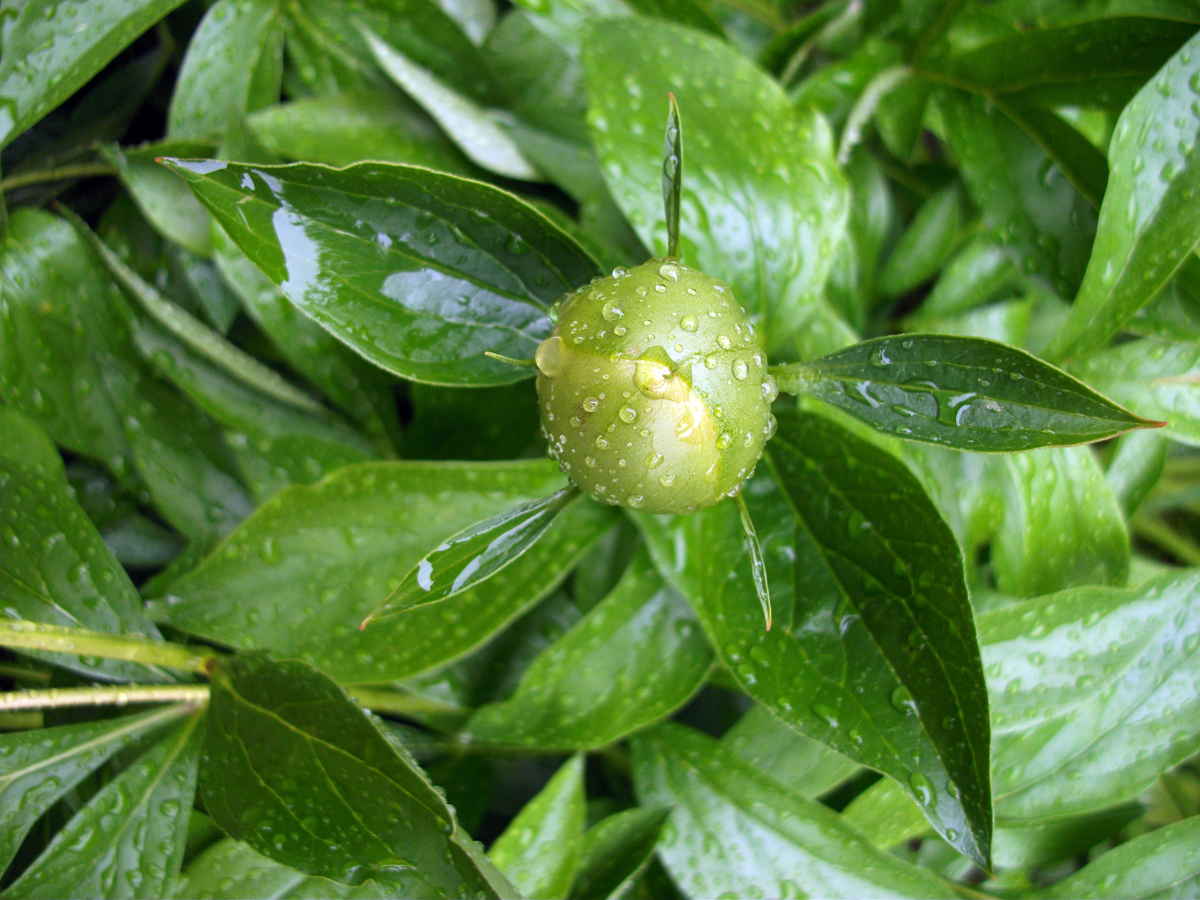
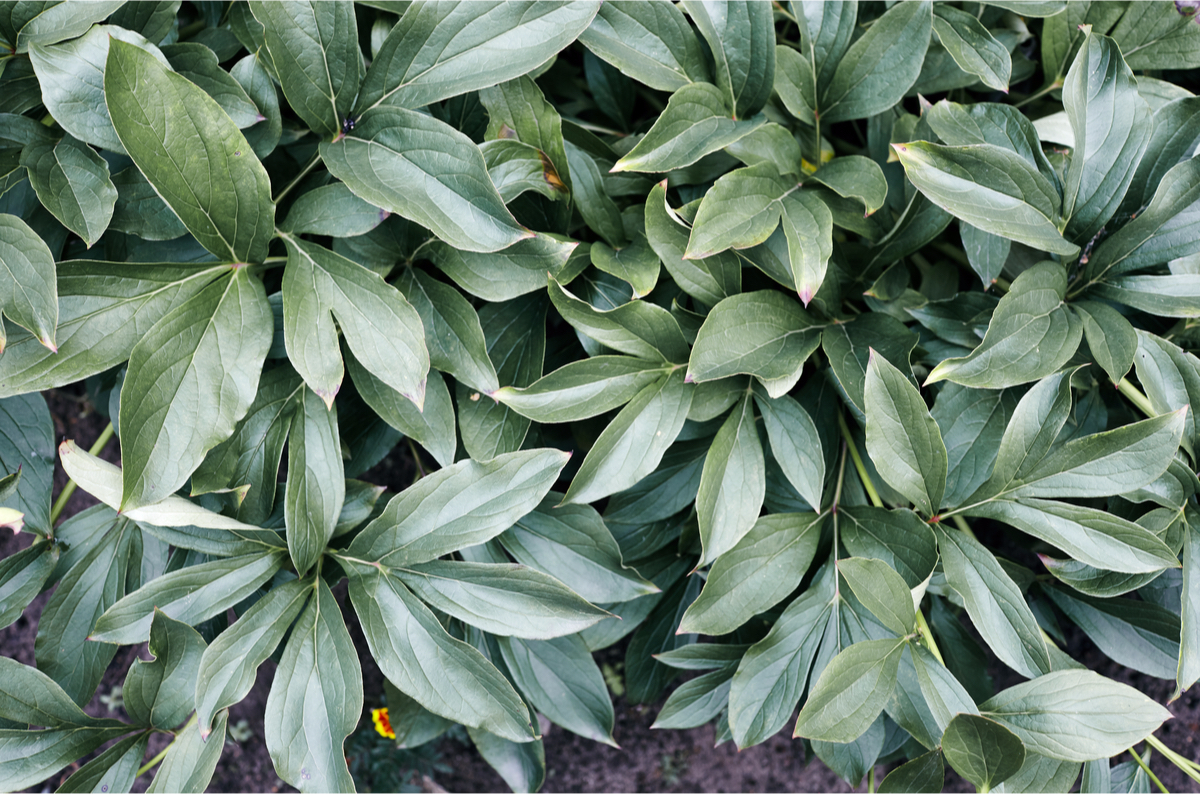 A bushy peony rich in leaves, but not too many flowers.
You can recognize a nitrogen-rich fertilizer by the NPK label.
All fertilizers have three numbers in bold on their packaging. The first number is the percentage of nitrogen (N), the second number is the percentage of phosphate (P), and the third number is the amount of potassium (P).
For peonies, look for a fertilizer with a lower first number. For example, a 5-10-10 mix will be low in nitrogen.
This slow release fertilizer from Lily Miller has an ideal NPK ratio for peonies of 4-10-10.
The same experts recommend using a fertilizer with a higher phosphate content (indicated by a higher average number). Maintaining adequate levels of phosphorus in the soil promotes the development of healthy and vigorous roots.
You can also use an all-purpose granular fertilizer, bulb fertilizer, or even rose fertilizer if you already have it.
To make sure you’re using an organic fertilizer, look for products that have the OMRI (Organic Materials Review Institute) seal and are safe for organic gardens.
This fertilizer from Good Earths Organics is OMRI certified and is ideal for fertilizing peonies in the spring.
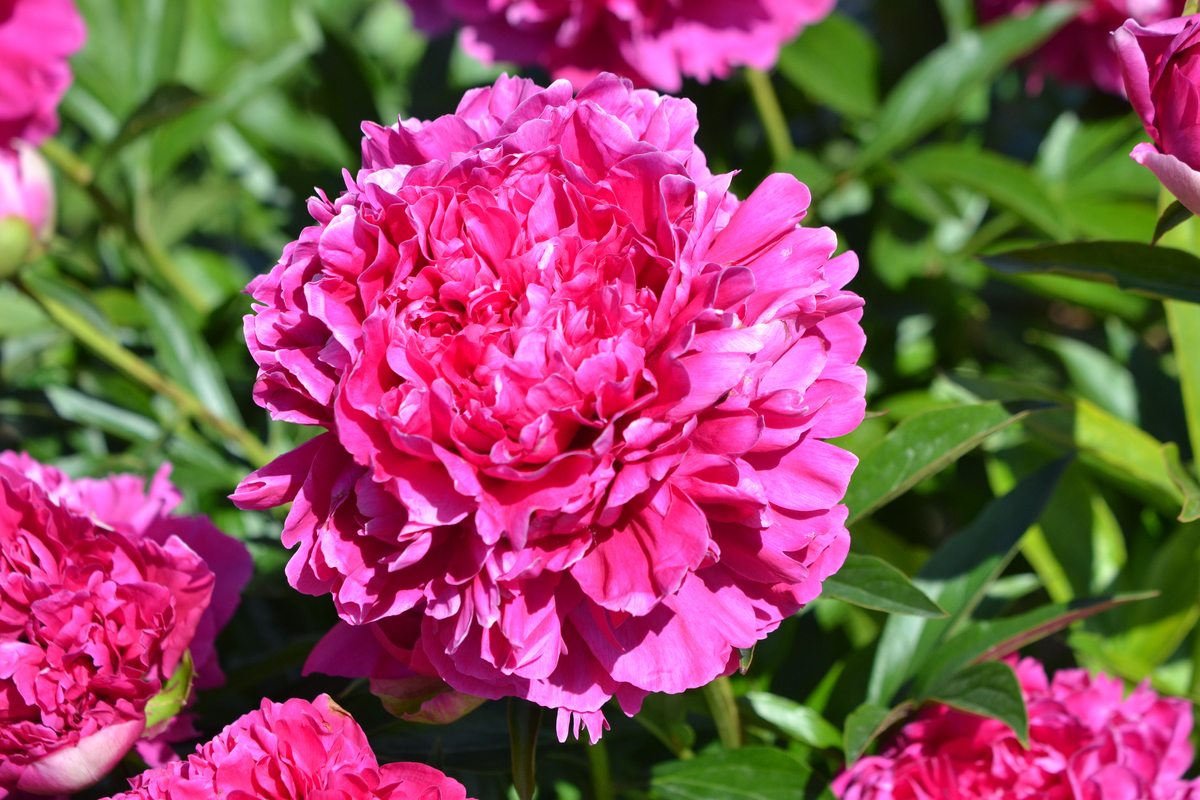 The Felix Supreme peony was introduced in 1955 by the Cottage Gardens nursery in Michigan.
Should I use manure to fertilize my peonies?
You can use a combination of compost and manure as fertilizer. While some growers swear by the results of feeding peonies cow dung, the American Peony Society recommends avoiding manure, especially near the plant stems, as it has been linked to the development of botrytis (an aggressive fungus that causes spots of gray mold on stems and flowers).
 Peony Mother’s Choice introduced in 1950 by American breeder Lyman D. Glasscock
Can I use a fast acting water soluble fertilizer for my peony?
Peony plants only produce one set of leaves per year, and once they’re gone, they’re gone. Therefore, you want to protect this leaf as much as possible throughout the season. Quick-release, water-soluble synthetic fertilizers can damage foliage by burning and turning it yellow.
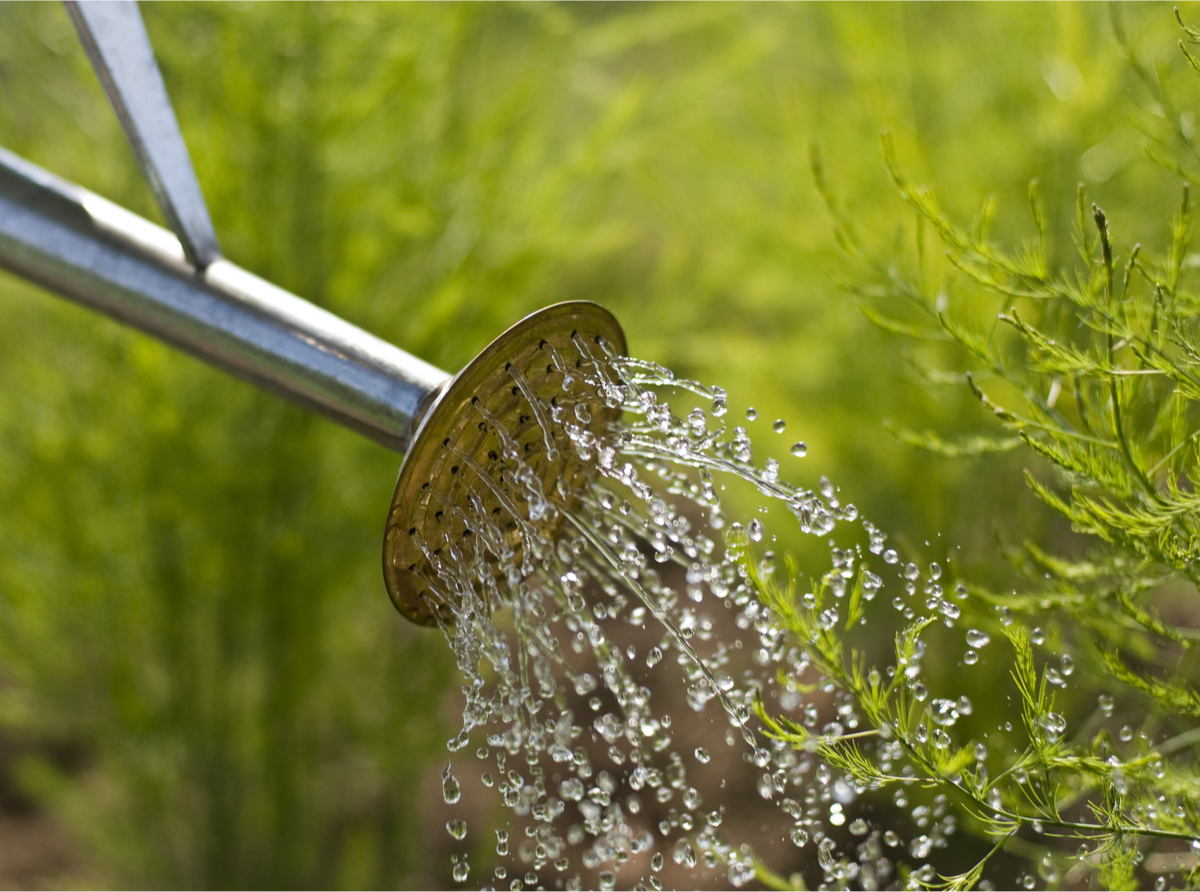 Water-soluble fertilizers, usually applied from a watering can, can damage foliage.
What about peony bone meal?
Bone meal encourages the development of strong roots, so it’s best to apply it in the fall when you want the plant to be strong and ready for winter. You can also use bone meal very early in the spring before the leaves form.
 The Gay Paree peony was introduced by Edward Auten in 1933.
Some additional tips on best practices for fertilizing peonies
If your peonies have been mulched to protect them from cold winter temperatures, you should remove the layer of mulch before adding fertilizer.
After feeding your peonies in the spring, add fresh mulch to conserve moisture and keep the soil temperature cool and even throughout the growing season.

Always apply fertilizer around the leaf crown drip line (the area directly under the outer leaves). Never apply directly on top of the peony or too close to the stems.
Don’t skip the step of working the fertilizer into the soil. If you just let it float on the ground, it will take longer to break down and can be washed away by heavy rain or heavy watering with a garden hose.
To make measuring easier, you can reuse one of your small measuring cups for use in the garden. This makes it easy to keep track of how many grains you are using.
 Peony Coral Charm introduced by Samuel Wissing in 1964
Peonies don’t like their roots to be disturbed in the spring, so avoid that as much as possible. The only reason to treat peony roots is when dividing them in the fall.
Speaking of dividing and repotting peonies, you should never apply fertilizer directly to the roots of a new transplant. Instead, you should add rich compost to the bottom of the planting hole before adding the new plant.
 Peony diving is best done in the fall.
If your peonies are having a bad blooming season, don’t switch to default fertilizing. There are other factors you can check and change first: your peony may be planted too deep, too young, or need more sun.
We hope this has been a helpful guide to fertilizing your peonies for bigger and better blooms. When it comes to fertilizers, remember that less is more.