
You are growing houseplants and one of them falls. Don’t panic, but rest assured, after all, you’ve put in the time and effort to take care of these little ones.
I have some tips for you on what to do if your precious plant has been knocked over. Take a deep breath and read on for the steps to follow and helpful checkpoints.
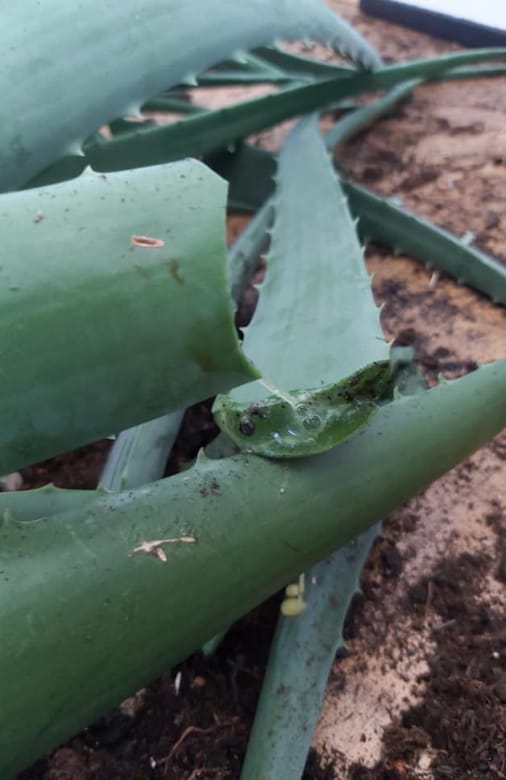 My aloe vera plant is broken and has damaged leaves after falling.
3 checkpoints and countermeasures when your plant starts to fall
Plants are notoriously uncoordinated, so it’s no surprise that they often topple over.
Whether you accidentally trip over them while cleaning or your furry friend decides to use them as a launching pad, a falling plant can be a real setback.
But don’t be afraid! Here are three checkpoints to remember when your plant goes haywire, and some helpful countermeasures.
1- Check for damage to branches and stems
First: assess the damage. It’s like a yard for your plant. Check these branches and stems to see if they are still intact. If they’re bent or broken, it’s time to play plant doctor.
How to fix
If you have a twisted stem in your hands, try reinforcing it with floral tape. It’s like a bit of plaster for your plant.
And if your plant seems a little wonky, help it out with a rope or a support pole.
Think of it as a plant walker. Be sure to remove the support once your plant feels more stable.
But if your poor plant has taken a beating and the leaves look worn down, it might be time for a little surgery. Use garden shears or pliers to cut under the damaged area.
And if you prefer gardening, you can even use these cuttings to grow a whole new plant. It’s like cloning plants, but less scary.
2- Check if the amount of land has decreased
If your plant is going crazy, it’s not just the plant that’s messy. There’s dirt everywhere, like a little vegetable crime scene. Therefore, it is important to assess the soil situation to ensure that your plant can still thrive.
How to deal with the problem
If it’s a small amount of soil spilled, don’t panic. It’s like sprinkling dirt.
But if your plant has spilled more dirt than a toddler on the beach, it’s time to act.
First, make sure these roots are not visible. It’s like making sure your plant’s underwear isn’t showing. If the roots are visible, cover them with a little fresh soil.
And if your plant seems a little wonky, add more soil to stabilize it. It’s like a vegetable shapewear.
But here’s the catch: don’t just shovel old dirt. This floor can be full of dirty things like dirt, dust, and pathogens.
Nobody wants that in their greenhouse. So use fresh, clean soil that you have saved or head to your local garden store to stock up.
And if you’re dealing with a full-blown soil disaster, it might be time to consider repotting. It’s like redecorating your plant’s house.
A new start, a new look. Who knows, this might be just what your plant needed to brighten up its space.
3- Check the pot for cracks and cracks
Let’s be honest; a falling plant is like a minor natural disaster. And just like after a hurricane, it’s time to assess the damage.
Check this pot for cracks or crevices. If the boat looks less worn, it’s time to act.
Corrective action
Now you can relax if the cracks are small or the pot has broken. It’s like a little battle scar. But if your plant’s home looks more like a broken vase than a flowerpot, it’s time to transplant that bad boy.
But timing is everything, my friend. You don’t want to be that person throwing a party during a hurricane, do you?
So remember that the best time to transplant is during the growing season, from May to October. You want to make sure your plant is in top condition before you start tossing it.
But what if your pot bursts during the winter? We all know that winter is the season to hibernate, not to renew.
So if you need to transplant your plant in winter, keep the “clod” intact. It’s like a ball of vegetable thread.
And when you’re done transplanting, find a comfortable place for your plant to recover. You don’t want to throw him into a new environment, like a reality show.
Be careful and monitor the evolution of your plant. You’ll be back to your usual routine in no time!
Key learning points
It happens to the best of us, but don’t panic! You need to do three things to keep your plant healthy and happy.
Are the branches and stems damaged?
First, we assess the damage. It’s like looking for a sprained ankle after a fall. Look at the branches and stems to see if they are bent or broken.
If so, it’s time to put on your plant doctor hat and take action.
Has the land area been reduced?
Then check this floor. Did he leak? Don’t worry if it only splashes a little. But when it looks like an explosion on the ground has erupted, it’s time to act.
Make sure the roots are not exposed and add fresh soil if necessary. It’s like giving your plant a little soil cure.
Are there any cracks or breaks in the pot?
Finally, look at this jar. Are there any cracks or breaks? If the pot looks worse from wear and tear, it’s time to transplant that baby.
But don’t worry; it’s like a little makeover for your plant. Keep timing in mind: the best time to transplant is during the growing season.
If you take the right steps, your houseplants should bounce back quickly. It’s like a little plant emergency, but you’ve got this!
Sharing is caring!