
Image – Wikimedia/Syrio
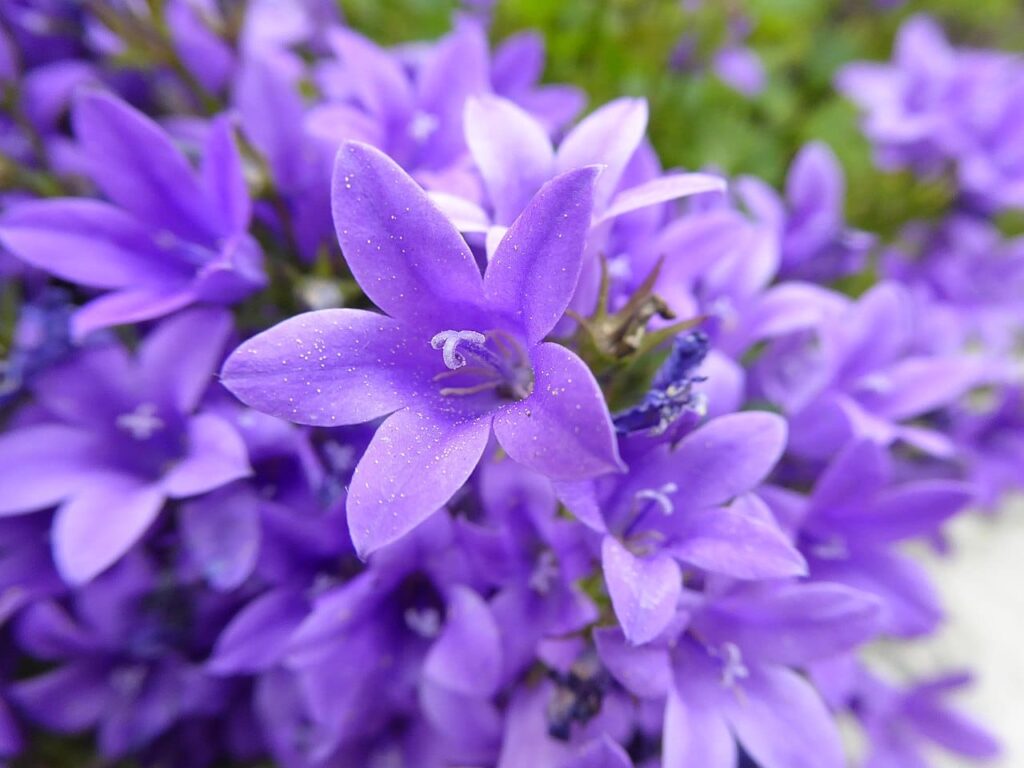
One of the prettiest blue flowering plants that requires less care is the Campanula portenschlagiana. This herbaceous plant, which blooms during the summer months, can be grown in pots, as well as of course in the garden. It doesn’t grow much, barely a foot tall, so you can place it wherever you want.
If you need to know when it’s watered, or if it needs sun or shade, Next, I will explain the care required by the Campanula portenschlagiana whether in a pot or if you choose to plant it in the ground.
Where to place it: in the sun or in the shade?
Image – Wikimedia/Salicyna
our protagonist It is a plant that I recommend to have in a sunny place; This way you will grow it healthier and produce stronger stems.
That doesn’t mean you can’t have it in partial shade or even shade, but if you choose to have it there, or what happens is that where you want put it does not receive direct sun, it is important that you take into account that there must be a lot of light.
Can it be inside?
The Campanula portenschlagiana It is a grass that, as I said, is small, and since it does not necessarily have to be exposed to the sun, it is possible that the question arises of whether it can be enjoyed at home.
Well, it is not the most advisable because it needs a lot of light to flower, but if you have a room with a window through which light enters, then yes. In any case, I insist, it is better to have it on the balcony, or on the windowsill, and not inside the house.
Pot or soil?
Where you want. But whether you are going to plant it in a pot or in the garden, you have to keep in mind that its roots cannot withstand waterlogging. For this reason, the soil should be spongy, not heavy, and also rich in nutrients. That is why, if you choose to have it in a container, you must choose one that has holes in its base and fill it with quality substrates, such as the universal of some well-known brands, such as Fertiberia or Flower.
If you decide to plant it in the garden, first make a hole about 30 centimeters deep by about the same width, and fill it with water. Calculate how long it takes to absorb it, and if it turns out to take more than an hour, make it deeper, 50 centimeters. Then fill it with a mixture of universal substrate and perlite in equal parts, and finally proceed to planting the bellflower.
When is the best time to transplant it?
It is very important that this is done in the spring, once the frosts have passed. However, this should only be done if the roots protrude from the drainage holes of the pot, otherwise there is a risk of it sustaining damage when removed from said container.
When do you water Campanula portenschlagiana?
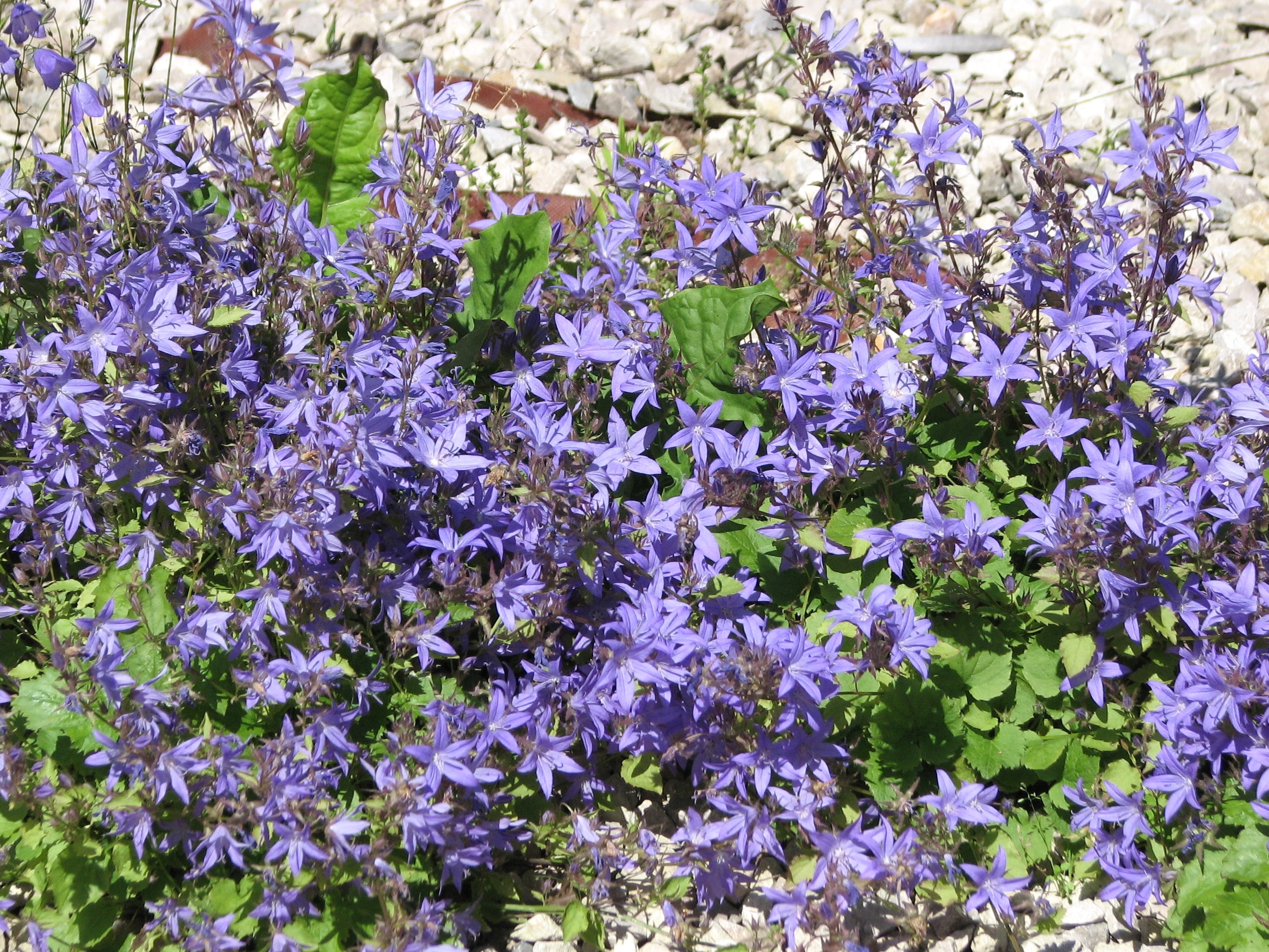
Image – Wikimedia/Kor!An (Андрей Корзун)
The frequency of irrigation will not be the same throughout the year. During the warmer months, it will be higher than during the colder months, because the earth takes less time to dry out. In addition, if you have decided to keep it inside the house, you will have to water it less than if it were outside, since the substrate will be moist for longer.
But you have to be careful not to overwater. The roots wouldn’t support it. That’s why I like to insist that, if you have doubts, check if the soil is wet or not by inserting a stick. It’s a very simple gesture that will let you know exactly when you need to water your bellflower. In this video you have information about it:
When can you pay?
To make it produce many flowers and be beautiful, It is interesting to fertilize it between spring and autumn. To do this, you can apply natural fertilizers, such as guano (available here) or manure.
Now, if you have it in a pot, it’s best to use fertilizers or liquid fertilizers, like this one which is specific to flowering plants like this. But yes, you must follow the instructions that you will find in the same product packaging.
Should it be pruned Campanula portenschlagiana?
As it is a relatively small plant, it is not necessary to prune it. But what can be done – and in fact is strongly advised – is to remove the faded flowers, as well as the dry leaves. In this way, it is avoided that the parts that no longer serve it end up attracting parasites or diseases.
And speaking of these, remember to clean the scissors you are going to use with soap and water before you cut. Viruses, bacteria, and fungal spores cannot be seen with the naked eye, but that doesn’t mean they aren’t present. Therefore, cleaning pruning tools is essential to protect plant health.
I hope these tips help you.