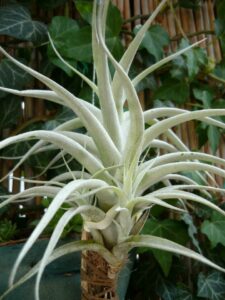
The air plant (Tillandsia) is one of the most interesting species I have ever come across. It thrives by drawing moisture from the air and clinging to trees and other structures.
Thus, anyone wishing to create a hanging garden or brighten up their home without having to resort to potting soil and potting can use these plants.
But since they depend on the humidity of the environment to thrive, be careful how much humidity you expose them to.
If you let them struggle to meet this basic need, they will look ugly and might even die.
This plant grows in moderately humid conditions. I’ll show you how much it needs, what you can do to increase the humidity in your home, and the signs that your plant isn’t too happy with its home. Let’s dig this:
What is the ideal humidity for an air installation?
Did you know that there are at least 500 species of air plants? Few of them do well in pots.
Besides, horseback riding is the best way to discover its beauty. But to do this, you need to pay attention to three essential aerial factors. Which are?
1) Airflow
Do not leave the venting installation in an enclosed space where it will not have access to airflow. In addition, the plant is sensitive to drafts.
So keep it away from hot and cold drafts, including heating ducts and air conditioning systems. Ideally, the plant should be in a spacious room and experience window and door traffic.
2) Temperature
 You can’t focus on humidity without looking at temperature, as these factors are intertwined.
As temperature increases, humidity also increases because heat increases the rate of transpiration and evaporation. But what should the temperature be in relation to the air installation?
I recommend anything between 50 and 90 degrees Fahrenheit. When temperatures exceed this range, you should mist your plant, as I will describe later in this guide.
Make sure the plant is protected from cold drafts, which can damage it, making it black and soggy.
Keep in mind that you can’t save a cold-stricken plant and your only option is to start over. The air grinder should be fine if you can maintain temps in the 50+ range.
3) Humidity
And now we come to the factor that most people believe is an integral part of growing air plants.
The amount of water vapor in the air. Do not mistake yourself. Yes, humidity is important. But focusing on just that without paying attention to temperature and airflow won’t help your plant much.
How humid should the house be now? The best range is between 50% and 70%. However, I must add that the humidity range depends on the type of air installation.
Mesic air plants prefer a humidity range between 50% and 70%. But xeric types do best in high humidity and enjoy anything above 65%.
If you have these factors in order, your plant will be a feast for the eyes in all seasons.
You may also be interested in: 8 Air Plant Problems and How to Fix Them
How do you know the humidity level in your home?
Is your home’s humidity range ideal for plant air? In most cases, you will find that most indoor conditions fall between 40% and 60%.
If you’re lucky, your level will be higher (60%), and if you have a mesic air plant, you should be fine. But of course that would not be enough for a xerophytic plant. How do you know if the humidity level is high or low in your home?
using a hygrometer: If you want the most accurate measurement of humidity in your space, using a hygrometer is the way to go. You can use the electric hygrometer or opt for the resistive electric hygrometer. In any case, the measurements must be correct.
What if you don’t have a hygrometer? You can always tell if your air plant is at risk using the following methods:
1) The dry and wet bulb temperature test
Do you have two dry bulb thermometers at home? So you can measure the humidity range without using a hygrometer.
Put a fan in the room where you want to check the humidity. Then place the two dry bulb thermometers where the blown air can reach them.
On one of the thermometers, place a damp (not wet) cotton cloth on the bottom. Let the fan run for five minutes, then check the difference between the two.
Please read This article on how the relative humidity is obtained based on this test.
2) The ice cube method
Put five ice cubes in a glass of water and place it in the room where you want to measure the humidity. Check the glass after ten minutes.
Condensation on the outside indicates high humidity, while no condensation implies low humidity.
Of these methods, I would recommend the hygrometer as it is the easiest to use. You can also use the wet and dry bulb thermometer test as it is accurate.
But the ice cube method won’t help you get an exact measurement, so it’s best to do an informal assessment.
You may also be interested in: How Big Can an Aerial Plant Get?
How to increase the humidity in your home
 Most homes have a humidity level between 40% and 60%. But during the colder months, these levels can drop quite a bit. How do you mount them? Here are some simple tips:
- Add more plants to the house as their transpiration and evaporation rates will increase water vapor in the room.
- Pour water into an open container and leave it open to release the moisture which evaporates into the air,
- Use your hob plus to boil water, which releases steam into the air,
- Take showers more frequently to release steam in the house,
- Leave your bathroom and kitchen doors open to allow more moist air to circulate through the house.
- Vent your clothes dryer in the house to increase the humidity of the air in the house. Also air your clothes inside, or
- Add a humidifier to the room to gradually release humid air into the room.
Keep measuring your humidity and adjust it according to the air system you have at home.
What are the signs that the humidity is not ideal for your air plant?
Your air plant will communicate if growing conditions aren’t ideal. And we will discuss two ways to do it:
Signs of low humidity.
In most cases, humidity problems will come from low levels of water vapor in the air. Signs include:
- sunbathe on the margins of the leaves,
- Wither and fall,
- yellowing leaves, and
- Pat the leaves dry so they feel and look crispy.
Signs of high humidity.
Did you know that too high humidity can also be a problem? You know it’s time to lower the humidity when the air plant:
- It has leaves that feel damp and seem stuck together,
- Begins to develop leaf mold, or
- It has new leaves that look damaged from the start, but the mature leaves seem to be fine.
You need to adjust indoor humidity based on the plant’s reaction to air.
You May Also Like: How To Care For An Air Plant In Winter
Do air plants like being misted?
To understand if air plants like misting, you have to go back to how they grow in nature.
They depend on water from the air to produce food and stimulate their growth. And because they get the most out of the water in the air, a little is enough.
So it’s never a good idea to soak them in water. Instead, misting is the best way to supply these plants with moisture.
How to nebulize your air installation
How often you water your plant will depend on how humid your home is. If the humidity in the house is above 65%, you can spray the plant about three times a week.
But if the humidity is between 50-70%, you should spray it 4-7 times a week. Please note that the schedule changes as the weather warms up or cools down.
To mist the plant, fill a water bottle with water and spray the moisture on the plant for about five minutes or until the plant is sufficiently moist.
Can we have air plants in the bathroom?
Yeah! Air plants thrive in high humidity conditions and will appreciate being in a humid environment like the bathroom.
To be on the safe side, place them out of direct sunlight and allow them to soak in moisture. It is better to mount them to avoid direct contact with water for a long time.
final thoughts
 Air plants are very adaptable and do well in almost any environment.
So even if you don’t live in a hot, humid climate, the plants can survive.
The only thing to avoid is exposing them to extreme conditions (especially cold drafts), and you should be fine. Happy gardening!