

One of the most used crops for personal consumption when we make an urban garden rocket. However, there are many people who do not know when to plant arugula in order to optimize its growth and have better results during the harvest.
For this reason, we are going to dedicate this article to telling you when to plant arugula, what are its characteristics and what are the fundamental aspects for the care to be correct.
When to plant arugula

It is easy to grow arugula in an urban garden as it is one of those plants that is encouraged to grow due to the excellent results it requires with minimal care. It can be cultivated, especially to take advantage of its leaves, because at the professional level it has other possibilities, such as cultivation to obtain its flowers and seeds. Therefore, we will focus on its cultivation to take advantage its characteristic spicy and slightly bitter tasteas well as a state-of-the-art cuisine appreciated by consumers.
Note that for the mechanized harvesting of arugula, the arugula is sown in the open field on a flat and well-leveled cultivation platform, with a higher planting density than normal (about 5 cm between plants) and distributed by sowing. Once germinated and in the seedling state, they are harvested several times to harvest their tender leaves.
These cards are used both to configure the pre-packaged salad bags found in the fruit and vegetable section of supermarkets, and are also sold to restaurants so that they can prepare these dishes in the menus that include it. .
Sowing
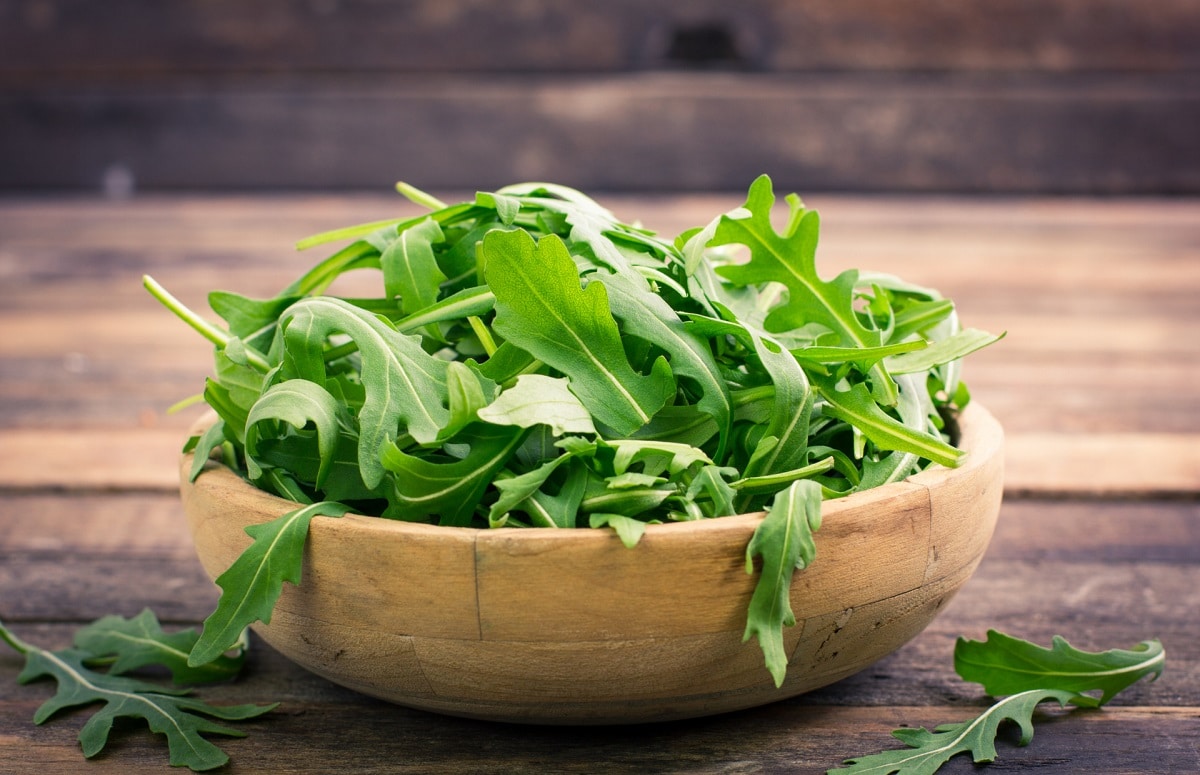
With few exceptions, there are no arugula seedlings like other species such as beets, spinach, or other leafy garden species. So, to grow it, we will start by buying packets of arugula seeds, which are easily found at florists, garden centers, DIY centers and other specialized outlets.
One sachet is enough to feed a family for an entire year. It is a very inexpensive variety. You can find different types of arugula seed packets:
- Depending on the weight, they are usually between 5 and 10 grams. There are companies that sell these sachets at very low prices and adjust the quantity of seeds to the final sale price of the sachet, which is the same for all species. But to give us an idea, there are around 3000 seeds in a 10g bag.
- According to gender, can be standard or ecological. The difference is that so-called organic seeds come from organically grown “mother plants”.
- Depending on the variety, in this case the catalog of rockets is very small and focuses on the so-called “rocket seeds for salads”.
- In these packets of arugula seeds, in addition to the name of the plant, the producer and the identification image of the plant, We can also find the necessary information through diagrams or pictograms.
Step by step for planting arugula

It is best to sow this plant directly. Direct sowing of arugula can be done in buckets, pots, or directly in the field. We can use the technique of direct sowing in alveolar trays in order to be able to start the culture (germination and initial germination). So, when you already have room to spare, we can transplant these well-established seedlings and start harvesting their leaves soon after.
For its sowing we will start from arugula seed capsules. Many people wonder when to plant arugula to optimize its growth. Growing arugula outdoors in a Mediterranean climate, whether in an urban field or in a garden, will begin direct seeding in spring, summer and autumn, although the best time to sow is the beginning of the spring. We will plant 2 or 3 seeds in each hole, burying them one centimeter deep. Planting frames can be established leaving 15 to 20 cm between plants and 30 cm between rows.
If grown in pots or pots in an urban terrazzo or balcony garden, the seasons are the same and yes, care is taken to place the container in full sun and avoid high winds as much as possible. Remember that buildings are generally more sensitive to wind.
The pot size does not need to be very tall, as arugula does not have a deep root system. Regarding the type of substrate to be used, it can be one of the types of planting substrate to which we will add 20% field soil and 10% clay or clay.
The substrate must remain moist throughout the germination period. The optimum soil temperature is above 15 ºC and it will germinate about 10-14 days after sowing.
Once it has germinated, we will remove the grasses that have germinated around it and we will keep it watered regularly and fertilizing it every 15 days with a balanced fertilizer containing the doses of trace elements recommended by the manufacturer.
Fertilizers that are too rich in nitrogen should be avoided because if it is necessary to promote the development of the foliage, it is also necessary to maintain its abundance to avoid disease problems. Another cultural work to be done is to periodically remove the soil to promote its aeration.
The ideal growth temperature is between 15 and 25 ºC. And the time it takes for a crop to go from planting to harvesting, if we’re going to use it, is about four months. Its collection is done manually through multiple steps throughout the cultivation process according to our needs. The freshness and flavor of these leaves are incomparable.
Arugula Pests and Diseases
If the crops are placed correctly and watered, fertilization and crop density are correct, it is quite rare for a rocket to have pests and diseases it can happen. Keep in mind that its cultivation lasts several months and it is also a very hardy plant.
In the event of phytosanitary problems, the most common pests are aphids and the most common diseases are rust and powdery mildew.
Some problems may arise which, although not directly related to the pest, have an indirect relationship. We refer to crop rotations or combinations on the same land or substrate. When growing in the open field, you should avoid growing cabbages, radishes, radishes and other plants of the same family in the same place. On the other hand, it is also beneficial in combination with other crops such as eggplant, lettuce, tomato or pepper.
I hope that with this information you can learn more about when to plant arugula and the stages of its cultivation.