If you purchase an item through links on this page, we may earn a commission. Our editorial content is not influenced by commissions. Read full disclosure.
When looking after your property and maintaining your gardens, you are always on the lookout for smarter and more efficient practices. Air pots make it easy to grow healthy plants that will explode with growth once you place them in the garden.
What are air pots? This is a new type of container that encourages lateral root growth, in addition to other benefits.
Keep reading to find out why this should be your new method for improving roots and growing healthier plants.
What is an Air Pot?

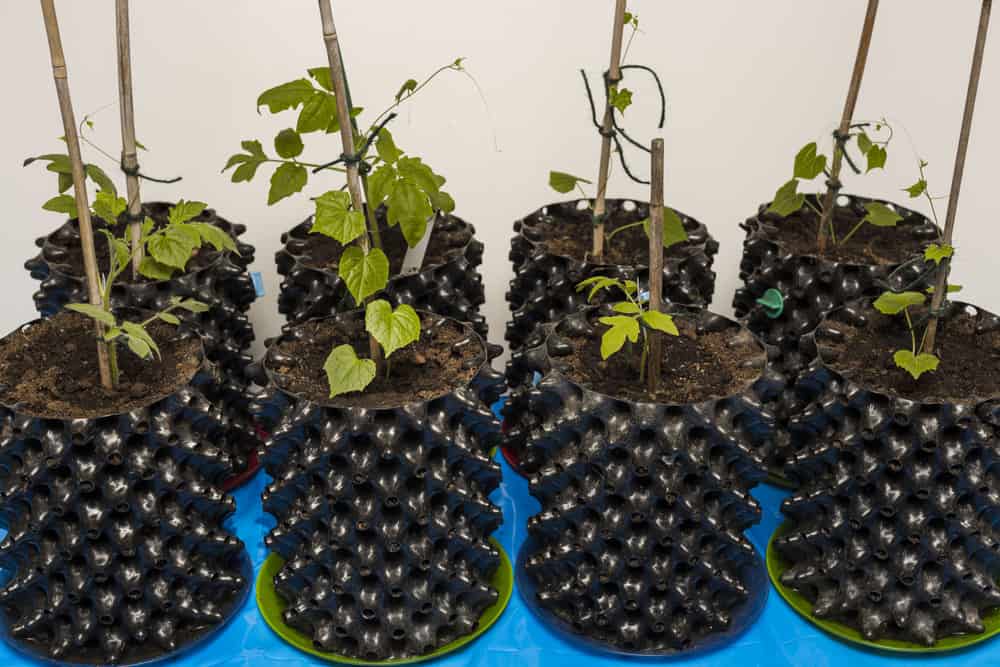
Air jars are plastic containers with many small holes at the end of a small cone. These holes promote healthy plant root development as they allow more air to reach the roots and promote air pruning (which we will discuss).
They are also usually able to decompose, making it easier to remove the plant without disturbing the roots and storage. They can also be reused year after year.
This container option has become more popular for starting plants, especially trees. They are commonly used by:
- nurseries
- small farmers
- Horticultural institutions
- Landscapers
- Gardening enthusiasts
Aerial pruning
When you grow plants in this system, they go through the process of air pruning, which avoids problems such as circular or uneven roots.

Any roots exposed to dry air during the growth phase can be air pruned. This is a natural process when the root tips dry out and fall off. Although this may seem like a bad thing, it’s great for your plants.
Air pruning means your plant will start producing more lateral roots from the main taproot section. This creates a healthier root structure as it allows them to search for nutrients and establish a robust root zone.
It also means you won’t have to worry about circular roots when planting. Pot-bound roots can take a long time to straighten out and start growing in the right direction.
Air pots favor air pruning. As the roots come out of the holes, they find dry air and the root tips die off, which encourages more growth in the soil area. This creates healthy root systems ready to sprout out as soon as you put them in the ground.
How do air pots work?
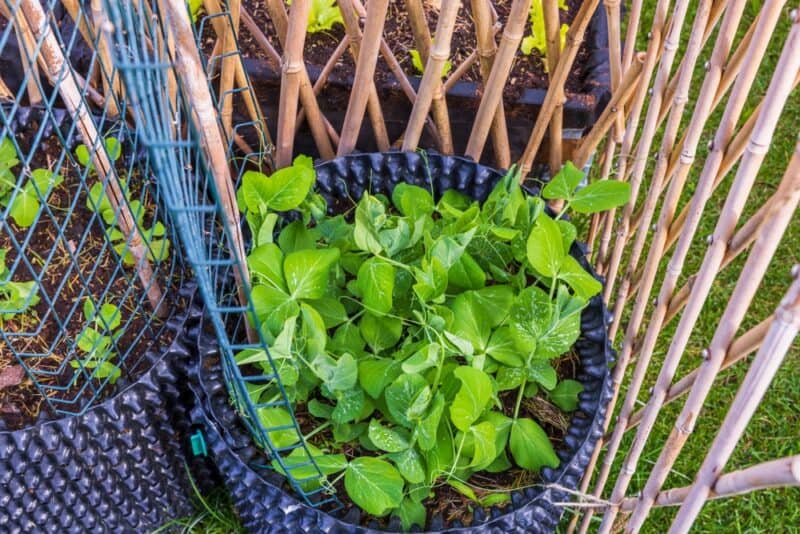
Choosing the right growing conditions for plants is always tricky, especially if you are new to gardening and have never tried growing your own seeds before. Luckily, air pots give you one less thing to worry about.
When researching the different plant growth requirements, the last thing on the list is often root growth.
Instead, most people focus on sunlight, soil condition, water, and fertilizer. But air is the secret weapon to establishing your root system.
The holes in the air pots give your roots the space they need to develop fully. They also increase drainage in addition to encouraging air size and proper growth in the right direction.
Plants grown in typical round pots end up with circular roots or roots that grow around the circumference of the pot. If there is no natural or human intervention, a plant’s roots will continue to grow in a circular pattern, which is not healthy for your plant.
When you plant your plant in the ground, it takes a while for the roots to straighten out and point in the right direction, which slows down your plant’s establishment.
You can find all sorts of sizes, from pots made for starting vegetables to those for growing trees.

Advantages of Air Pots
Besides promoting better root systems, there are other compelling reasons to switch to air pots instead of traditional planters.
1. Healthy Bacteria and Fungi
Air pots improve the number of healthy bacteria and fungi.
Bad bacteria and fungi can cause disease, but the good ones are vital to the overall health of your plant.
If your plant has more root area, there will be more room for the good bacteria and fungi to grow. For a balanced garden, you want to have a supply of microorganisms that break down nutrients in the soil, which makes it easier for your plant to stay healthy.
Mycorrhizae for strong roots
“Mycorrhizae” means fungal roots, and these fungi form a symbiotic relationship with nearby plants. They attach themselves to the roots of plants and eventually become part of the root system.
There are two different types of mycorrhizae: ectomycorrhizae and endomycorrhizae. These two fungal roots operate outside and all around the plant. Once either of these forms of mycorrhizae attaches itself to a plant, it will increase the surface area for absorption.
When a healthy system is in place, you won’t need to water plants as frequently, there will be less soil erosion, and your plant will have more access to nutrients.
2. Recessed bottom for better drainage

In most planters, the bottom is flat, which means that it is in contact with the ground at all points. This makes it more difficult for water to drain, which promotes mold growth, root rot and fungal diseases.
Airpots are made so that their bottoms are recessed, which means they sit an inch or two off the ground. You won’t have the same drainage issues with this container because water can drain away and not pool around the roots.
3. Easier storage
Being a gardener can sometimes be a nightmare. You walk into your shed, open the door, and a pile of pots lands on your head. When the growing season ends, you should store the pots in a safe place until the weather changes, and you can start potting again.
If you decide to use air jars, it will make handling the storage system easier. Compared to regular pots that come in different sizes and end up dominating the shelves and falling over, you can put your air pots in a smaller area because a lot of them break down.
You can remove the outer walls and lay them flat, then remove the bottom.
Not all airpots can do this, so keep an eye out for ones that can be taken apart if maximizing storage is important to you.
4. Simplified stripping
Another important task when you are a gardener is repotting or removing your plants from the growing container. Air pots allow you to remove the sides and bottom of the pot and leave the soil intact.
When you put the plant in the ground, the soil is less disturbed and the roots are ready to grow in the right direction.
Disadvantages of Air Pots

Of course, no planting method is ever perfect and air pots are no exception. There are a few drawbacks to consider when using these containers.
You will need to increase your watering schedule. Due to the holes that make air pots excellent for strong root growth, the systems require more humidity as water evaporates quickly in these planters.
However, there is a way around this drawback. If you have many air pots, install a drip irrigation system.
These pots are also more prone to fungus gnat intrusion.
Was this article helpful?
Yes No ×
We appreciate your helpful feedback!
Your response will be used to improve our content. The more feedback you give us, the better our pages will be.
Facebook pinterest