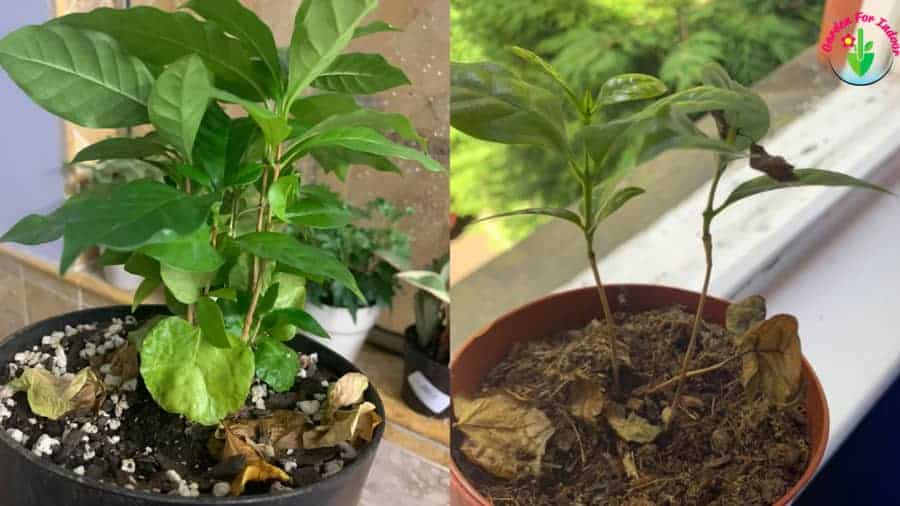
Congratulations on finally getting that coffee plant you’ve always dreamed of! I’m sure you can’t wait to bring back your first vintage. You’ve probably learned all you can about caring for your new coffee tree.
However, despite all your preparations, you have encountered some obstacles and now you fear for the well-being of your plant wondering why it suddenly started losing its leaves.
The main reason a coffee tree loses its leaves is too much water. Other causes can be temperature fluctuations, drafts and lack of humidity, usually due to poor placement. Coffee trees prefer humid environments with tropical temperatures.
Have you looked at your factory and nothing mentioned in our answer applies to you? Read on for more possible reasons why your coffee tree is losing its leaves and what to do about it.
Causes of coffee leaf drop
Coffee plants can be difficult to maintain. There are many diseases and environmental factors to consider when caring for this plant. When growing coffee plants, it is important to know what is healthy and what is not.
The key is to catch a disease or fix a problem before the damage to the plant becomes permanent. Some of the symptoms to look out for, their causes, and remedies are listed below.
Submarine
Coffee plants will lose their leaves if you let the soil dry out completely.
These plants thrive in humid climates and are not designed by nature to withstand drought.
Letting the soil dry out completely can cause irreparable damage to your coffee tree.
SolutionS
⦿ For underwater water I would recommend watering more frequently. Make sure the soil stays moist but not soggy.
⦿If the potting soil does not contain enough water, no matter how often you water the plant, soak the whole pot in water for thirty minutes to an hour. This will force the potting mix to absorb the water instead of just letting it drain away.
⦿When you take your pot out, drain the excess water so your plant doesn’t get overwhelmed. Your soil should be good again.
⦿Don’t water again until the top layer of soil, about an inch deep, is dry. A coffee tree grows best if you keep the soil moist.
excess water
Although the coffee tree prefers moist soil, it will not tolerate soggy soil. Standing in water can rot the roots and bark, effectively destroying the roots and cracking the plant.
The damage can be permanent if the problem is not corrected immediately, resulting in the death of your coffee tree.
SolutionS
⦿If you overwater, I recommend waiting between waterings until the first inch of soil is dry.
⦿Remove excess water that remained in the tray half an hour after watering the plant.
⦿You can test if the soil is dry by pressing your finger about an inch into the soil. If it seems dry, it’s time to water your plant.
down hhumidity
Low humidity can stress your coffee plant. If your plant is under stress, it will drop leaves for protection.
Fewer leaves means less energy is used, and less water and nutrients are needed to keep those leaves, and therefore the plant, alive.
SolutionS
⦿Mist your plant at least once a day. It is best to nebulize several times a day if you have the time. Avoid fog at night.
⦿An alternative is to place a humidifier next to your coffee tree to keep the air moist around it.
⦿You can also place your plant in a container with water and pebbles. If you are using the tray method, make sure your plant is not directly above the water.
⦿Finally, you can group your plants. Grouping plants together will help retain moisture and increase humidity in the process.
compact bottom
When the soil in your coffee plant’s pot becomes compacted, it can cause stress to your plant’s roots. Roots may struggle to absorb water and grow as they should. This stress can cause the plant to lose its leaves.
SolutionS
⦿If you notice that the soil in your coffee pot is compacting, you may choose to replace or loosen the soil with a garden pitchfork.
⦿When loosening the soil, try not to damage the roots.
thermal stress
The coffee trees begin to lose their leaves as soon as the temperature drops below 12.78°C. However, they can suffer permanent damage if temperatures drop below 5.57°C (42°F), which can lead to death.
SolutionS
⦿Coffee plants prefer consistent temperatures between 60°F (15.56°C) and 75°F (23.89°C).
⦿ Temperature control is easier when your plant is indoors. For those staying outdoors, be sure to bring your plant indoors when the temperatures begin to drop in the fall or early winter and during the heat of the day in the summer.
Notions
Drafts can stress your coffee plant and cause it to lose its leaves. Hot or cold air can cause mechanical damage to plants.
If your current location is a bit drafty, that must be the reason your coffee tree is shedding leaves.
SolutionS
⦿ It is best to place your coffee plant in a room without drafts or take measures to protect the room from drafts and wind if you place it outside. Make sure high winds don’t stress your plant.
⦿ The coffee tree prefers a humid environment without drafts.
Too much direct sunlight
Being in full sun can cause leaf scorch, which looks like brown spots on the leaves, which will likely cause the plant’s leaves to drop completely.
SolutionS
⦿Coffee plants prefer both direct and indirect sunlight.
⦿Direct sunlight can damage the leaves. It is best to place this plant in a bright room, not exposed to direct sunlight.
not enough indirect light
Although a coffee tree prefers indirect sunlight, it can drop its leaves in very little light.
Leaves may appear discolored before falling. This happens because the plant cannot produce enough food to support all the leaves.
SolutionS
Solving this problem is as simple as moving the plant to a room with strong indirect light or supplementing natural light with artificial grow lights.
You may also be interested in: hydrangea leaves turn yellow (8 causes and how to fix it)
Poor nutrient management
Yellow leaf discoloration can occur in coffee plants that lack nutrients in the soil.
The cause of the discoloration may be due to a lack of iron and manganese. Coffee plants can also lose their leaves if they receive too much fertilizer.
Too much fertilizer can burn the roots and damage the plant. (Source: Pennsylvania State University)
Solutions
⦿All you have to do is buy a suitable fertilizer from your nearest garden store and mix it into the soil. You can ask the store keepers if you are unsure of what fertilizer to use and what strength to use.
⦿If your problem is too much fertilizer, the solution is to remove your plant from its pot, mix the current soil with new potting soil, and then repot your plant. Be careful not to damage the roots during this process.
harmful
There are two main pests to watch out for when caring for your coffee plant: scale insects and spider mites.
Scale insects are usually not a problem unless your plant is already weakened by inappropriate temperatures in its environment.
You can recognize this pest by its scaly appearance and honeydew-like discharge on the leaves and stems. (Source: Food and Agriculture Organization of the United Nations)
Mites will be a particular problem if your coffee plant is too dry with too little moisture. You can recognize these little pests by the yellowing of the leaves of your coffee tree and by too dry soil.
SolutionS
⦿You can treat scale insects by correcting other issues with your plant, such as too wet or too dry conditions and temperature range. You can also prepare a mixture of soap, alcohol and water to apply to the leaves daily until the problem is solved.
⦿Mites are easy to control. They absolutely hate humidity, so the best treatment is to correct excessively dry conditions for your plants with heavy watering. You can also prune infected branches to reduce the number of infestations and remove remaining leaves.
frequently asked Questions
Question: How often should a coffee tree be watered?
A: There is no set frequency for watering this plant. It is best to do the finger test. Coffee plants prefer to stay moist, but not wet. After watering your plant, allow the top inch of soil to dry out before watering again. To test if it is dry, simply press your finger about an inch into the soil, if it feels dry, water your plant.
Question: Why are my coffee leaves turning yellow?
A: There are several reasons why the leaves of your coffee plant may turn yellow. These reasons include, but are not limited to: pests such as spider mites, lack of nutrients in the soil, lack of light, and a fungal infection that causes leaf spots.
Question: Why are the leaves of my coffee tree curling?
A: There are several reasons why the leaves of a coffee tree curl. Some of the reasons can be too much water, too little light, nutrient poor soil, etc.
Sharing is caring!