
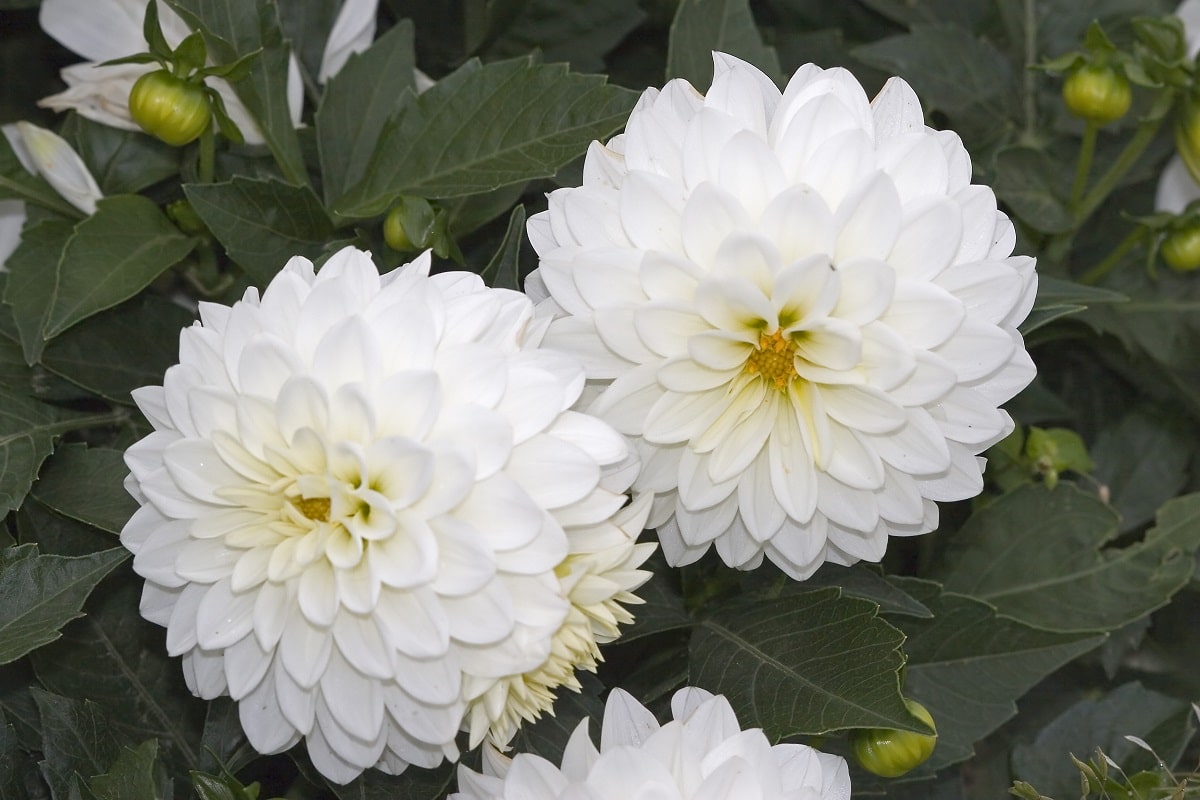
There white dahlia It is a plant that belongs to the Asteraceae family and whose flowers are extremely appreciated and valued for their beauty. It is used both to decorate the exterior and the interior and has a history linked to the tradition, history and culture of Mexico. Many people wonder about the care of this plant.
For this reason, we are going to dedicate this article to tell you about the care of the white dahlia, its characteristics and the aspects to take into account to grow it correctly.
Characteristics and cultivation
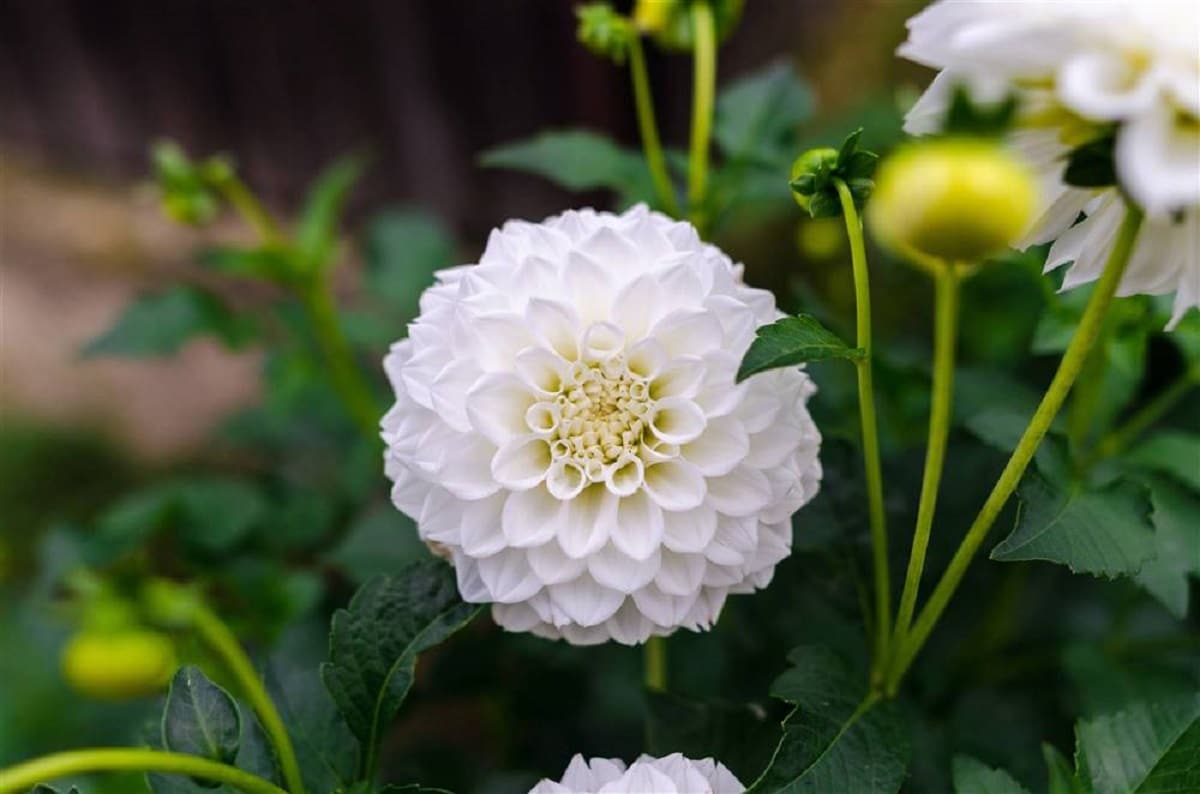
Dahlias are bulbous plants native to Mexico that can be grown both indoors and outdoors. They can reach a height of one meter, but the smallest species are around 30 cm.
However, it is undeniable that what is most striking about these plants are always their flowers, which bloom with the onset of summer and last until the last months of autumn. The white dahlia has very large flowers and an intense white color. If it’s very hotdahlia can bloom after summerwhen the temperature is milder and more pleasant for her, that is, already in autumn.
Although they tolerate cold, protect them from night frosts. The ideal is to plant them first in pots and in a protected place before transplanting them into the garden. The soil should be fertile, rich in humus and well drained. Dig a hole about 50 cm, the growing point of the bulb upwards, cover with soil and compost, water, do not flood. Once every three weeks is enough.
It is recommended to plant dahlia bulbs in stages from February to the end of May. This way you will have flowers both in winter and in summer. In late fall, clean and store the tubers in a cool, dry place. They will keep until spring. Make sure the eyes of the tubers are facing up, don’t water them until you see them start to sprout, then water 3 times a week.
White Dahlia Care

lighting and positioning
These plants need very bright places to grow well, especially when you want to enjoy their beautiful flowers. Place the dahlia in a well-lit spot in the garden, or if you keep the dahlia indoors, next to a window or light.
You should place these flowers in partial shade, or at least sheltered from the strongest and most dangerous influences, only when the sun in your area is very intense, usually at noon.
In addition, the wind can do a lot of damage to your dahlias, so it is necessary to find them a place that is as sheltered as possible in this regard. If you can’t protect them from him, teaching them is a very good idea.
climate and soil
Although they are temperate in climate and tolerate heat well as long as they are not exposed to direct sunlight for a few hours, dahlia flowers they can tolerate fairly low temperatures and light frosts down to -5ºC. However, if your area tends to freeze from time to time, it’s a good idea to put them indoors on colder nights.
Cover the base and the bulbs with a thick mulch, or remove the dahlia bulbs if the temperatures are very cold. You can always store them in a protected and dry place to replant them once the frost has passed.
The white dahlia likes to grow in soil rich in organic matter. As always, we recommend using organic, eco-friendly fertilizers such as worm humus, compost and bokashi. Both are very rich fertilizers that will keep your plants free from synthetic chemicals.
To prepare the soil, remove the soil or substrate before planting to loosen it and allow for the best possible drainage. Give it strength with the fertilizers we have mentioned. The fertilizer is renewed every winter, with a small monthly dose during the warmer months. After planting dahlias, fix the soil on the bulbs and water.
Watering the white dahlia
This plant is very heat tolerant, but it appreciates a lot if we water it frequently and abundantly during the hottest days and seasons. Always water the plant in the ground and try not to wet its leaves or flowers to avoid problems with excess moisture.
Water dahlias frequently during the warmer months, but keep in mind that bulbs don’t tolerate waterlogging or excess moisture, so it’s best to water more frequently, but sparingly, to avoid the engorgement.
White Dahlia Pests, Diseases, and Spread

these plants they are not particularly susceptible to pests or diseases. At best, snails and slugs can feed on it, and you have plenty of home and eco-friendly remedies for it, like serving beer on a plate or in a bowl.
At this point we will know how to reproduce our dahlia. We know that the best time of year to plant dahlias is spring. Now, to propagate it, we will do it by the tuber division method. For this we need the bulb of the dahlia, but above all the intersection of the stem with the corresponding bulb. From there, all we have to do is plant it.
It should be noted that dahlias wither before fall.so if you want them to stand up to our test, it’s best to harvest the tubers and store them in a cool, slightly humid place away from light.
To prolong flowering, a technique called tiare flower should be practiced. This technique cannot be practiced on all plants, but it is possible to lengthen the flowering period of plants such as dahlias.
The flowers are headless and, as the name suggests, consist of a stem which passes through the bud to produce the seed. This way, the plant spends less energy to produce those seeds and helps create new flower buds so the bloom lasts longer. Of course, as the temperature begins to drop, whatever we do with the inflorescence, the plant will not bloom again.
I hope with this information you can learn more about how to care for the white dahlia and its characteristics.