
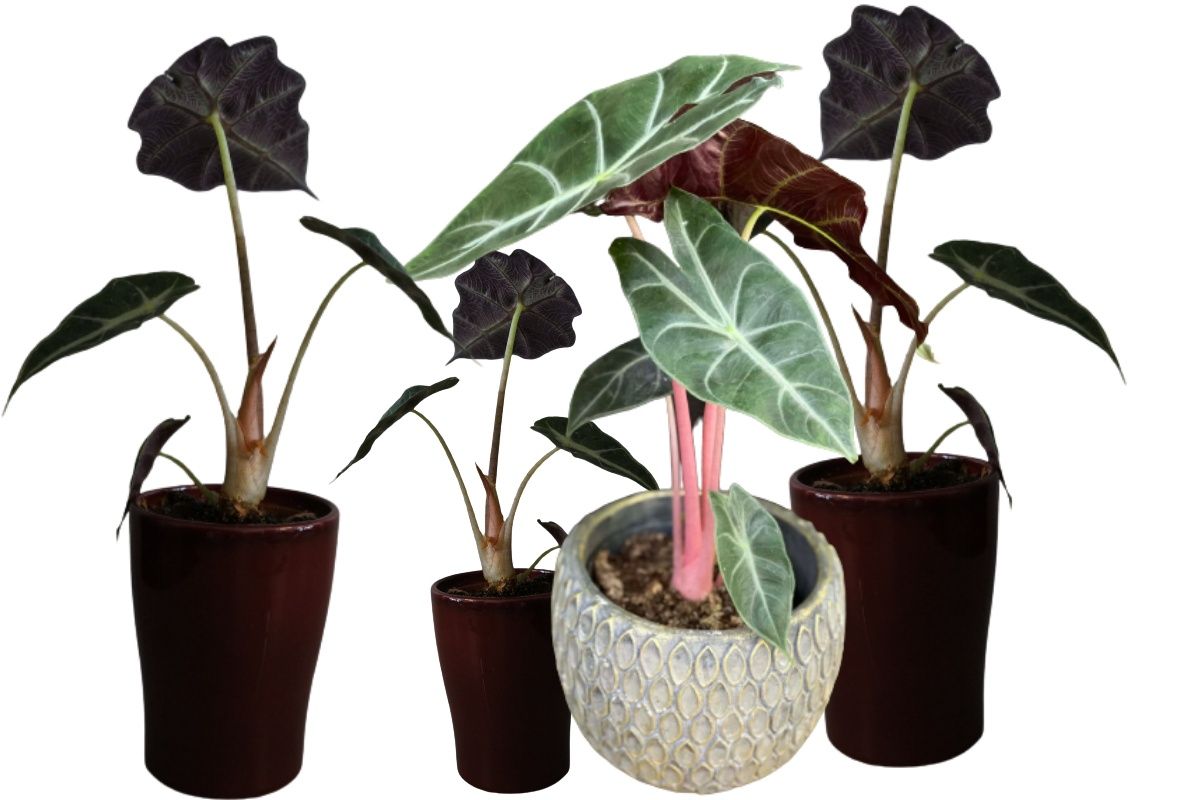
Among the alocasias, some attract attention for their large leaves, for those resembling dragon scales or, as in the case of the pink dragon Alocasia, for their stems.
But, What do you really know about the pink dragon of Alocasia? Do you know its characteristics and the care it needs to have it at home? Below we give you all the details you need to know about this plant. Keep reading!
How is the Alocasia pink dragon
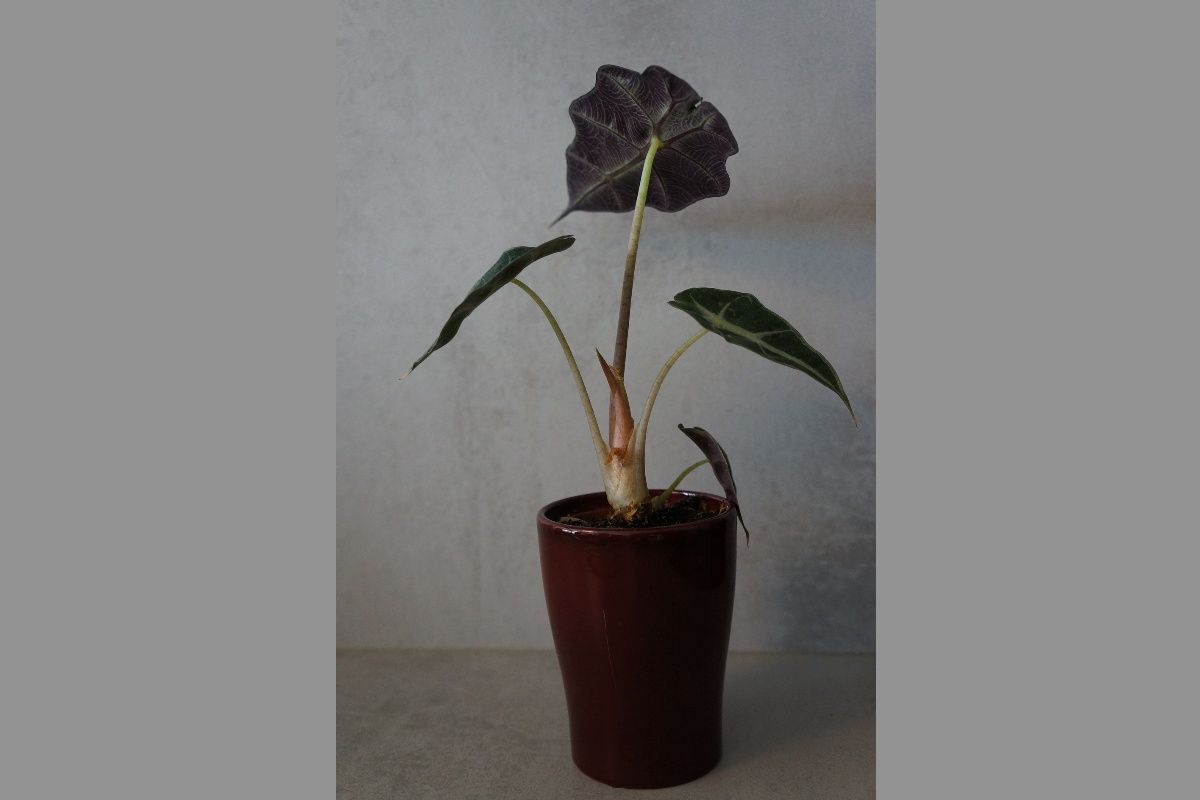
Alocasia pink dragon is one of the plants that, like some of its other varieties, has characteristic appearances. In this case, the plant not only looks beautiful, but also stands out for more than its leaves. Want to know more about her?
For starters, it’s called the Alocasia Pink Dragon, although you can also find it in the market as the Alocasia Baginda Pink Dragon. It is native to the subtropics of Asia, although you can also find it in Australia. In general, Its natural habitat is related to humid areas and warm temperatures. In this, it can reach more than a meter in height and a maximum of 80 centimeters in width. However, that’s usually not the norm when you have it at home.
How are the leaves and stem of the Alocasia pink dragon
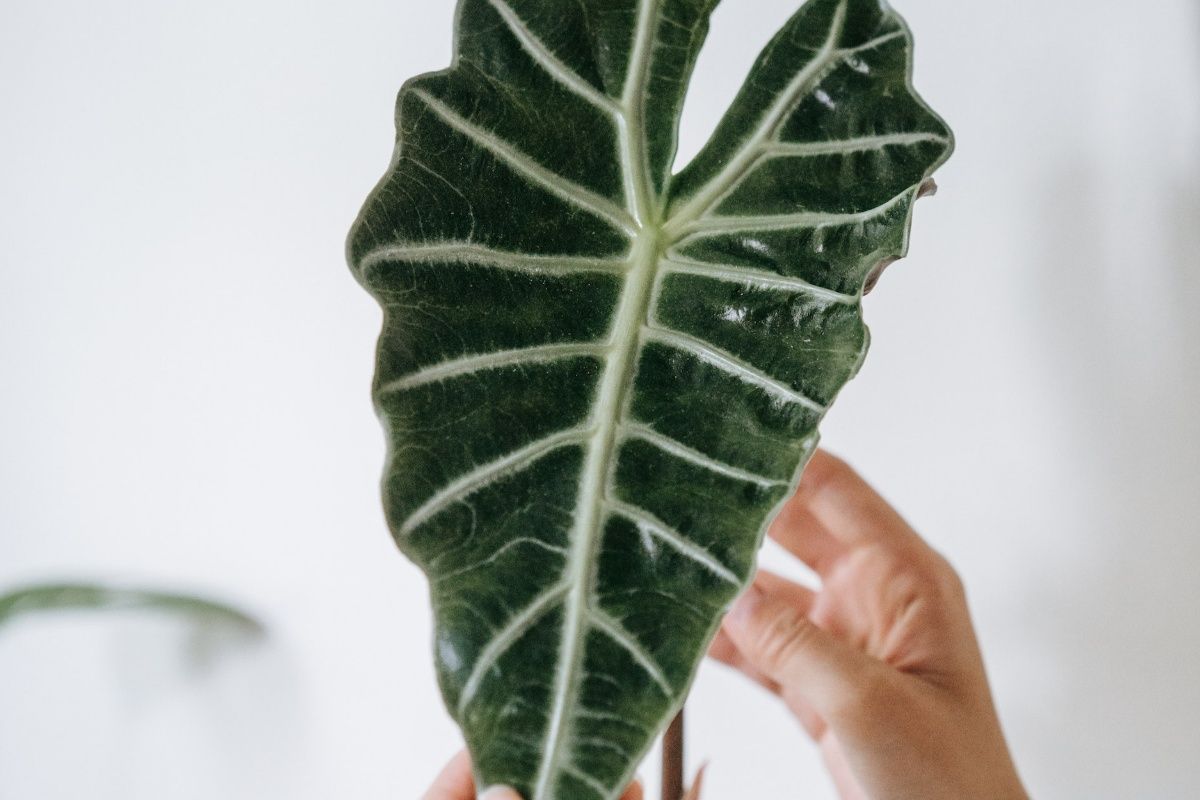
Two of the main characteristics of the Alocasia pink dragon are its leaves and its stem. In the first case, the leaves are slightly curved, dark green in color and with white veins (or in a light green). The underside of these is not green, but burgundy. They can easily reach 50 centimeters and keep them for a long, very long time since their leaves are evergreen. In fact, they will die, but it will still come out of the leaves, so you won’t have to worry about seeing it “bald” unless there are issues in its care.
As for the rods, here is the reason why it has this name. And it is that these petioles are pink.
Toxicity
As with other alocasis, Alocasia dragon rose yes it is toxic to pets and children. Even for you if you don’t protect yourself from her. If poisoned, you will know because you will get rashes, and if swallowed, your mouth and tongue may become inflamed and irritate your eyes.
Alocasia pink dragon care
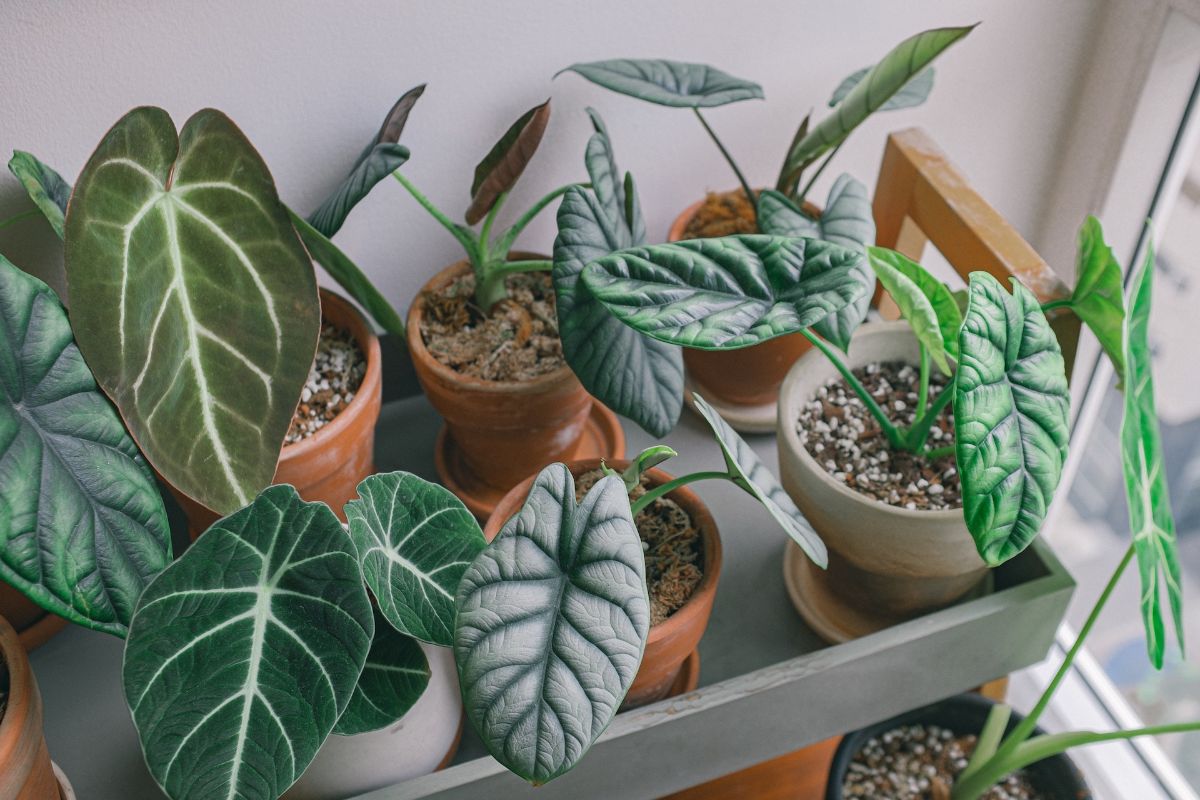
You know the pink dragon of Alocasia a little better now. But it is possible that due to its beauty, it captivated you. The truth is that it is a very easy plant to maintain if you know what it needs to be healthy. AND it can last for many years. But, for that, it is essential that you know what the needs are. Something we leave you as a guide:
location and temperature
In general, the Alocasia pink dragon is an outdoor plant but, beyond its natural habitat, it is common to have it indoors to satisfy the rest of the care it needs.
Now, that doesn’t mean it should be in full or partial shade. In fact, although he can tolerate it, it will harm his growth. For that, it is best if it is in an area with indirect light. Even, and only when it is already adapted, you can opt for direct light at the very beginning of the morning, or at the end of the afternoon, to give it a little more energy.
As for the temperature, the ideal for Alocasia pink dragon is between 15 and 26 degrees Celsius. It is true that It can tolerate more heat, provided other precautions, such as irrigation or humidity, are observed.. But in terms of cold not so much. In fact, if the temperature drops below 10°C, it is normal for him to suffer, not only by slowing down his growth, but also by falling ill and possibly dying.
Substrate
One of the usual problems in alocasias is based on using a terrain that is not suitable for them. Alocasia pink dragon may have root rot issuesand to maintain it in the best way it is necessary to use a universal substrate with peat (so that it maintains the humidity in the earth) and with perlite or sand that serves as drainage when pouring water (and that there are no accumulations in it).
Irrigation
Like the rest of the alocasias, the Alocasia pink dragon also needs frequent watering to keep the soil moist. Of course, between watering and watering, the soil should dry out so that it does not have a problem.
SO, in summer, water it between two and three times a week; while in winter it may take two weeks or more to do so.
And it is that here the humidity of the environment also comes into play. There must be 60 to 80% humidity for it to be good., which involves having a humidifier, or a plate with pebbles and water, to control it. Otherwise, you will see that the growth slows down, the leaves come out smaller and smaller and they wither much earlier (as if they were eaten and turned into paper). Don’t let this happen to her as she will spend a lot of energy on the blades and could weaken her to death.
Subscriber
In spring and summer, it is advisable to use fertilizer for alocasia. Of course, at half the manufacturer’s rate to avoid over-fertilizing.
Plagues and diseases
Although the Alocasia pink dragon is a plant that resists pests and diseases well, it is not invincible. In the first case, watch out for scale insects, aphids and spiders, that they can roam freely in the leaves and harm their health.
In the event of diseases, those linked to poor maintenance (lighting, substrate, watering, etc.) can kill the plant. Most important of all is root rot.
As you can see, having an Alocasia pink dragon today is not difficult at all. In fact, in the market you can find both small specimens for around 7-8 euros and larger ones from 15 euros. And if you apply everything we’ve taught you about them, we’re sure they’ll last a very long time. Do you dare to have an alocasia of this type in your home?