
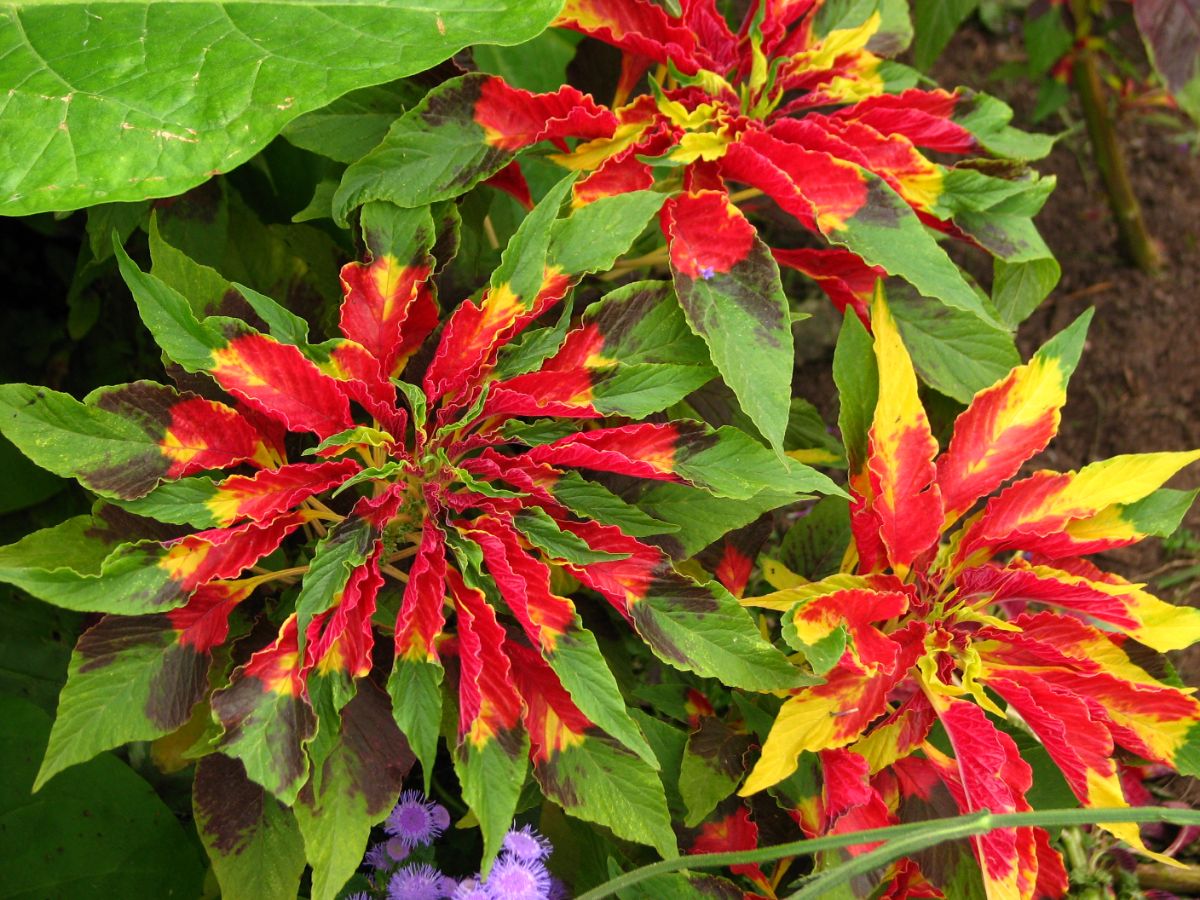
In amaranth plants is Amaranthus tricolor, also known as parrot wing. What do you know of him? At first glance it looks like a Coleus, but it goes further.
If you want to find out what the characteristics of this plant are, as well as the care to be taken to make it perfect, this guide will help you in everything. Do you take a look?
How is the tricolor Amaranthus
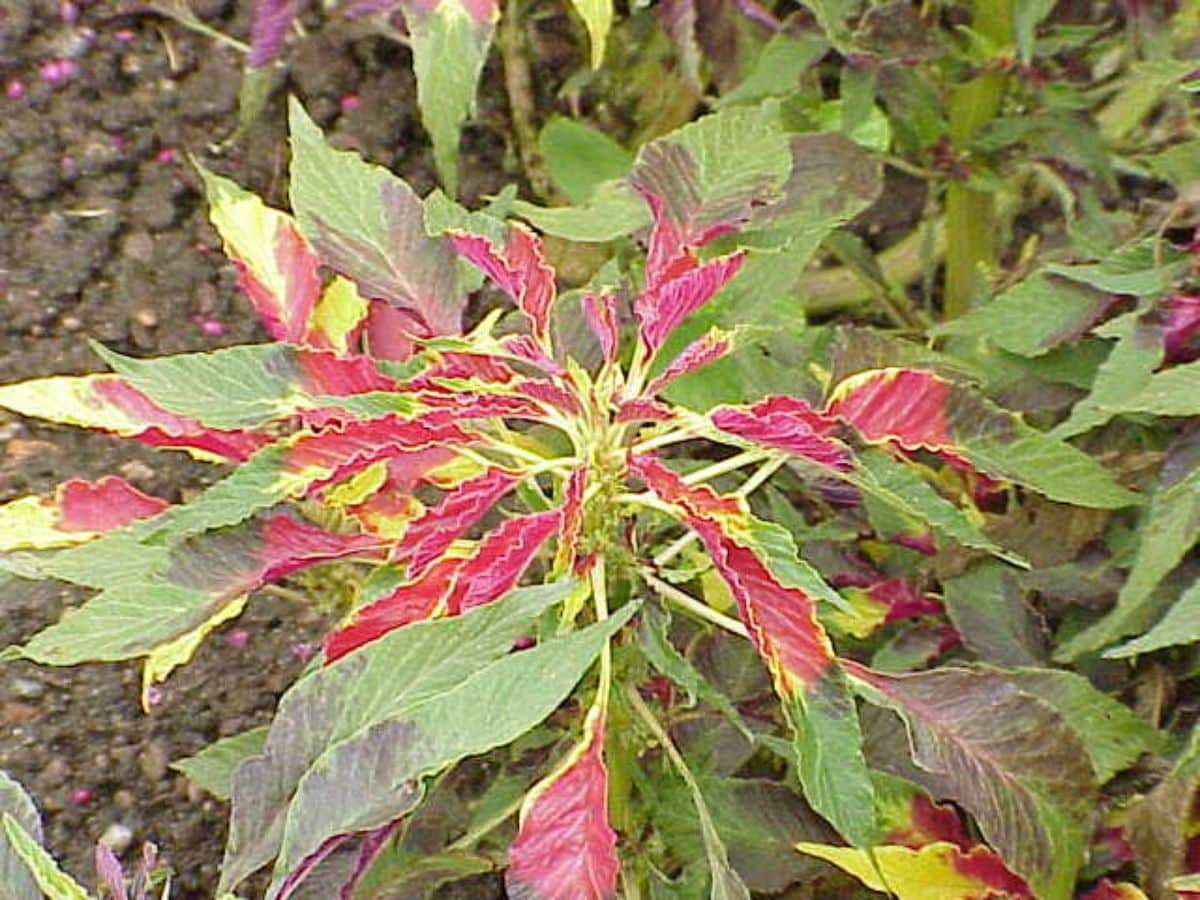
Besides the parrot’s wing, the Amaranthus tricolor is also known and marketed as the royal cape, common parrot or macaw. It is an ornamental plant. In fact, the most beautiful thing are its leaves, which can have red, yellow and green tones at the same time. Its origin is in tropical Asia although it can now be found in many more places.
Visually, we are talking about a grass that grows vertically and can easily reach more than a meter in height (and between 30 and 60 centimeters in width). It has a fairly thick stem from which branch and grow glabrous, angular branches. These initially produce green leaves, which are also glabrous and hairy. They are quite long (they can measure up to 8 centimeters), and also have a petiolate and oval shape. Now these leaves are changing to another color, especially the tall ones, as they change to red and yellow.
Amaranthus tricolor also blooms, although in this case the flowers are not as pretty as the leaves. The flowers are green and come in globose clusters (where you have both male and female flowers. And after them the fruit is obtained, where you will find small seeds, black or brown, which you can plant.
The truth is, both when you see it in person and in the photo, it reminds you of some Coleos, especially those with the same shade on the leaves. Now it’s a little easier to care for this one than Coleus.
Tricolor amaranth treatment

As we have already told you, the Amaranthus tricolor does not pose too many problems when it comes to taking care of it. It is true that you have to keep in mind what it is and what it needs to be healthy and develop properly. But overall, It will not be difficult for you to have it at home, whether in a pot or in the garden.
Here we leave you the most important care as a guide.
location and temperature
We recently told you about another Amaranth. And in this case we tell you that it is better in full sun. Well, with Amaranthus tricolor, we don’t recommend putting it in full sun unless you live in a cold climate. If the weather is temperate or hot, it is best to place it in a partially shaded area so that it is protected from the hottest leaves and has some shade. By having such disparate colors, the plant can have problems with burns, especially if the sun falls on it too much.. It is therefore better to avoid it.
Always indirect light and direct light early in the morning and late in the afternoon.
As for the temperature, it is adaptive, that is, it will get used to the temperature wherever you put it. While it’s best for hot climates, the truth is that nothing will happen in the heat. Another thing is the cold. It does not have a good tolerance and when the temperature drops below 0°C it can kill it.. For this reason it is recommended that if this happens it is protected in winter (either with a plant cover or if you have it in a pot, moving it to a more protected area.
Substrate
Amaranthus tricolor is a plant that, although it can adapt to any terrain, its ideal is one that is characterized by its fertility, very rich in humus, which maintains humidity and is also well drained. If you give it all this, the plant will grow happily.
Therefore, the best thing we can recommend is to have a mix with soil and some drainage like bark, orchid soil and even perlite (we bet on the first two to get more oxygen).
Irrigation
With what we have told you before, you will have seen that irrigation is important if we are to make the earth always moist. Now this is one of the most important cares and if you go too far with the water you could kill the plant.
It is also not appropriate to pour the water directly on the trunk of the plant.but it is better to do it around because it will promote the growth of the roots (the secondary roots) of it and it will establish itself much better in the ground (and will become stronger).
Subscriber
Fertilizing this plant is important, as it requires a lot of nutrients. But if you transplanted it the same year, we advise against fertilizing it (in late summer at most). The subscriber must be constant especially in spring and summer, once every 15 days. This can be foliar or use one that is soluble in irrigation water.
In addition, before planting it (whether in the garden or in a pot) it is recommended to apply a base of manure or compost and mix a little with the soil that is going to be added.
Plagues and diseases
Amaranths have several pests to be aware of. The leaf beetle, as well as caterpillars and snails will wreak havoc on the leaves of thiss, appearing bites, with holes, etc. this will spoil the appearance of the plant. Fortunately, there are remedies (both chemical and natural) you can use to prevent them from approaching the plant.
As for diseases, they are linked to an excess or lack of lighting or irrigation.
Multiplication
Eventually, we come to the propagation of the Amaranthus tricolor. In this case, the only way it will work is through the seeds the plant will give you. You should save them and plant them in the spring, when the temperatures are already warm.
You will need to do this in nurseries for the seedlings to start growing and only when you see that they have developed a good root can you pot them up. This is quite a stressful process for the plants, so some may not survive (they also go from almost constant watering, as they require a lot of water, to more moderate watering).
Do you dare to give color to your garden with a tricolor Amaranthus?