
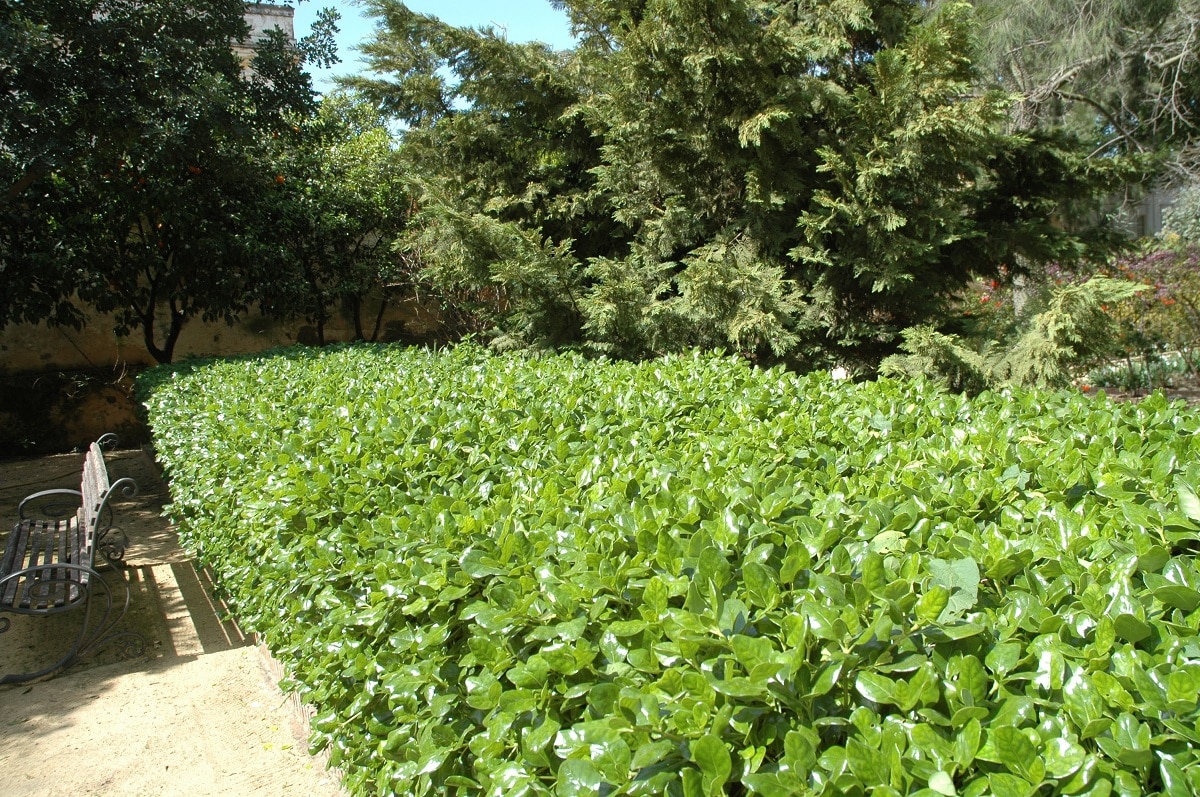
There are about 200 species of plants in the genus Coprosma, and this time we will introduce you Coprosma repens, a bushy ornamental plant native to Australia and New Zealand, currently cultivated in Spain for landscaping and xeriscaping, and exported to other European countries. Its growth is fast and vigorous, which makes it a very interesting hedge plant. In addition to being bushy, its thick, shiny oval leaves give it excellent ornamental value.
In this article, we are going to tell you everything you need to know about the Coprosma repensits characteristics, care and maintenance.
main Features

It is part of the Australian group of ornamental plants. Its scientific name is Coprosmus repens, and is known by popular names such as Brilliant, Coprom or Mirror Plant. It belongs to the Rubiaceae family and is native to Australia and New Zealand. A plant with an excellent Mediterranean climate which, under the right conditions, can be grown in any coastal area of the world due to its resistance to saline environments.
It is a fast growing shrub that can be pruned up to a height of three meters high and about two meters wide. Its most outstanding ornamental characteristic is the shine of its leaves, hence its two most common names: shining plant and mirror. These leaves can be green or variegated with yellow, red, pink, etc. edges. They vary in size from breed to breed, but all are attractive, thick, shiny, and oval in appearance ending in a point.
From an ornamental point of view, its flowering is not the most striking. It produces small green or white flowers that are not very decorative. Coprosma repens it is dioecious, so it has male and female sex organs on separate flowers and stems. This means that to get its fruits, you must have both genders. Its fruits are very decorative, yellow or orange in color and small in size.
Requirements of the Coprosma repens
Coprosma repens In the garden, it is versatile as it can be used to make hedges, to cover spaces, and even in pots as a single plant on terraces. The location of the Coprosma repens Its very important. It must be in full sun to shine fully, although it can also live in partial shade.
It is very resistant to cold and can withstand sporadic frosts of at least -5ºC. As for the topography, it adapts well to calcareous soils, as is usual in many areas of the Mediterranean region, although it prefers light soils rich in organic matter. It would therefore be appreciated to bring organic amendments, manure, compost or simply to add a peat substrate as an all-purpose compost or planting medium before planting in the garden if it is low.
Maintenance and transplant
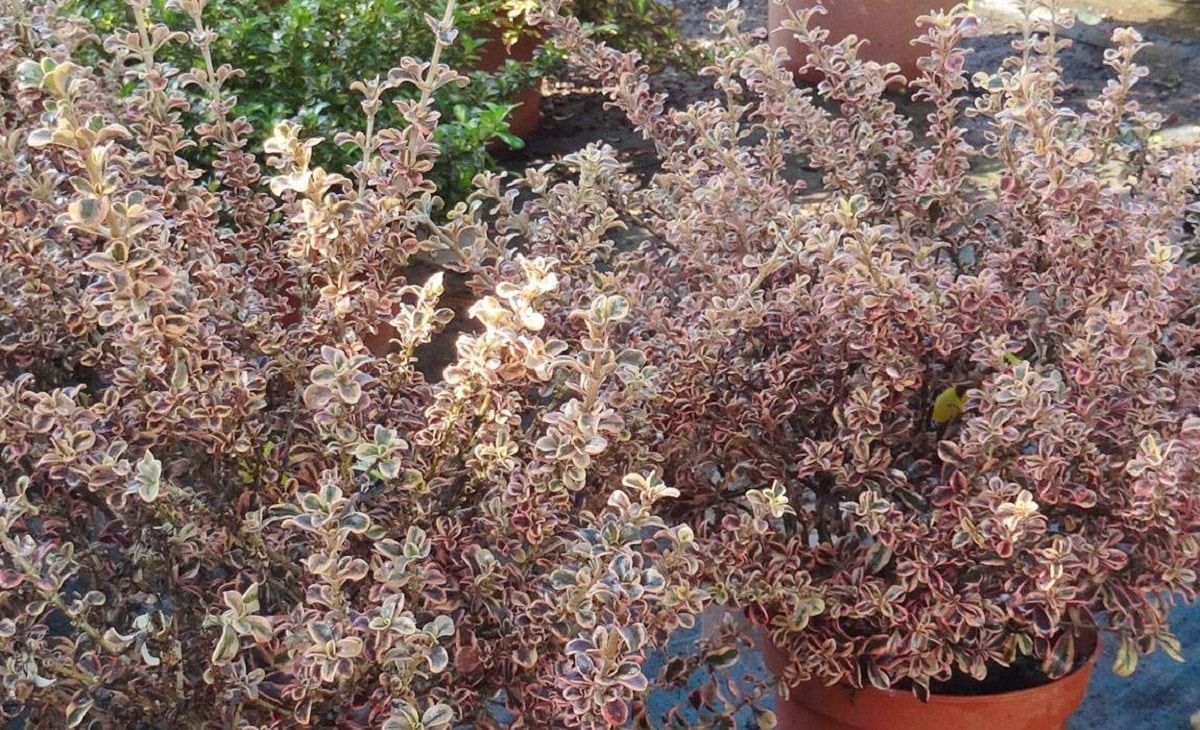
Its grafting is preferably done in the spring. As it is a very drought-tolerant shrub and restores soil quality, if the soil is very cohesive, it is advisable to add silica sand, washed river sand, perlite, clay foam or any other inert material to lighten the weight of the substrate and increase its permeability resistance. Avoid waterlogging, waterlogging will affect the normal development of its root system.
When transplanting into larger pots, it is advisable to place a small layer of gravel at the bottom of the pot to aid drainage. As for its irrigation, it must be moderate, and wait until the soil is slightly dry before watering. Since it does not tolerate flooding, these periods of water shortage help its roots function better.
Its fertilization must use compound fertilizers, balanced and rich in trace elements. Its recommended application is fertigation in low but frequent doses.
Coprosma repens it even recognizes the art of pruning, so it can also be used for hedges. The size is great fun to keep the shape you want. Planting time can be mid to late fall to allow germination to begin before winter feeding ends and it shows all its leafy splendor in spring, its main ornamental attraction.
Its long branches can also be shortened at the end of winter depending on weather conditions. In any case, the problem is to obtain more compact and branched plants by eliminating their broken, dry or badly oriented branches.
Plagues and diseases
It generally has few phytosanitary problems because it is very resistant in this respect. Nevertheless, Due to its hardiness, it is quite resistant to typical garden pests, and if we take care of its adequate light and irrigation conditions, the land will grow without problems.
Another problem is when grown in a greenhouse, from cutting to sale. In this case, the rest of the time there may be problems with root diseases or leaf-sucking insects when rooting, although as professional nurseries they easily control these.
culture of Coprosma repens

It can be grown in spring from cuttings. For this we can use branches cut from pruning to obtain cuttings. The method is to use the healthiest shoots and cut the stems with three or four pairs of leaves. Make sure they’re not too soft if they’re also on top. The incision must be clean to avoid crushing the incision area, as this can become a source of infection.
Then we will remove some lower leaves and plant them in a tray or small pot with dimples. Your substrate can be a substrate for indoor plants to which about 30% silica sand, coconut fiber or perlite is added to improve its aeration.
Newly planted cuttings should be placed in a protected location with partial shade, keeping the soil slightly moist and high ambient humidity to prevent dehydration. At temperatures between 20 and 25 ºC, in two or three weeks they will begin to root finely.
Once the root ball has formed and acclimatized, the cuttings are ready to be planted in a larger pot. For this we can use, for example, a universal substrate and improve its structure with aggregates, as we have already proposed before.
Throughout the crop we will regulate the irrigation to keep the substrate moist but not flooded. We will also fertilize with fertilizer type 18-12-24 plus trace elements added to irrigation water at the dosage recommended by the manufacturer.
After several months of cultivation, just in time for early spring or late summer, they can be grown directly in the garden or in large pots and enjoyed as solitary plants.
I hope with this information you can learn more about the Coprosma repens and their characteristics.