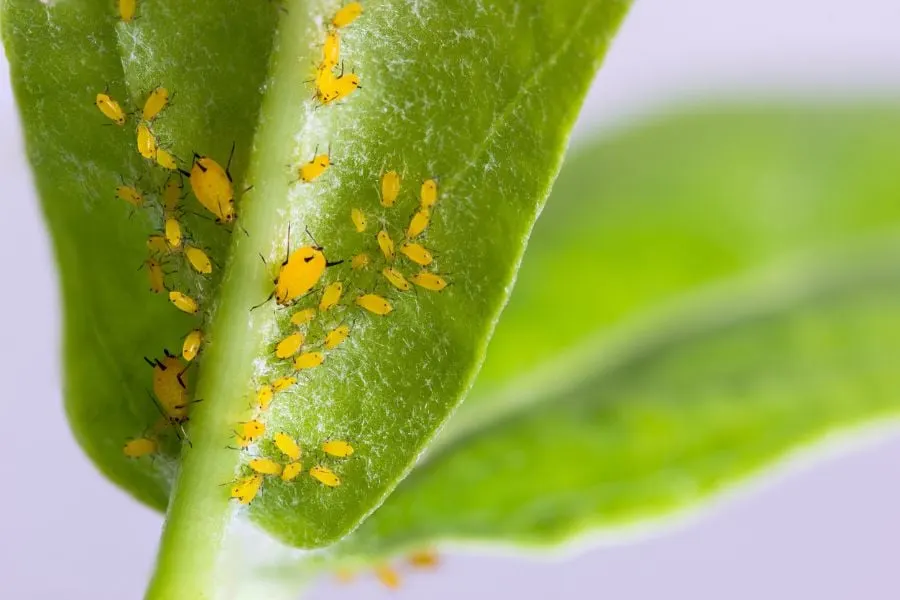
Are you afraid that your plants are infected with pests? Although you can get rid of insects with a few tricks, it’s best to prevent an infestation in the first place.
Super important: weak plants are more susceptible and more likely to fall victim to pests. That’s why we’ve rounded up our best tips and tricks for strengthening your plants, preventing potential infestations, and keeping pests from coming back.
The right environment for your plants.
Like I said, location is half the battle or even more than half.
Creating the right environment for your plants gives them the best foundation for healthy and robust growth.
Appropriate lighting conditions
Different plants come from different environments, which means they have different needs regarding their environment. For example, some plants need lots of light, while others thrive in less light.
So be sure to meet your needs. This is the most important thing for your plants.
Signs that your plant isn’t getting enough light include leaning toward the window, stems that are too long, or small leaves.
In dark corners you help your plants with artificial light, such as plant lights. This way you create the perfect environment for your plant.
high quality flooring
High-quality soil that absorbs moisture well while remaining very well drained can minimize the risk of waterlogging or the soil drying out too quickly. It also makes watering easier.
For example, conventional potting soil is often too dense for indoor plants.
This means it is less porous and takes much longer to dry out, making it easy for the plant to overwater.
With the right soil, you create the ideal soil conditions for your plant to grow big and strong.
temperature and humidity
The most common houseplants come from tropical or subtropical regions. In other words, they like heat and humidity.
Humidity between 50 and 60% is ideal. But since the United States is in different climatic zones, sometimes we need to improve the indoor climate.
In winter, the humidity drops considerably due to the dry indoor heating. We’ve put together some tips for increasing humidity to combat this. Think your air is too dry?
Hygrometer immediately, you can monitor the temperature and humidity in your home.
Preventing Pests in Houseplants
To actively prevent pests, there are several activities you can or should do on a regular basis:
1- water properly
Proper watering is the most important part of plant care.
Push your finger into the soil an inch deep. If the soil is still wet, it will stick to your finger. When it dries, it crumbles. Water your plant only when the top 1-2 inches are dry.
Pour out excess water from the outer pot so your plant doesn’t get its feet wet. Otherwise, clogging may occur. It can also happen if you water your plant too often, even if the excess runs off.
correct fertilization
Fertilizing gives your houseplant the nutrients it needs to grow. You can do this in two ways:
- With a slow-acting fertilizer: You can put our biofertilizer granules in the soil of your plants once in spring and once in summer. They release nutrients into the soil for a few months.
- With liquid fertilizer: You can mix liquid houseplant fertilizer directly into irrigation water.
Make sure you never exceed the dosage indicated on the package. Too much fertilizer can harm your plants.
In our plant encyclopedia you can see how often your plants appreciate liquid fertilizers. It depends on the type of plant.
2- Replant
If you take good care of your plants, they will grow steadily. Eventually, your pots will become too small. You can see this happen when:
- the inner pot is completely attached to the root,
- the inner pot is deformed,
- the roots grow from the top or bottom of the inner pot, and
- your plant is too heavy, so it is easy to knock it over.
Does this happen to your plant? Find out how to transplant houseplants.
3- Check plants for pests
Another essential part of plant care: regularly inspect your plants for pests.
In this way, possible infestations can be detected and treated in time. Unfortunately, infestations usually only become apparent at a very advanced stage.
When you water your plants, we recommend that you take a good look at them. Or, as a secret tip: I inspect my plants while I brush my teeth.
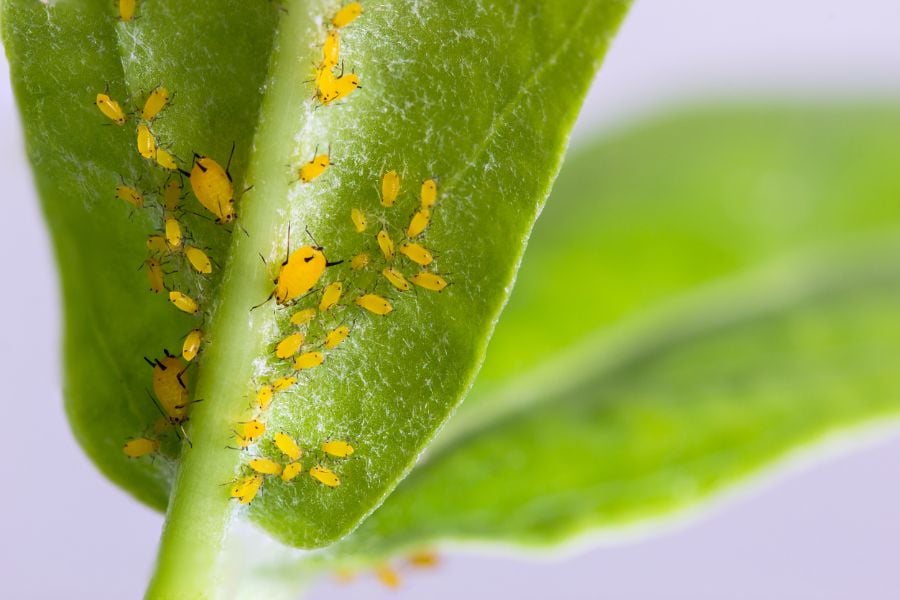
Pay particular attention to the underside of the leaves. This is where pests like to hide. Watch out for small insects, white cobwebs, and sticky residue on the leaves.
4- Sweep the plants regularly
Over time, dust builds up on your plant’s leaves. This means that less light falls on them and they cannot photosynthesize as efficiently. Less photosynthesis also means less energy.
You can provide support by wiping your plant with a damp cloth or taking a shower every few weeks.
During colder months, such as fall and winter, you should do this more frequently, as your plant will already be receiving less light. Another advantage is that you get rid of all the pests that go unnoticed in your plant.
5- Boost your plants with beneficial bacteria and fungi
Not all bacteria and fungi are harmful to plants.
For example, the mushroom Trichoderma harzianum It clings to the roots of your plant, promoting growth and resilience. The same goes for natural soil bacteria. amyloliquefaciens bacillus.
We think these fungi and bacteria are so cool you can find them at garden stores too! You can easily apply both during your watering routine.
6- Use of beneficial insects.
By using beneficial insects, you can prevent pest infestations in the first place. These insects will eat the pests if they appear. Pests can go unnoticed through an open window.
Predatory mites are also diligent helpers, making sure thrips don’t wander onto plant leaves.
7- sticky traps
By hanging sticky traps near your plants, you can spot a pest infestation early and take action immediately. Additionally, the traps attract certain pests that attach themselves to them, making it easy to spot unwanted visitors.
For example, yellow sticky traps attract fungus gnats and blue sticky traps attract thrips.
Do you have an infestation that you can’t get rid of, even though you’ve tried everything? Or do you have other questions about your plants? Let me know, I’ll be happy to answer your questions.
Sharing is caring!