

Image – Wikimedia/Peter A. Mansfeld
The sanseviera is a plant which, although relatively small, like all other you need your space to grow. This is why the transplant is so important, because if we didn’t do it, it would barely grow and, in addition, there would come a time when it would lack nutrients.
But, How to transplant sansevieria in the right way? Although its roots are not delicate, it is advisable to be careful when removing it from the pot and planting it in a larger pot.
How is sansevieria transplanted?
Below I will explain how you should transplant your sansevieria plant so that it can continue growing without problems:
Choose a bigger pot
It should be a pot more or less as high as it is wide, or if you prefer, a little wider than it is tall. In addition, It should be at least three or three inches longer, both in diameter and in heightand have at least one hole in its base (although it is better if it has several).
As for the material with which it is made, you do not have to worry. It can be plastic or clay, depending on your preference. What is important is what I just said: it must have yes or yes holes in its base through which water can escape.
Fill it with substrate for succulents
And it is that sansevieria or tiger’s tongue is very sensitive to excess water in its roots. For that, It is strongly recommended to fill it with a light substrate that drains water well and also allows the root system to have a good development.. For all this it is worth using a prepared substrate for succulents.
So what will be done is to pour a lot of it into the new pot, but taking into account the height of the old pot. This way, you can plant your sanseviera correctly, without it being too low or too high.
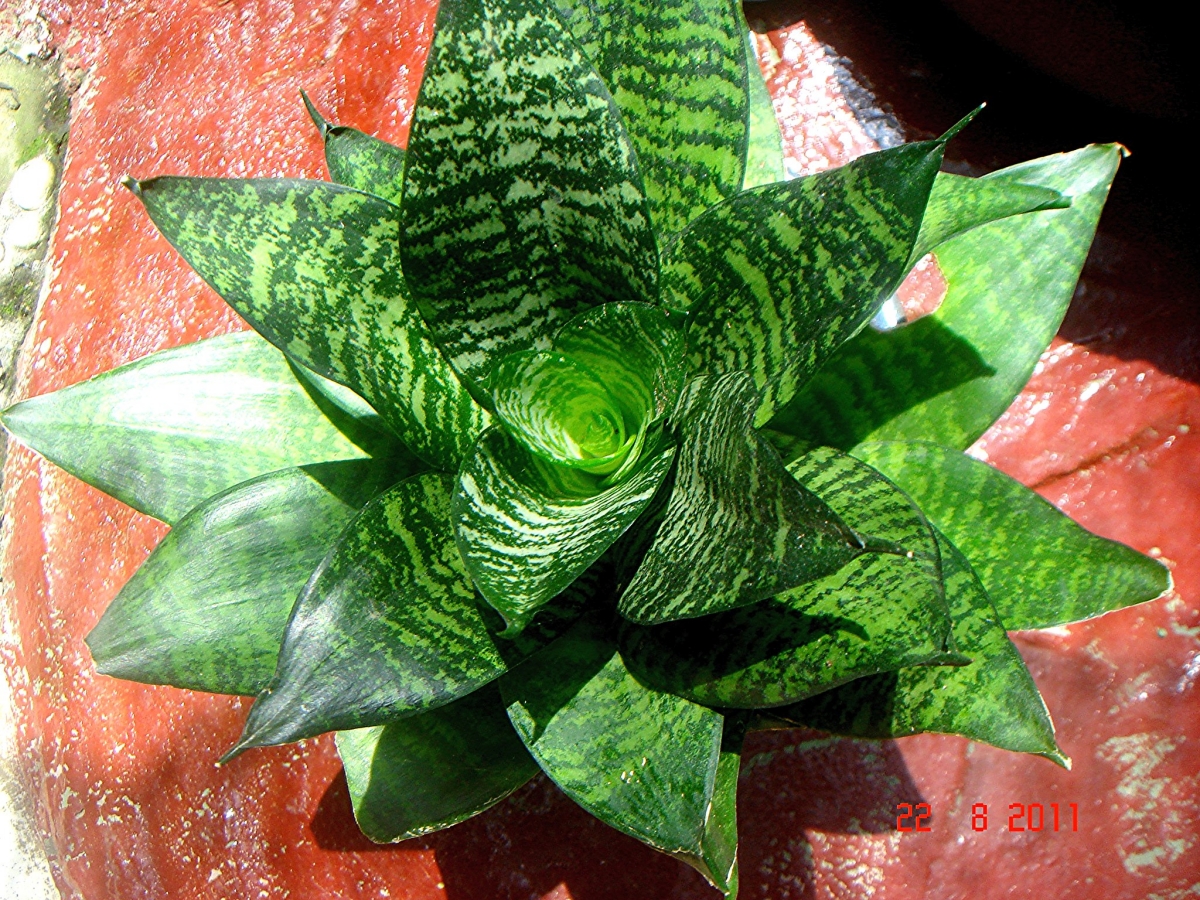
Image – Flickr/Ahmad Fuad Morad
To do it well, I advise you to put the sansevieria on a table. So, hold the pot with one hand, and with the other grab the plant by the base of the leaves. Now carefully remove it. If you see that it does not come out, give gentle but firm blows to the pot so that the earthen bread “separates” from said container.
If it has roots that come out of the holes, you will have to see if you can untangle them; and if not, it will be better to break the pot so that the plant comes out without suffering any damage.
Introduce it into the new pot, placing it in the center
It is also important, since all roots must have the same space to keep growing. But also, you need to make sure the sansevieria is at the right height; that is, it is neither too low nor too high relative to the rim of the pot.
Ideally it should be just a little below (not more than a centimeter) so that water is not lost when watering, because if it were lower, the leaves could end up rotting.
Finish filling the pot
Now what remains is to add more substrate to finish planting it. This, yes, do not bury the leaves. These must be exposed so that they can breathe and perform their functions normally, because if they were underground they would eventually suffocate and die.
And finally, water. So you can plant your sansevieria correctly.
When to transplant sansevieria?
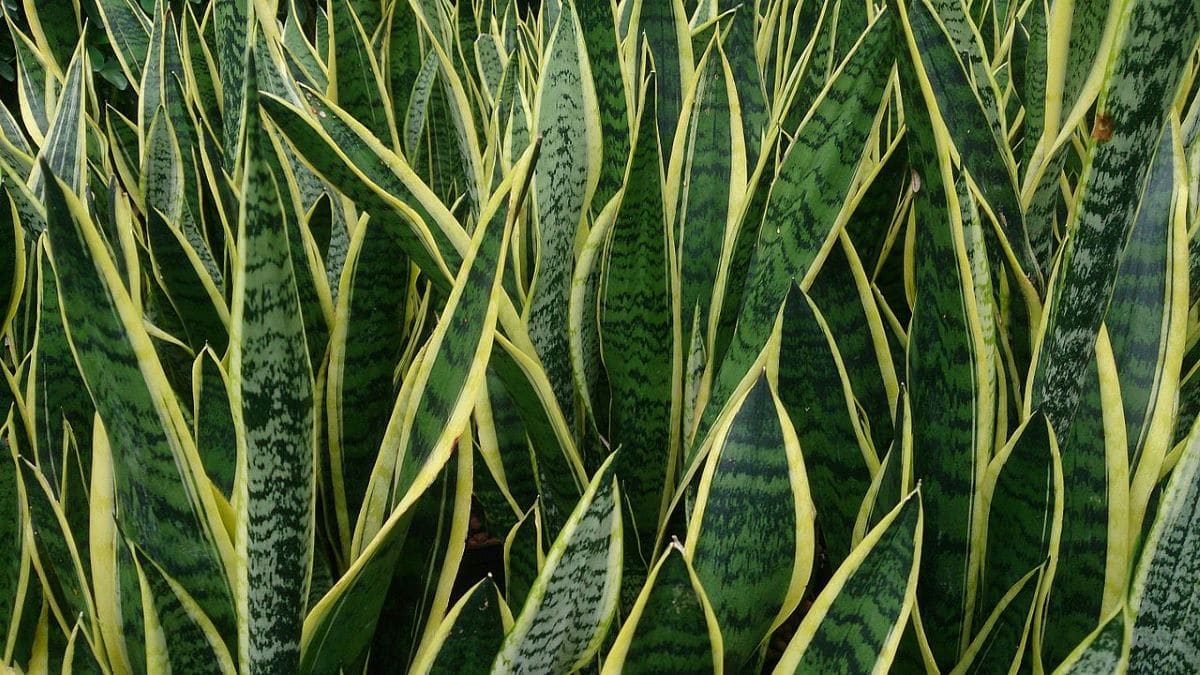
Image – Wikimedia/Mokkie
Sansevieria transplant should be done as soon as spring stabilizes; that is to say, as soon as the temperatures exceed at least 15ºC minimum. And it is that it is a plant that grows when the weather is good, that is when it starts to get a little warm, so it is strongly advised to change pots once the temperatures start to rise .
In addition, this should only be done in the event that it can no longer continue to grow in the pot it is in. We will know either because its roots are coming out through the drainage holes or because it has produced so many suckers that it has run out of space to continue growing.
This way your sanseviera can become even more beautiful.