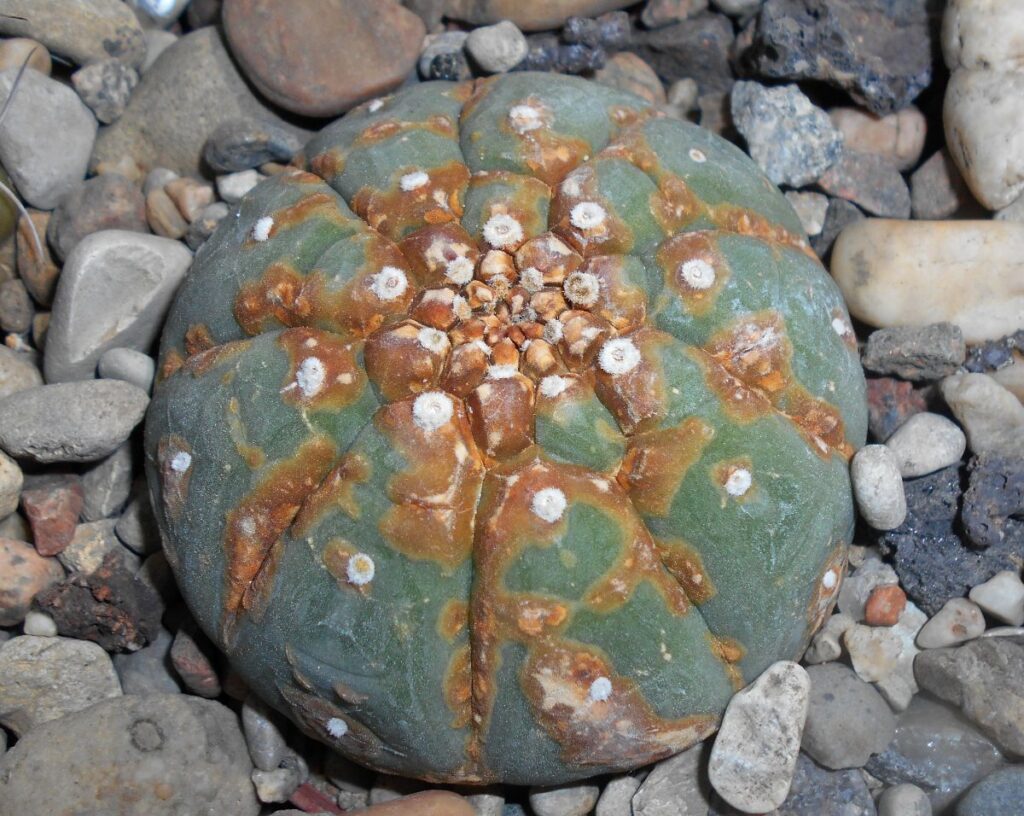
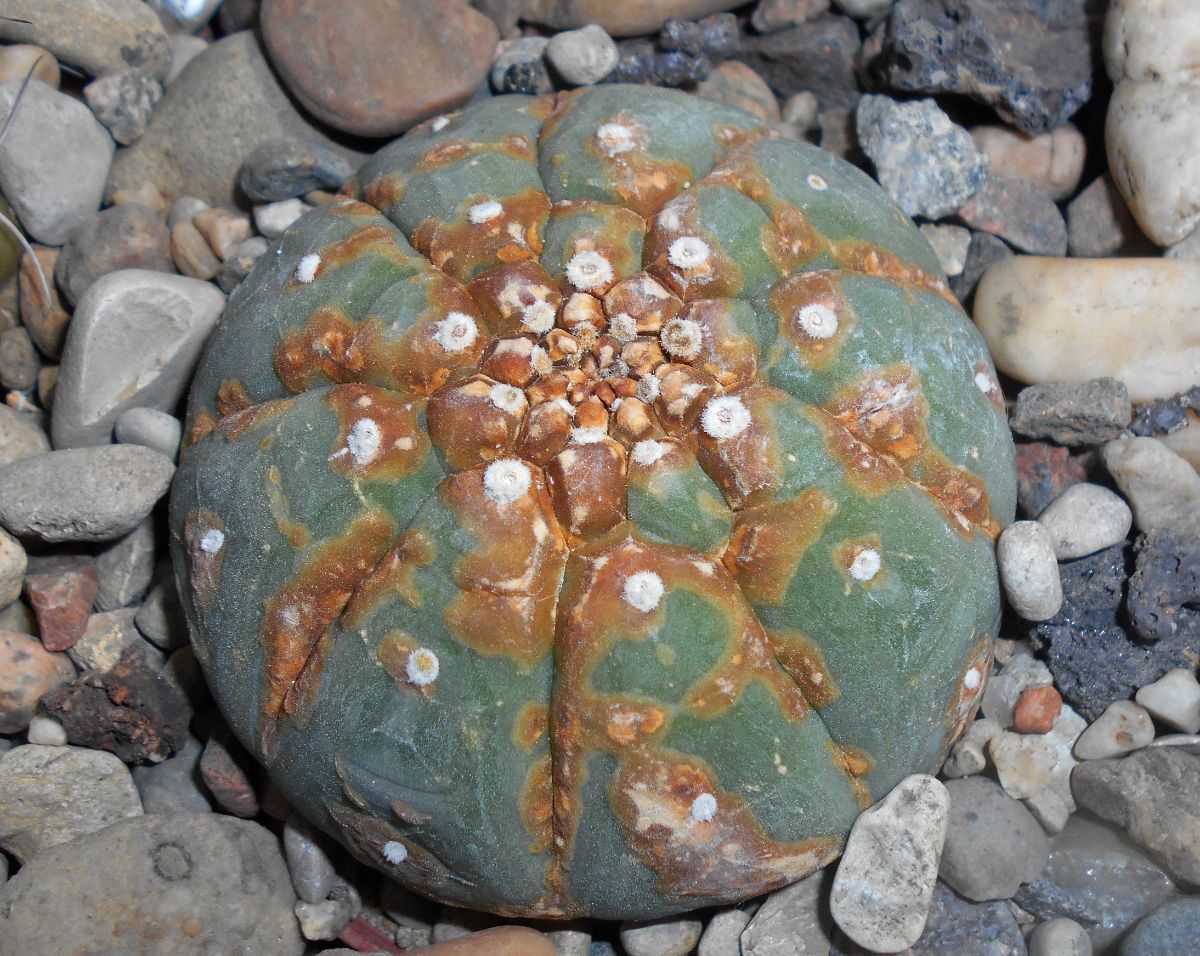
If you like cacti, you have surely heard of Matucana madisoniorum. Perhaps you even have it in your collection, since it is one of the most common and that you can find in its normal version and in its variegated version.
But what do you know of him? What about the care you need? Then we are going to give you all the keys so that you can see it with different eyes and know how to take care of it according to its needs.
How is the Matucana madisoniorum
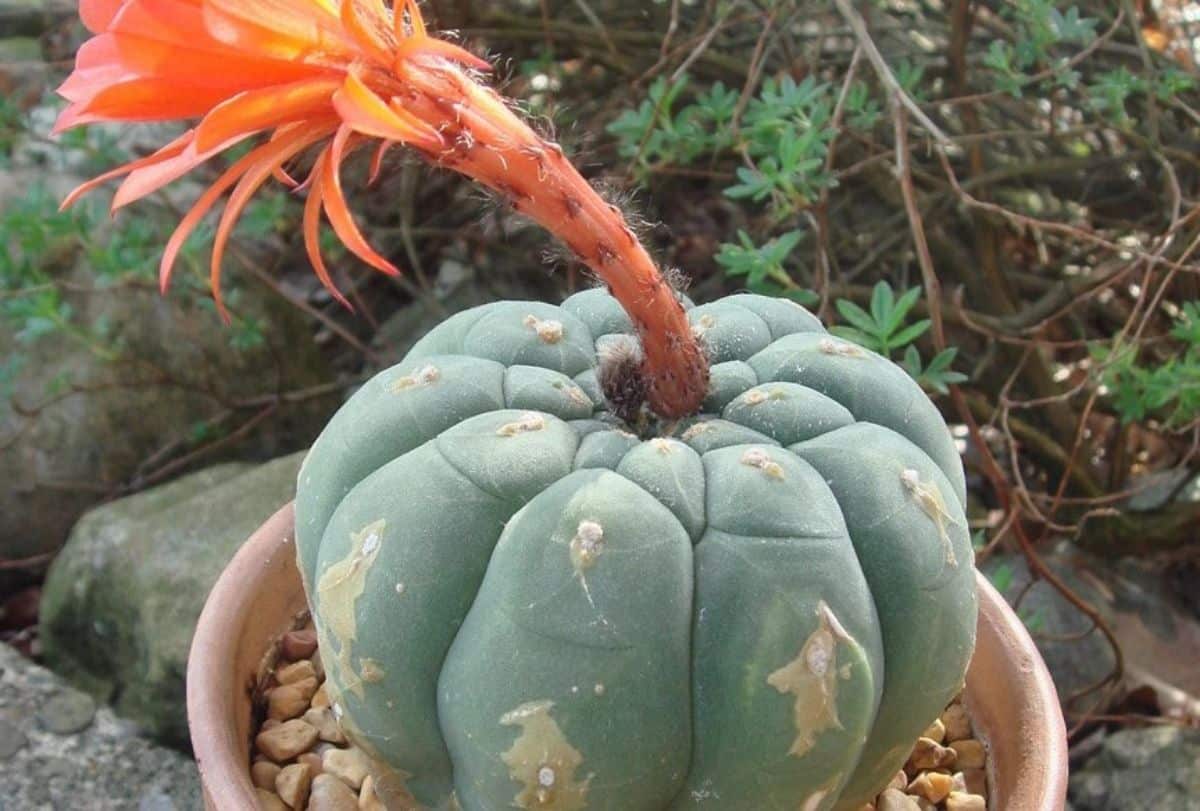
The Matucana madisoniorum cactus is native to Peru, specifically the Peruvian Amazon. In its natural habitat, it grows solitary, it is very rare to see it grouped together with other cacti of the same species.
Visually, you will find a globular cactus (shaped like a flattened ball). It is a grayish green color. Now the ones you find in stores usually have this shape but over the years this one gets bigger and there will come a time when it will be about six inches tall. It will keep that globular shape, but it won’t be as perfect as you can see now.
In addition to its shape, it has between seven and twelve ribs. These are flat but wide. And in the areolas, it will have a series of tubercles. Moreover, it has thorns. These are generally dark, between brown and black, very flexible and curved (at least when they grow, they then become hard).. In each areola there will be about five. However, don’t be surprised to see it in stores without them, as it is common.
If you’re lucky, you’ll also see it bloom in spring or summer. These flowers are born from the cactus itself (usually from the upper part, from the areoles themselves and will give rise to a tubular flower which can be orange, white or red. They will measure between four and five centimeters in diameter and behind them it is very likely that the fruits, which they will be half as big as the flowers, that is to say about two centimeters.
Matucana madisoniorum treatment

Now that you know the Matucana madisoniorum cactus a little better, How about we talk to you about care? If you have one, you will be able to see if you really take care of it; and if you don’t have one, you can always find out what you’ll need to feel good.
location and temperature
Like all cacti, the ideal location is outdoors, as it needs several hours of direct sunlight. Of course, you can’t put it in the sun as soon as you buy it, because that’s the stupidest way to lose it. You have to get used to its climate and the sun you have. Approximately in seven or fifteen days you can leave it in full sun and there will be no problem. During this time, it takes some getting used to with one or two hours of sun in the very early morning or late afternoon. And every other day, increase this time. Now, be careful because if the sun is strong enough where you live, it will be better to put it in the shade or partial shade.
We don’t recommend it indoors unless you have special lights for plant growth.
As for the temperature, the ideal is that it does not fall below 12°C. If it is more, there is no problem, because we are talking about cacti and they tolerate high temperatures well.
Substrate
This cactus is okay to have in a pot, although you can plant it in the garden (but being small it won’t be worth it unless you’re building a cactus garden).
The soil you will need should be sandy, light and also drained. For this reason, we recommend mixing with pumice or with akadama and kiryuzuna. Another option, cheaper than the previous ones, can be cactus soil with additional gravel or even small stones. The goal is for the soil to be loose and there is plenty of room for the roots to breathe and there is no pooling of water.
The transplant, meanwhile, is always done in the spring, but when you see that the cactus is already too big for the pot it has.
Irrigation
As for irrigation, we are talking about a cactus, which means you will have to water and wait to do it when the soil has dried. Generally, you are said to water once or twice a week in the spring and summer, and once every three weeks or a month in the fall.
In winter, watering is not recommended.
If you do not know when to water, keep in mind that for cacti it is better to water little and occasionally than to spend water.
Subscriber
Although you don’t need a follower, the truth is that it doesn’t hurt to apply a little mineral fertilizer in the spring. Only on this occasion.
But, as you are told, it is not that it is necessary to do so, it is just a contribution that will help you see it flourish.
Size
The Matucana madisoniorum, as a cactus, does not need to be pruned. But many choose to remove the thorns to make it more attractive and enjoy this peach skin without any puncture accident.
Of course, by removing the thorns, you can cause insects and other animals to damage the surface of the cactus.
Plagues and diseases
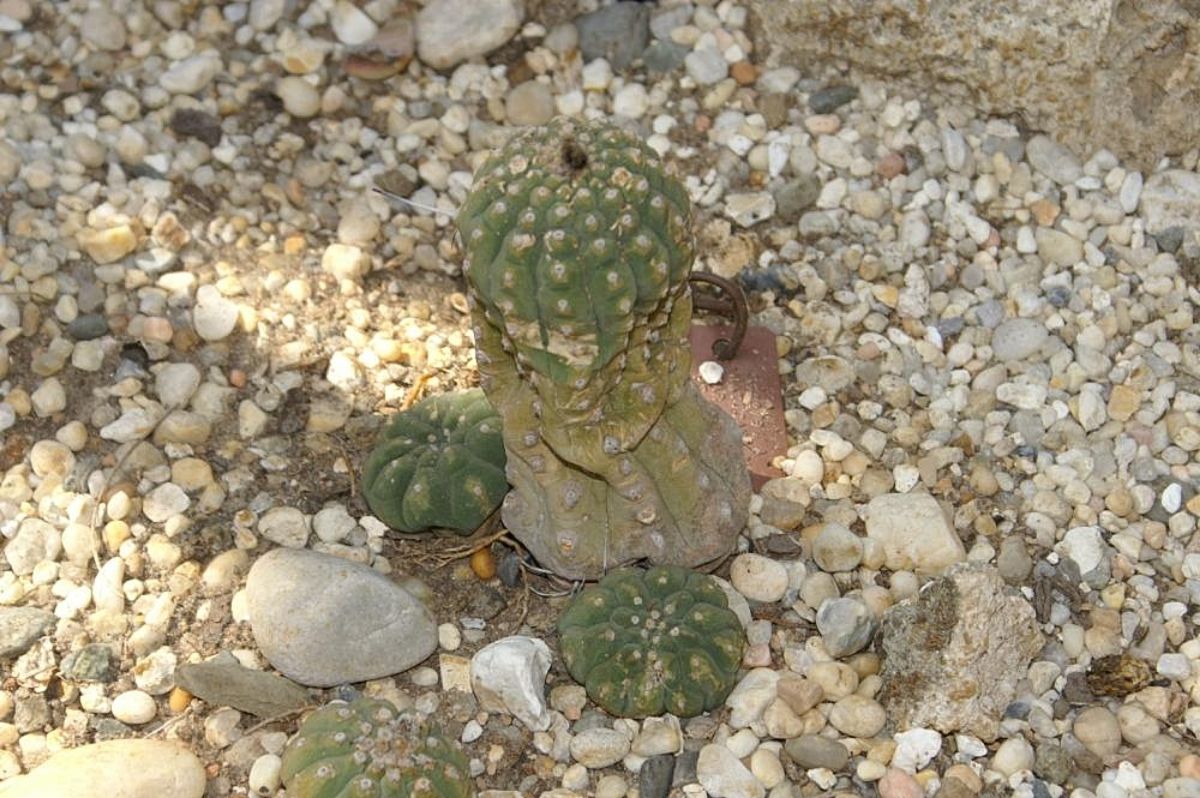
When it comes to pests, perhaps the one that can do the most harm is the mealybug. But, in general, cacti are not affected too much.
This, yes, There is a disease that must be kept at a distance: excess moisture. If you water a lot or where you live there is a lot of ambient humidity, it will weaken the roots of the plant.
Multiplication
Finally, concerning the propagation of Matucana madisoniorum, you should know that it is done thanks to the seeds it produces during its flowering. You can sow them in the spring and wait for them to grow little by little. And it is that it is not a fast growing plant; quite the contrary.
In general, caring for a Matucana madisoniorum is not difficult. Also, you should keep in mind that on many occasions the thorns can be cut. In fact, it’s common to find them in stores or second-hand with the spines cut off. These will grow back but this way it looks better visually. What do you think?