
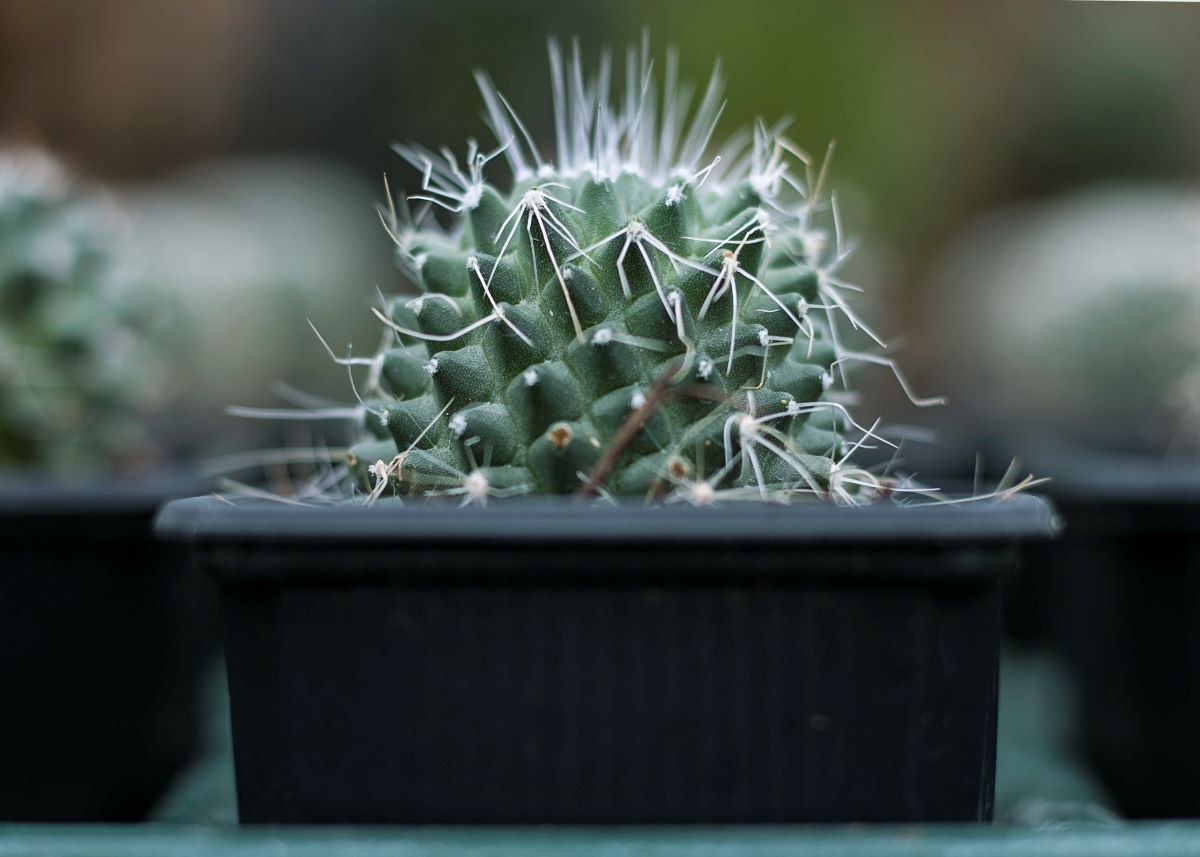
When to transplant cacti? As they say, “there are times for everything”, and in case our plant starts to need more space to continue growing, it is also important to choose the season of the year in which we let’s do it.
And it is that, yes, they are usually plants that easily overcome transplants, but it would not be positive if they suffered damage, and even less if we could avoid it.
When is the best time to transplant cacti?

From my own experience of transplanting cacti of different species and not always at the same time of year, I can tell you that the best season to complete this task is spring.. But not at any time of this season, but when the temperatures are already higher than they were in winter, and the risk of frost has become non-existent. In fact, Ideally, the thermometer should have marked a minimum of 15 ºC for several weeks.
And it is that if it were done, we are going to assume, just at the end of winter, if it is still cold in your area and/or if there are frosts, that the plants will notice it and that they will suffer. After all, a transplant involves removing them from their place of growth, exposing the roots to sun, wind, etc.; and since this is something they are not prepared for, going back underground as soon as possible will cause the cactus to start showing damage, like burns for example.
How do you know if a cactus needs a transplant?
Related article:
How to plant cacti?
Transplantation is something that must be done from time to time if we have cacti in pots, since they are plants that, although they usually grow slowly, over time their roots occupy the entire interior of said container . Once they are fully rooted, growth slows down a lot. And from there, two things can happen: the plant stops growing and eventually weakens, or it grows out of the pot (the latter happens with globular cacti, like Ferocactus and some Echinopsis, among others).
The truth is that it is quite sad to see a plant like this, because to continue its growth what they do is thin its stem, to the point that, in extreme cases, to save its life , it is sometimes better to cut said stem, where it is thin, impregnate the base with rooting hormones and plant it in a new pot with a cactus substrate. Luckily, it’s very easy to avoid getting there, since it’s just a matter of checking them once in a while.
But, How do we know they need a transplant? For this, we will have to look if:
- the roots come out of the drainage holes
- if with the naked eye you can already see that it lacks space to grow (for example, if it is a globular cactus, you will no longer be able to see the substrate because the plant has occupied the entire container)
If we still have doubts, I recommend doing the following: Place the cactus on a table, and with one hand hold the pot and with the other take the plant by the base. And now what you have to do is take the plant out of the container a little: if you see that the bread of earth or the clod does not collapse, then it has taken root well and you can transplant it.
I do this when, for example, the earth has been dry for so long that it has become compacted. And of course, once compacted, it “detached” from the inside of the pot.
Depending on the quality of said substrate, it is sometimes better to plant the cactus in a new pot with a new, better quality substrate., like this, than trying to rehydrate the soil you have, for the simple reason that if it happened once, i.e. if it was compacted once, it will will probably happen again in the future. And of course, it is better to put a substrate that is better so that this does not happen again.
Special case: transplanting cactus that has suffered from excess water

In principle, no diseased plant should be transplanted, because in many cases the cure would be worse than the disease. But if our cactus has received more water than it needs, then things change. In these situations, if we want to have a chance of saving its life, we will have to plant it in a pot with a new substrate, in addition to applying a systemic fungicide like this to try and stop the fungus from killing it.
The pots that cacti need are those that have holes in their base, since they don’t like having their roots soaked. Also, it wouldn’t be a good idea to put these pots in pots without holes, for the same reason.
This transplant it will be done at any time of the yearbut I recommend that, if it is winter, you keep the cactus at home until spring so that it can adapt to its new pot.
As you have seen, the transplant is important, yes, but it is also important to do it at the most convenient time.