

Sure that have you seen the Ctenanthe burle marxii and thought about the prayer plant; or in calatheas and marantas. But the truth is that it really isn’t. It is related to them, of course, since it belongs to the Marantaceae.
However, we can already tell you that it is not exactly one of them, but a close relative. Despite everything, it is still one of the most beautiful and striking plants, curious for its mobile leaves and similar in appearance to the others (but with other care and needs). Do you want us to talk about it?
How is Ctenanthe Burle Marxii?
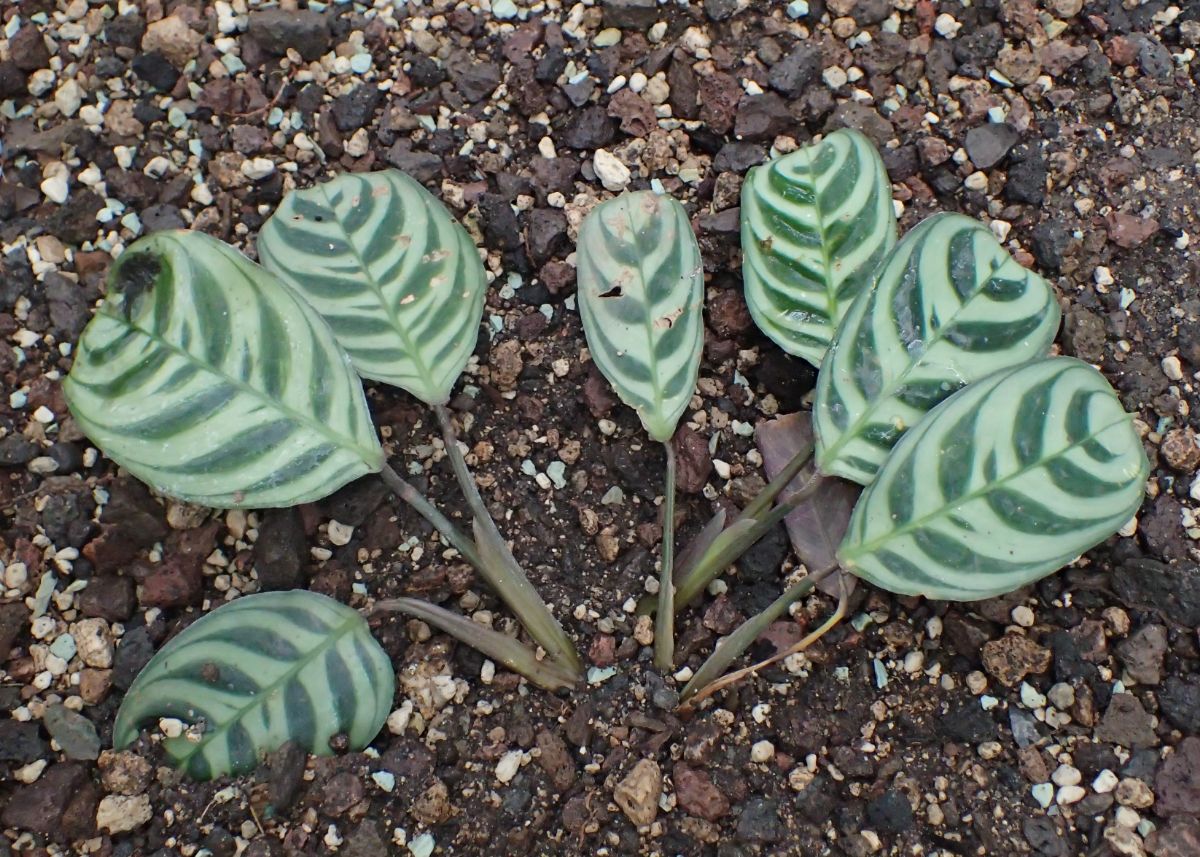
We will start by talking about Ctenanthe burle marxii because of its origin. This plant Its natural habitat is Central and South America. More specifically, in tropical areas because, like a good maranta, it needs humidity to live well. In addition to its name, Ctenanthe burle marxii is also known by more “common” names, such as: Fishbone, Calathea Burle Marx or Maranta Fishbone.
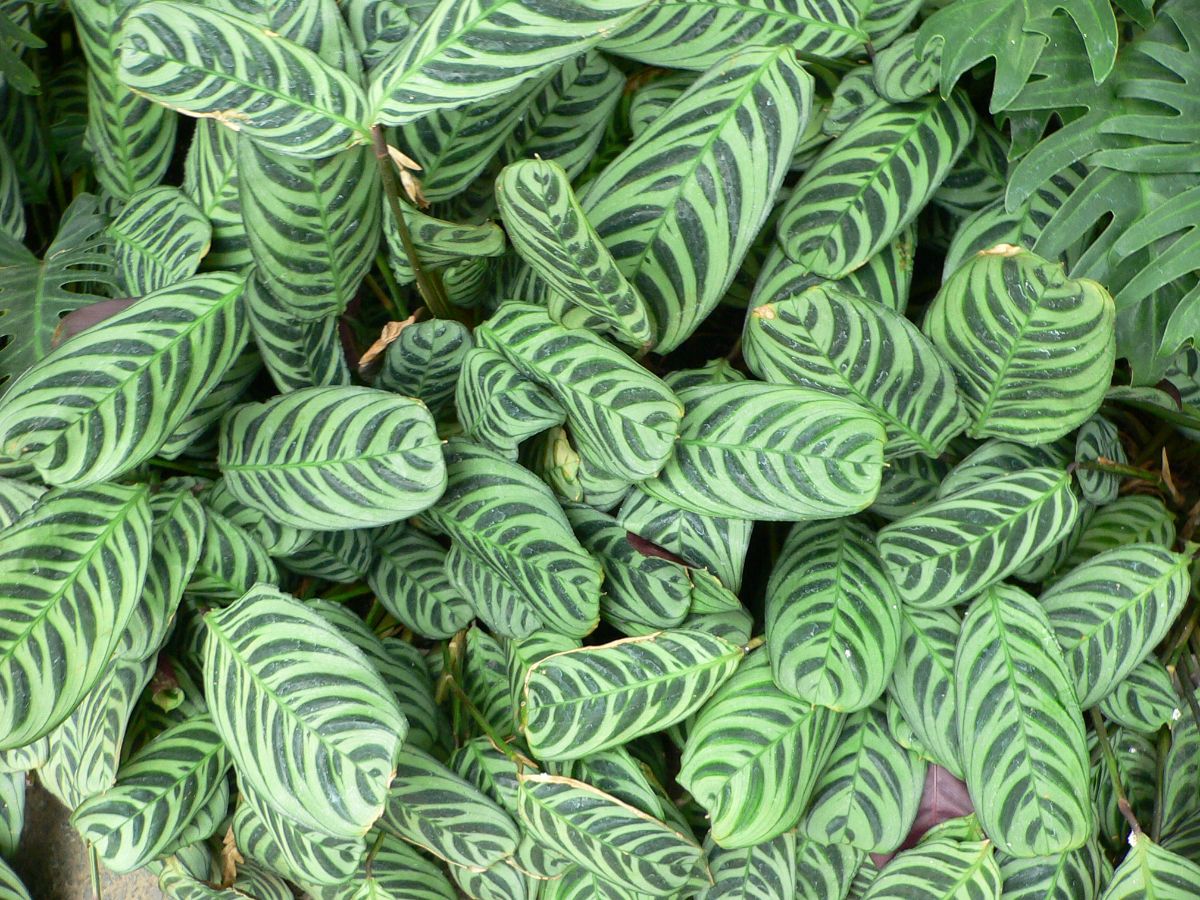
Physically, it is a plant that It grows to a maximum of about 40 centimeters. Once it reaches them, it fills with buds and spreads widely. The leaves are oval, long and green with a pattern that simulates the spine of a fish, hence the curious name.
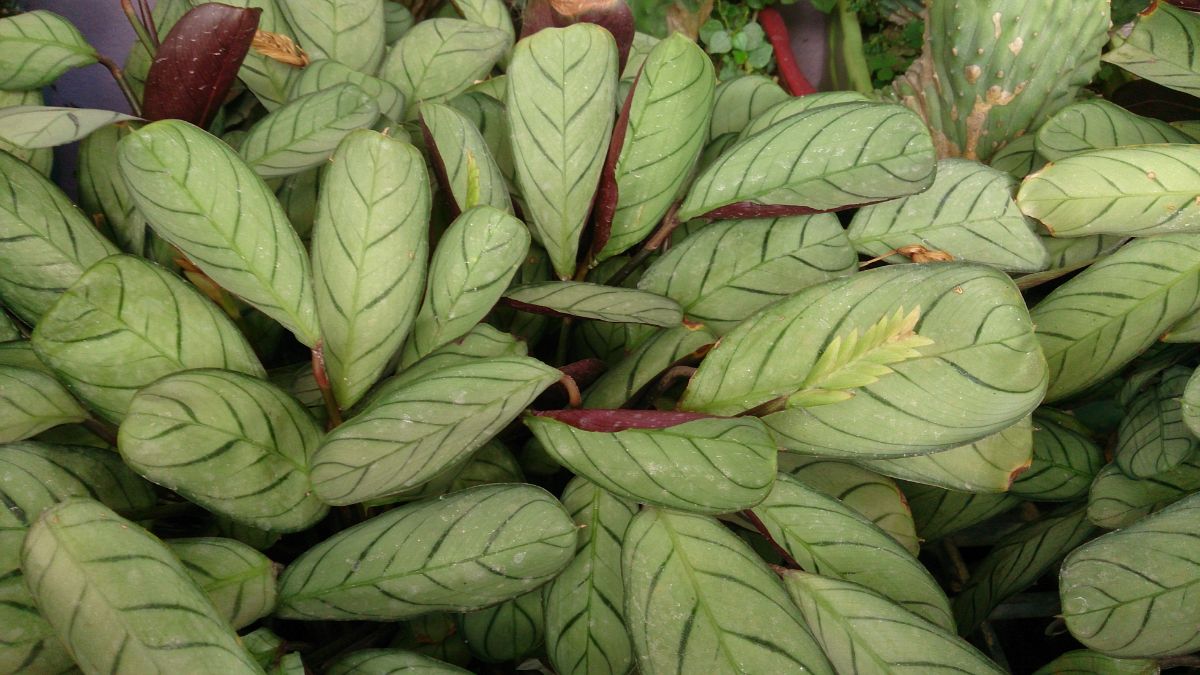
These leaves are, from behind, that is to say on the underside, of a reddish color, and one of the characteristics for which it is confused with a maranta or a calathea is the fact that it moves its leaves. That is to say that in the morning, it opens them and at night, for lack of light, it closes them.
However, yes there is a difference between Ctenanthe burle marxii and a “true” maranta or calathea. It has to do with the leaf pattern. On the one hand, you will see that this pattern is not the usual one in a maranta or a calathea; on the other, the leaves are not the same either, as they are much longer and oval than those of the real ones. Despite everything, it is still a very pleasant plant to have at home, especially because it oxygenates and improves the humidity of the room where you place it.
Something not usually seen in Ctenanthe burle marxii that nevertheless does occur in its habitat is flowering. Although at home it is very difficult for us to see it, in its ideal environment it blooms with spikes full of white flowers. If at any time she does it at home, she will let you know that the care you are providing is most appropriate for her.
Care Ctenanthe burle marxii
And speaking of care, do you know what you need to take care of for the Ctenanthe burle marxii to be happy? We have to tell you that this is not a plant you need to be very aware of. In reality, once you meet all the requirements you can forget about it for a bit and take a look at it from time to time. Here we leave you indications of everything.
Location and lighting
When buying a Ctenanthe burle marxii, the first thing you need to think about is where you are going to place it. It is not a plant that tolerates direct sun, but it does not like shade either. In reality, its ideal location would be in partial shade for, if it is in the sun, the leaves will burn; and if it is in the shade, it will not photosynthesise well and will suffer.
Therefore, place it in a very well lit area but without direct sun (it can tolerate some early or late morning sun, as long as it is not very intense).
Temperature
As for the temperature, you should know that it generally adapts to everything. But it is true that it has a slight problem of freezing. In winter, when the temperature drops below 10 degrees, the plant begins to suffer. Your ideal would be between 15 and 25 degrees Celsius.
Heat tolerates it better, although you should bear in mind that when this happens the environment dries out more and needs an extra supply of moisture to keep its leaves intact (with heat, leaves wrinkle, blacken and appear completely dry) .
Substrate
Ctenanthe burle marxii is a plant that likes loose, well-drained soil. For this reason, it is recommended to choose a soil that has a pH of 6 and whether it is mixed with perlite or simulated, almost almost 50% of both. In this way the roots will have good air circulation and can grow much more easily.
Irrigation
The irrigation of Ctenanthe burle marxii must be moderate. But you don’t have to go overboard. Indeed, it is better to provide it with good constant humidity than to water it. It is best to check the terrain. If you put your finger on it and find that it is wet, do not water it. Only when you notice it’s dry. Another option is to see the leaves, as these tend to bend when they run out of water.
In general, irrigation will depend on the climate you have and the temperature. But more or less, in summer you will have to water it 2-3 times a week, and in winter, once every 10-15 days might be enough.
Now well, humidity is important and you must control that the environment in which the plant is located is like that. To do this, you can group it with other plants that need humidity, put it on a plate with pebbles or perlite, or place a humidifier next to it to give it the humidity it needs. .
Subscriber
The Ctenanthe burle marxii needs a subscriber at least 1 to 2 times a month during its growth period, from spring to summer. It is advisable to add a little less than the dose recommended by the manufacturer. And the results you will get will be quite good.
Plagues and diseases
One of the most common, and one that can kill your plant, are scale insects. It is perhaps the plague that will affect you the most. But if you often clean the leaves and maintain good humidity, lighting and watering, then they should not appear.
As far as diseases are concerned, the normal thing is that you have problems with excess or lack of irrigation, and lack or excess of light. Controlling these factors should not be a problem.
Multiplication
To breed your Ctenanthe burle marxii the best you can do is split kill It is normally made up of bulbs that reproduce among themselves in such a way that if you divide them you will have several plants in a short time (it grows quickly).
As you can see, the Ctenanthe burle marxii is a very easy plant to maintain and care for. Do you have it at home or do you dare to include it in your plant collection?