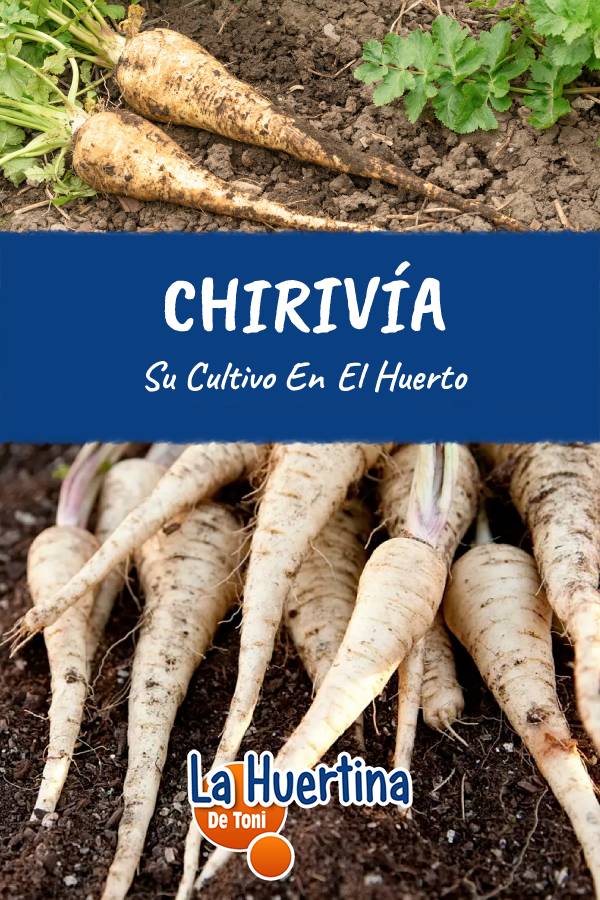
The parsnip is a fairly easy vegetable to obtain, but it is not consumed as much as its relative, the carrot, but the culinary possibilities are quite wide, as well as its nutritional properties, which is why it is one of those vegetables. which, although widely used for making broths and other dishes, is rarely planted in beginning orchards.
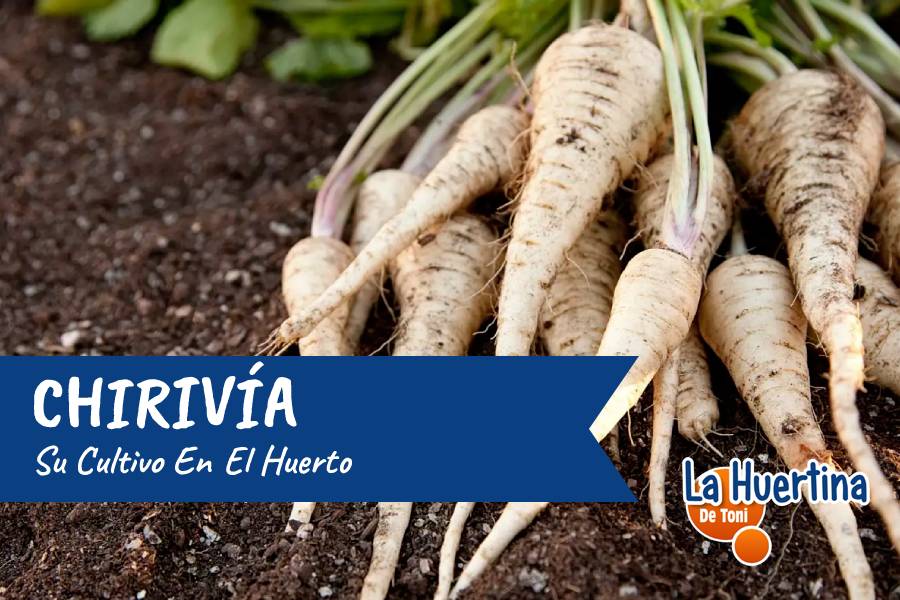

What is parsnip
Parsnip is a root vegetable also known as parsnip and belongs to the Umbelliferae family. It is a food consumed since ancient times and its name comes from the Greek word chirophyllum, which means “blades of grass”. This sweet-tasting root is characterized by its crunchy and firm texture.
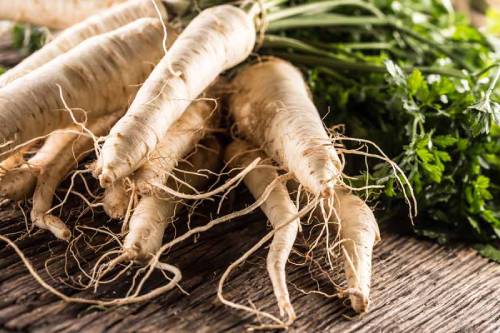
Parsnips can be found in different sizes and shapes, from small bulbs to roots up to 30 cm. Its appearance is yellowish-white with some dark streaks and its flavor is sweet and slightly bitter.

Parsnip medium long GUERNSEY
- Plant with a long white root, swollen at its upper end and fleshy, with a very particular taste.
- Its leaves are an excellent feed for fattening cattle. It is a variety appreciated for its pleasant flavor
- Form of culture: It is sown on a seat in Spring and also in Autumn, in mild winter climates, on the fly or preferably in rows spaced 30 to 40 cm apart, thinning out when the seedlings are 3 in number or 4…
- Sowing: March to October
- Harvest: from 120 days
How and when to plant parsnip?
The planting time for parsnips begins in early spring, in April in the cooler regions of the northern hemisphere and in October in the southern hemisphere. Although if our climate is rather warm, we could bring it forward a month or two, let’s say that in the middle of winter we could start.
It’s important to protect it from freezing, so if it’s a cold area or you’re waiting until the chance of frost has lessened or in the house greenhouse that I’m teaching you to do.
It is preferable to sow them directly, because in nurseries, if you want to transplant them later, you risk damaging them. This does not mean that it cannot be done in the nursery, but rather that in direct seeding it is a crop that responds much better.
As we saw in the article on the moons to sowthe waning moon is most appropriate for this culture.
Sun or shade for growing parsnips?
The parsnip is a crop that thrives in full sun, but also in partial shade, as we saw in the article on shade crops. In fact, it is a vegetable native to Central Europe, and in this region, although there are hot summers and very cold winters, it also has average temperatures but with some darkness.
Irrigation
Although parsnips should be watered regularly, waterlogging should be avoided.
Germisem Guernsey Parsnip Seeds 5g, EC9030
- Variety of conical, voluminous, smooth and white roots
- It adapts to all types of soil with good sun exposure.
- Very productive and well cared for and once harvested they can be stored in a cool dry place.
- Germinates in about 30 days
Pass
Nutrients are very important for the development of this crop, so before direct seeding we will work the land to fertilize it properly, although it is also something that we can do later, both in the soil and in the irrigation.
Plagues and diseases
Because of the similarity to carrots, pests that affect carrots can also affect parsnips. There carrot fly it is undoubtedly the worst of all, although both neem oil as a treatment, as well as crop rotation preventively they can be essential.
Other carrot pests that could also affect parsnips include cutworms, aphids, carrot weevil, wireworms and swallowtail butterfly.
Harvest
If all went well, we would harvest the parsnips 5 months after sowing.

Semillas Fitó 101 – Medium Long Parsnip Seeds from…
- Planting period: In temperate zones from February to May. In the continental zone, from March to May. Germinates very slowly in 4 weeks or more
- Sowing depth: 3-5 mm deep and 3 seeds per point. Culture frame: 40cm between rows and 25cm between plants
- Sun exposure: Full sun. Irrigation: Regular avoiding stagnation
- Harvest: About four months after planting, the roots are harvested. The leaves and young shoots are also edible, although they are generally not appreciated.
- Associations: It can be associated with lettuce, onions or cabbage
Association
There association of cultures is also very important for parsnips, and it is one of those vegetables that can be plant next to onions, help each other repel or combat potential pests. It is also a culture that one can plant next to tomatoes.
An important thing is that although parsnip and carrot are quite similar, this does not mean that they should be planted together, quite the contrary, as we saw in the post of the carrot association.
Recipes with Parsnips
Parsnips can be used in many ways to prepare delicious dishes. One of the most popular recipes is parsnip cream. This is a light version of the classic celery soup, using parsnip cubes instead of the traditional celery. This soup is very nutritious and is prepared with onion, carrot, tomato, garlic, a handful of basil and a touch of ginger for flavor.

Another delicious recipe is parsnip salad. This salad is a combination of parsnips, carrots, onions, cucumbers, celery and a lemon and olive oil vinaigrette. It is a very nutritious salad, with a touch of sweet and sour flavor.
Also, a very tasty parsnip recipe is parsnip omelet. This is a twist on the classic Spanish tortilla, but with parsnips and a hint of ginger for flavor. It is a very simple and nutritious recipe that can be enjoyed as a quick meal.
Other names for parsnip
Parsnip also goes by other names like parsnip, country celery and white carrot.
What is it for and properties of parsnip
Parsnips are a very healthy and, as we have seen, versatile food, and have been used since ancient times as a natural remedy to treat various ailments. This root is rich in nutrients and contains a high amount of vitamin C, potassium, magnesium, iron and fiber.
In addition to its nutritional content, parsnips contain bioactive compounds that help prevent chronic diseases, such as diabetes and cardiovascular disease. These bioactive compounds also have anti-inflammatory and antioxidant properties.
In addition to its high nutritional content, parsnip also helps improve digestion, increase energy, and improve immune function. This root has also been used to treat problems with inflammation, headaches, chronic fatigue, anxiety and depression.
Germisem Guernsey Parsnip Seeds 5g, EC9030
- Variety of conical, voluminous, smooth and white roots
- It adapts to all types of soil with good sun exposure.
- Very productive and well cared for and once harvested they can be stored in a cool dry place.
- Germinates in about 30 days
What do you think? Did the article help you? Leave me your opinion in the comments of the forum and if it works for you, you can always support the channel with a donation or help me spread it by sharing it on social media. If you want to follow me, here are some of the social networks I use Facebook , instagram , pinterest either subscribe to my youtube channel
HERE I LEAVE YOU A POSTER IN CASE YOU WANT TO SAVE IT ON PINTEREST