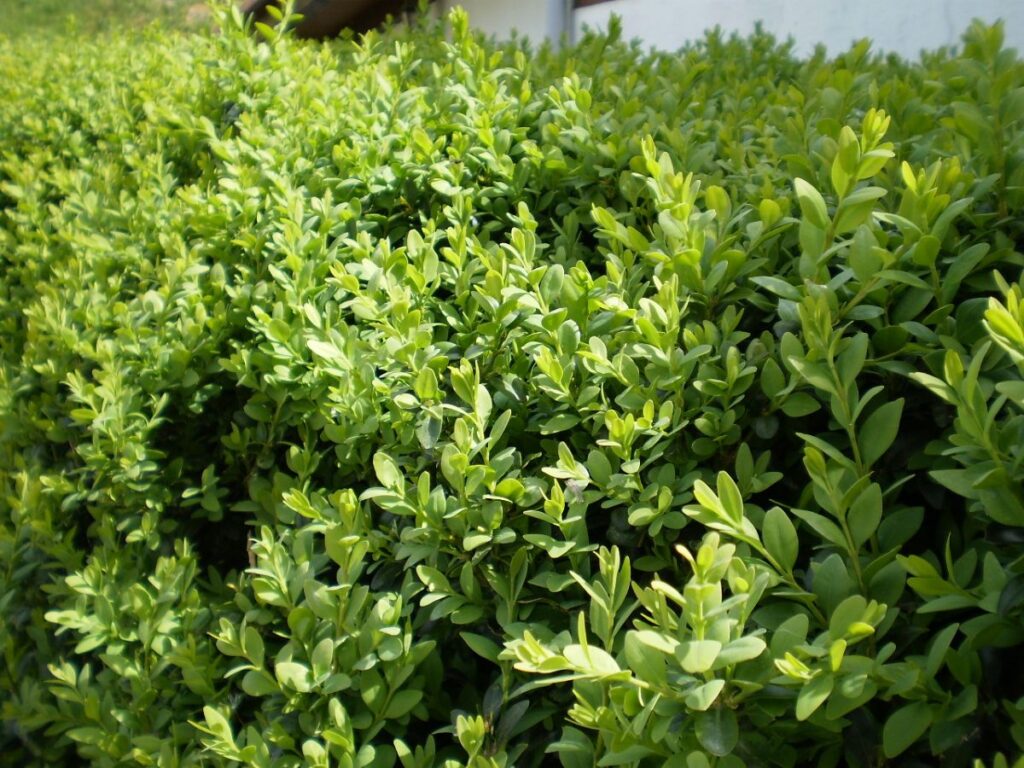
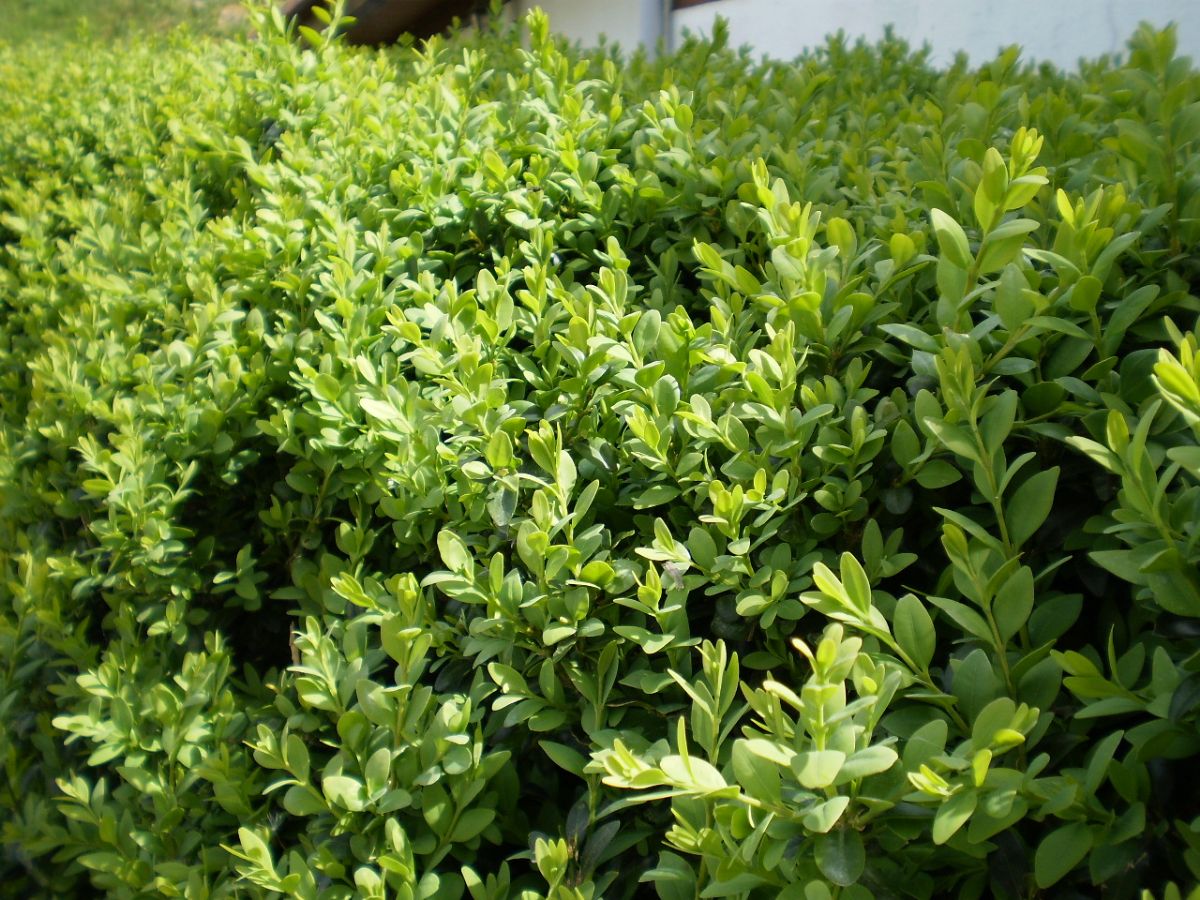
Sometimes in our garden we can have a hedge to achieve privacy and that there are no “curious neighbors” that prevent us from enjoying as we would like. However, although there are many species that serve us, most use the privet hedge. Does this cause problems? Unfortunately yes.
And it is that, like other plants, watch out for diseases, a topic we are going to cover today so that you know what to do with your privet hedge when it shows signs that something is wrong. Dark?
Privet Hedge: Common Issues to Consider

Source: HomeMania
Before telling you about the pests and diseases that can affect your hedge, we wanted to review the main disadvantages of having this species in your garden. It’s not that they are very bad, but you have to take it into account when placing it because it will not be to have it and that’s it.
Frequent pruning
Privets are characterized by rapid growth, as well as a fairly constant density in the form of a hedge. But that means you have to prune it frequently if you don’t want it to lose its shape or take over the territory of other plants.
We know that it’s good that it grows fast and a lot, but often that can mean that every x months it has to be pruned and therefore do maintenance.
Dull appearance, especially in winter
You have to take this into account depending on the variety of privet you have. And it is that there are many that have cold resistance but some that don’t. And the problem is, if you have one, when fall and winter come, you’ll see how the leaves on the hedge thin out, the branches aren’t so consistent anymore.
And if, it can die (although well cared for, it can germinate in the spring). However, this is one of the problems with the privet hedge to be aware of, as it means that it will leave you “naked” and there will be no privacy in your garden.
Attracts certain insects and pests
Let’s start with insects. privet they are quite attractive to beesespecially when in bloom, which means you need to place it as far away from people as possible to avoid problems.
At the same time, also it will attract birds or other pests which could not only damage the plants in your garden, but also the hedge.
We’ll talk about it next.
Privet Hedge Pests and Diseases

Source: plantamus
We have already seen in generating the problems posed by a privet hedge. However, we have left the topic of pests and diseases for last as it is a “separate chapter” to consider.
gray mold
This problem is caused by Botrytis cinereaa fungus that affects especially in winter and that causes that there are thousands that infect the plant. How does he do? By wounds, for example, when pruning, when openings are left on the surface of branches or the trunk.
The signs that your privet has this pest are mainly found on the branches, which you will see how they lose strength and begin not to hold the leaves (which will fall).
One of the main causes why it appears is due to the irrigation of the crown of the tree, as this creates an environment that favors the appearance and germination of the tree.
to treat it, you will need to remove all parts that are infected and burn or destroy them.
black fungus
As its name suggests, privet is affected by sooty mold, a disease that causes round, black spots on the leaves of the hedgerow. Over time, these spots will grow in size and also increase in number, affecting the branches as well. This prevents the plant from being able to carry out photosynthesis and, with this, its death is almost guaranteed.
What you can do to rid her of this disease is Remove any leaves you see with spots as soon as possible and apply fungicide as well. If it has already touched the branches, you will need to prune them (yes, we recommend sealing the wounds).
anthracnose
It is one of the most common diseases in a privet hedge, and with quite a few problems. To begin with, it can be caused by different pathogens, such as Apiognomonia veneta or wanderingor the Collectotrichum gloeosporioides.
Among the symptoms that you will see in the plant, there is especially the appearance of brown spots on the leaves, this makes them grow poorly and does not photosynthesise well. When it affects the branches or the trunk, it will seem that they consume it from within.
Unfortunately, if your privet has this disease the only thing you can do is remove any plants that are affected. There is no fungicide that can with these pathogens.
To rot
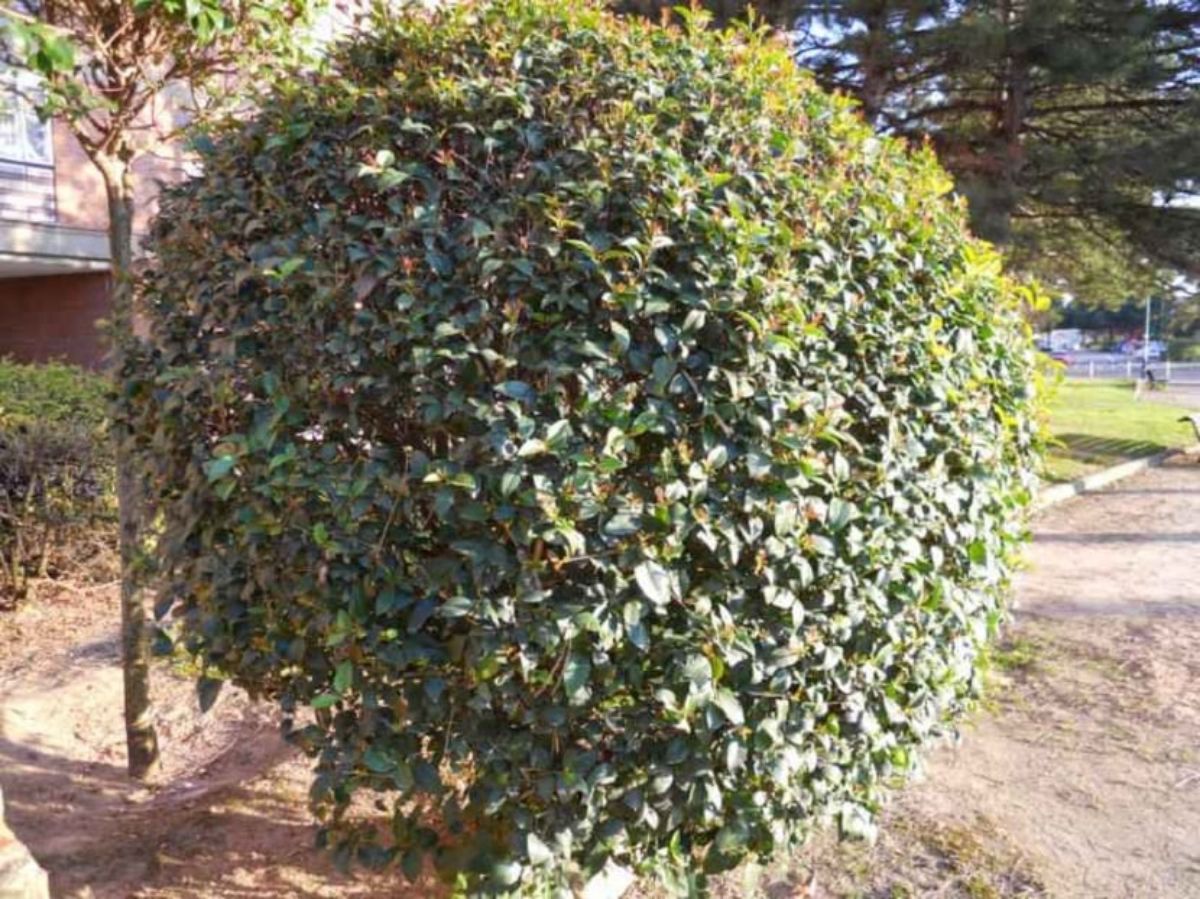
It will appear if the area where the privet hedge is located is warm and humid at the same time. then plant it you will have wilting or yellowing leaves, and the bark of branches and trunks will appear to be crumbling.
The only way to try to save her is disinfect the base of the plant and remove plants that are affected (there is no way to save them). In prevention, for the rest, you could use a fungicide.
Cercospores
This fungus is another that causes problems in privet hedges, especially in the leaves. Some of the symptoms you will recognize will include premature fall of leaves, as well as yellow, round spots on them.
This can affect especially in autumn, as well as in areas where it rains a lot or where it is very windy.
To solve it, it will be necessary to water from above (without going too far so as not to cause another disease) then remove the affected parts. Azoxystrobin or Myclobutanil are two treatments that you can apply that will help recover it, but we recommend that you consult an expert because if you add too little it will not work; and if you go too far, you could kill the plant.
white cochineal
It’s one of the best known, isn’t it? It affects a large number of plants and, of course, this one too. Above all they lodge in the trunk, branches and leaves when they have not yet finished opening. The problem is that they weaken the hedge and prevent it from growing, getting weaker and weaker and eventually die.
To remedy, a pesticide or any mealybug treatment you find will work for you (and observe, of course).
black dot
If you have a privet hedge, Have you noticed round reddish-brown spots with a purple edge on the leaves? If so, you are dealing with one of the most common issues that you need to consider.
It is produced mainly by lack of ventilation but if you remove the affected leaves and branches, you can always salvage them with a fungicide.
As you can see, the privet hedge has many problems. Some with solutions and some not. Have you encountered any in your garden?